Rahul shows pellet gun injuries of protester to slam Centre, says 'stop assaulting our students'
Source Entity
India Latest News: Top National Headlines Today & Breaking News | The Hindu
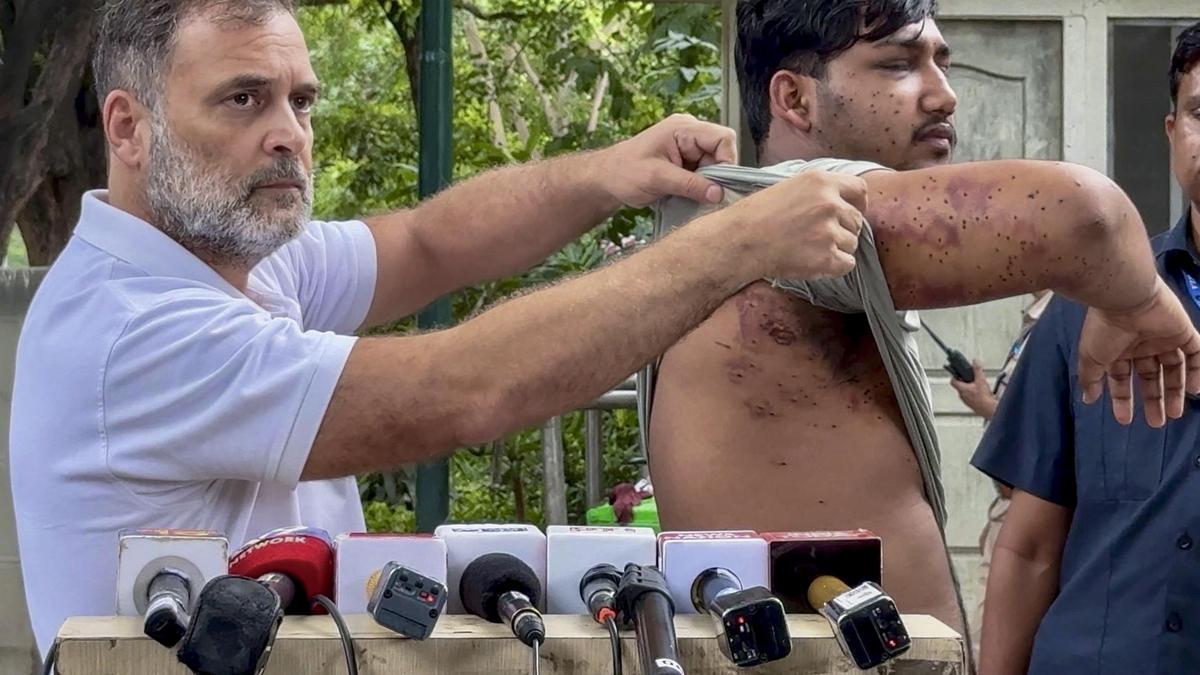
A controversy has erupted following allegations that security forces used pellet guns against student protesters during the July 20 'Chalo Sansad' march. Rahul Gandhi has demanded the Education Minister's resignation, while the Rapid Action Force has launched an internal verification of the incident.
The Jantar Mantar Protest Crisis: An Analysis of Alleged Excessive Force
The Incident and Escalation
On July 20, 2026, the 'Chalo Sansad' march, organized under the CJP banner, descended into violence in New Delhi, resulting in significant friction between demonstrators and security forces. The aftermath of this protest has triggered a intense political firestorm, centered on allegations that the Rapid Action Force (RAF) utilized pellet guns against peaceful students. The controversy gained national attention when Congress leader Rahul Gandhi presented a student named Sahil, who allegedly suffered pellet injuries while holding a tricolour flag, as evidence of state-sponsored aggression.
Contradictory Reports and Medical Evidence
At the heart of the dispute is a fundamental disagreement regarding the use of force. While Delhi Police have maintained a narrative that minimizes the severity of the crackdown, a hospital case sheet detailing the presence of pellet shards embedded in the victim's skin directly contradicts these official claims. This medical documentation provides a tangible, clinical basis for the protesters' allegations, shifting the focus from political rhetoric to physical evidence of injury.
Political Repercussions and Demands
Rahul Gandhi’s public intervention has elevated the incident to a major parliamentary standoff. By labeling Dharmendra Pradhan a "criminal Education Minister" and demanding his removal, Gandhi has framed the protest not merely as a localized clash, but as a symptom of a broader "collapse of India's education system." The demand for an official apology from Prime Minister Narendra Modi signals that the opposition intends to leverage this incident to hold the central government accountable for the treatment of student activists.
Internal Verification by Security Forces
The Rapid Action Force (RAF), operating under the Central Reserve Police Force (CRPF), has initiated an internal verification process to examine the conduct of its personnel during the July 20 event. Officials are currently reviewing video evidence of the clashes to determine whether the use of force was proportionate or excessive. While a full Court of Inquiry has not yet been formally ordered, the fact that the CRPF is investigating its own anti-riot unit highlights the gravity of the accusations.
Broader Implications and Future Trends
This event underscores a recurring tension in Indian democracy: the balance between the right to peaceful assembly and the state's mandate to maintain public order. The use of pellet guns—weaponry historically associated with high-intensity conflict zones—against student protesters in the capital is likely to set a precedent for how future demonstrations are managed. If the internal probe confirms the use of such weapons, it could force a policy shift regarding crowd control protocols in urban areas. Moving forward, the government will face increasing pressure to ensure that security responses to civil unrest remain within the bounds of human rights standards to avoid further erosion of public trust.
Multiple Citing Sources
Verification Required?