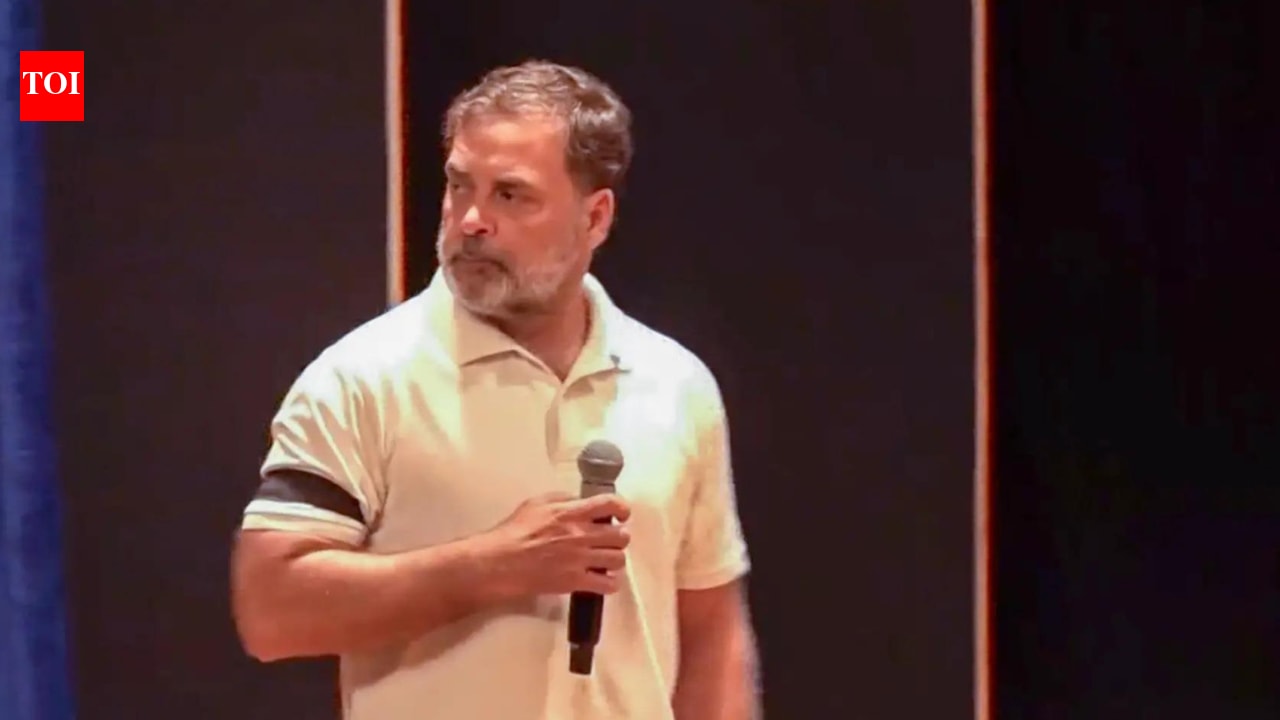
'Metro, roads, internet shut - but not paper leaks': Rahul attacks Centre
Source Entity
TOI NEWS DESK
The Delhi High Court has dismissed a PIL demanding an NIA investigation into the Cockroach Janta Party's 'Chalo Sansad' protest. The court emphasized that law enforcement agencies and the central government are responsible for such probes, leading the petitioner to withdraw the plea.
Delhi High Court Dismisses Plea for NIA Probe into CJP March
Overview of the Judicial Decision
On July 24, 2026, the Delhi High Court, led by a Bench comprising Chief Justice D. K. Upadhyaya and Justice Tejas Karia, formally refused to entertain a Public Interest Litigation (PIL) that sought to mandate an investigation by the National Investigation Agency (NIA) into the 'Chalo Sansad' march. The march, organized by the Cockroach Janta Party (CJP) on July 20, was intended to protest against the NEET-UG paper leak and related systemic issues. Following the court's observation that the judiciary is not the appropriate authority to direct the referral of cases to specialized agencies like the NIA, the petitioner opted to withdraw the plea.
The Role of Authority and Due Process
The central premise of the court’s decision rested on the principle of institutional separation of powers. The Bench clarified that it is the prerogative of the Central Government—not the judiciary—to determine when a case warrants an NIA investigation. Furthermore, the court noted that the authorities were already aware of the alleged incidents of vandalism that occurred during the march. By refusing to intervene, the High Court signaled that existing law enforcement mechanisms are expected to handle such civil disturbances and criminal allegations according to established statutory procedures.
Contextualizing the Protest and Police Response
The 'Chalo Sansad' protest, which moved from Jantar Mantar toward Parliament House, was marked by significant unrest. Reports indicate that police personnel utilized lathi charges to disperse demonstrators. The situation became a focal point of legal debate, as the High Court had simultaneously been considering separate pleas regarding alleged police excesses during these same demonstrations. This dual-track judicial scrutiny—evaluating both the violence associated with the march and the conduct of the police—highlights the complexity of managing large-scale student-led protests in the capital.
Broader Implications for Public Interest Litigation
This case serves as a reminder of the limitations of Public Interest Litigation in India. While PILs are essential for safeguarding fundamental rights, the judiciary remains cautious about overstepping into the executive domain, particularly regarding the deployment of specialized anti-terror agencies. By dismissing the plea, the court reaffirmed that unless there is a glaring failure of the state to act, the courts will generally defer to the discretion of the executive branch regarding the investigation of public demonstrations and civil unrest.
Future Trends in Demonstrations and Legal Recourse
As the NEET-UG paper leak controversy continues to fuel student activism, the legal system will likely face increased pressure to adjudicate the boundaries between the right to protest and the maintenance of public order. The Delhi High Court’s recent focus on ensuring that police actions follow the law, as evidenced by its issuance of notices regarding SIT inquiries into 'non-isolated' incidents, suggests that future litigation will likely focus on administrative accountability rather than the escalation of investigative mandates to national-level agencies. The withdrawal of this specific PIL effectively narrows the legal battlefield, focusing attention back on the standard investigative procedures already underway by local law enforcement.
Multiple Citing Sources