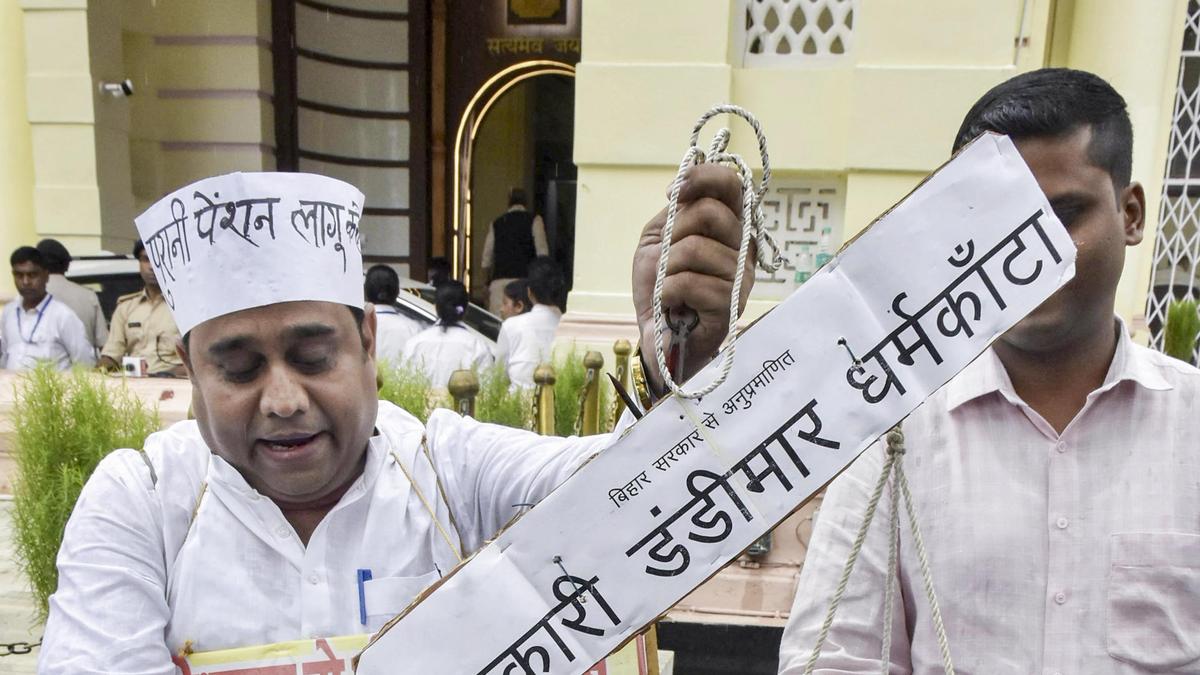
AISA calls for ‘Bihar Bandh’ on July 25, against police lathi charge on protesting students
Source Entity
India Latest News: Top National Headlines Today & Breaking News | The Hindu
The Delhi High Court has dismissed a PIL seeking an NIA investigation into the Cockroach Janta Party's 'Chalo Sansad' march. The court emphasized that law enforcement agencies are already handling the matter and that referring cases to the NIA falls under the purview of the Centre, not the judiciary.
Delhi High Court Dismisses Plea for NIA Probe into CJP March
Judicial Restraint and Jurisdictional Boundaries
The Delhi High Court, presided over by Chief Justice D. K. Upadhyaya and Justice Tejas Karia, recently dismissed a Public Interest Litigation (PIL) that sought to involve the National Investigation Agency (NIA) in investigating the violence associated with the Cockroach Janta Party’s (CJP) 'Chalo Sansad' march. The court’s decision underscores a fundamental principle of administrative law: the judiciary is not the appropriate authority to direct the transfer of criminal investigations to specialized federal agencies like the NIA. By clarifying that such referrals are the exclusive prerogative of the Central government, the court has reinforced the separation of powers.
Context of the 'Chalo Sansad' March
The march, held on July 20, 2026, was organized by the CJP to protest the widespread concerns surrounding the NEET-UG paper leak. As these demonstrations moved from Jantar Mantar toward Parliament, they culminated in incidents of vandalism and subsequent police lathi charges. The legal dispute arose from the conflicting narratives regarding these events—with some petitioners demanding a high-level terror probe into the violence, and others seeking an inquiry into alleged police excesses during the crowd control operations.
The Role of Law Enforcement
During the proceedings, the Bench noted that the authorities are already cognizant of the alleged vandalism. The court’s stance suggests a reliance on existing procedural mechanisms, where local police and administrative bodies are expected to manage public order and investigate incidents within their jurisdiction. By refusing to entertain the plea for an NIA probe, the court signaled that it would not bypass established legal processes unless there is a compelling, demonstrated failure of the state to uphold the rule of law.
Broader Implications for Public Protest
This case highlights the ongoing tension between the right to peaceful protest and the maintenance of public order in India’s capital. The fact that the court had previously sought responses from the Centre and Delhi Police regarding allegations of police misconduct indicates that the judiciary is monitoring the state's response to the protests. This balanced approach suggests that while the court is cautious about expanding the scope of terror-related investigations into civil demonstrations, it remains vigilant regarding the conduct of law enforcement.
Future Trends in Judicial Oversight
As protests regarding exam integrity and government accountability continue, the Delhi High Court's refusal to intervene via an NIA mandate establishes a precedent for future petitions. It suggests that courts will likely favor letting standard investigative agencies complete their work before considering extraordinary judicial intervention. This trend points toward a more conservative approach in judicial activism, prioritizing administrative accountability over the immediate escalation of investigative scope, unless the government itself deems the intervention necessary.
Multiple Citing Sources
Verification Required?