'Force feed Sonam Wangchuk': Plea in Delhi HC seeks liquid diet, hospitalisation for climate activist on hunger strike
Source Entity
Latest News: Today's Latest News Headlines from India & World | Hindustan Times | Hindustan Times
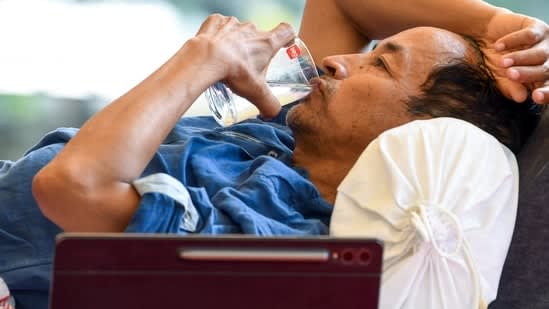
A petition has been filed in the Delhi High Court by advocate Rakesh Kumar Saini, requesting the central and Delhi governments to hospitalize climate activist Sonam Wangchuk and provide him with a liquid diet to prevent health deterioration during his ongoing hunger strike.
Legal Intervention in Sonam Wangchuk's Hunger Strike
In a significant legal development, a plea has been filed in the Delhi High Court seeking the immediate medical intervention and hospitalization of renowned climate activist Sonam Wangchuk. The petition, moved by advocate Rakesh Kumar Saini, urges both the Central Government and the Government of the National Capital Territory (NCT) of Delhi to ensure that Wangchuk is shifted to a government hospital and provided with a liquid diet. This move comes as a response to the deteriorating health risks associated with Wangchuk's prolonged hunger strike, highlighting a critical junction where the right to political protest clashes with the state's obligation to preserve human life.
The Conflict Between Autonomy and State Duty
This legal plea brings to the forefront a complex jurisprudential debate regarding the limits of a hunger strike. While hunger strikes are historically recognized as a powerful tool for non-violent resistance—most notably utilized by Mahatma Gandhi—they present a profound ethical and legal dilemma for the state. The request for "force-feeding" or the administration of a liquid diet represents the state's attempt to exercise parens patriae jurisdiction, where the court acts as the guardian of individuals who may be unable to care for themselves or are putting their lives at risk. The Delhi High Court must now balance Wangchuk's personal autonomy and his right to protest against the government's duty to prevent a potential fatality under its watch.
Contextualizing Sonam Wangchuk's Activism
To understand the gravity of this event, it is essential to recognize who Sonam Wangchuk is. An engineer, innovator, and educator from Ladakh, Wangchuk has gained international acclaim for his work in sustainable education and environmental conservation. His current hunger strike is not an isolated act of desperation but a calculated political statement aimed at drawing attention to the fragile ecology of the Ladakh region. By bringing his protest to the capital, Wangchuk is attempting to bridge the geographical gap between the remote Himalayan highlands and the corridors of power in New Delhi, emphasizing that the environmental degradation of the "Third Pole" has global implications.
Broader Implications for Ladakh and Environmental Policy
Wangchuk's strike is deeply rooted in the demands for constitutional safeguards for Ladakh, specifically the inclusion of the region under the Sixth Schedule of the Indian Constitution. This schedule provides for the administration of tribal areas, allowing for local autonomy and the protection of indigenous land and cultural rights. From an expert perspective, the urgency of this plea reflects the high stakes involved; if Wangchuk's health fails, it could galvanize further unrest in Ladakh, turning a focused environmental protest into a larger socio-political crisis. The demand for hospitalization is thus not just a medical necessity but a move to mitigate the political volatility surrounding the activist's health.
Historical Precedents and Future Trends
Historically, the Indian judiciary has dealt with various hunger strikes by public figures, often oscillating between allowing the protest to continue and intervening when life-threatening conditions arise. The outcome of this specific plea in the Delhi High Court will likely set a contemporary precedent for how the state handles high-profile climate activists. As the global climate crisis intensifies, we can predict an increase in "extreme" forms of non-violent protest. The legal system's response to Wangchuk—whether it prioritizes the sanctity of life through forced medical care or respects the activist's agency—will signal how India intends to manage the intersection of environmental urgency and civil liberties in the coming decade.
Summary of the Current Crisis
In conclusion, the plea filed by advocate Rakesh Kumar Saini serves as a critical safety valve in a high-tension standoff between a determined activist and the state. While the primary goal of the petition is the immediate preservation of Sonam Wangchuk's life through hospitalization and a liquid diet, the underlying narrative is one of environmental desperation and a struggle for regional autonomy. The Delhi High Court's decision will not only determine the immediate physical fate of Wangchuk but will also echo through the halls of environmental policy and human rights law in India.
Verification Required?