Court Junks Plea For Anti-Terror Agency Probe In July 20 Parliament March
Source Entity
NDTV News Search Records Found 1000
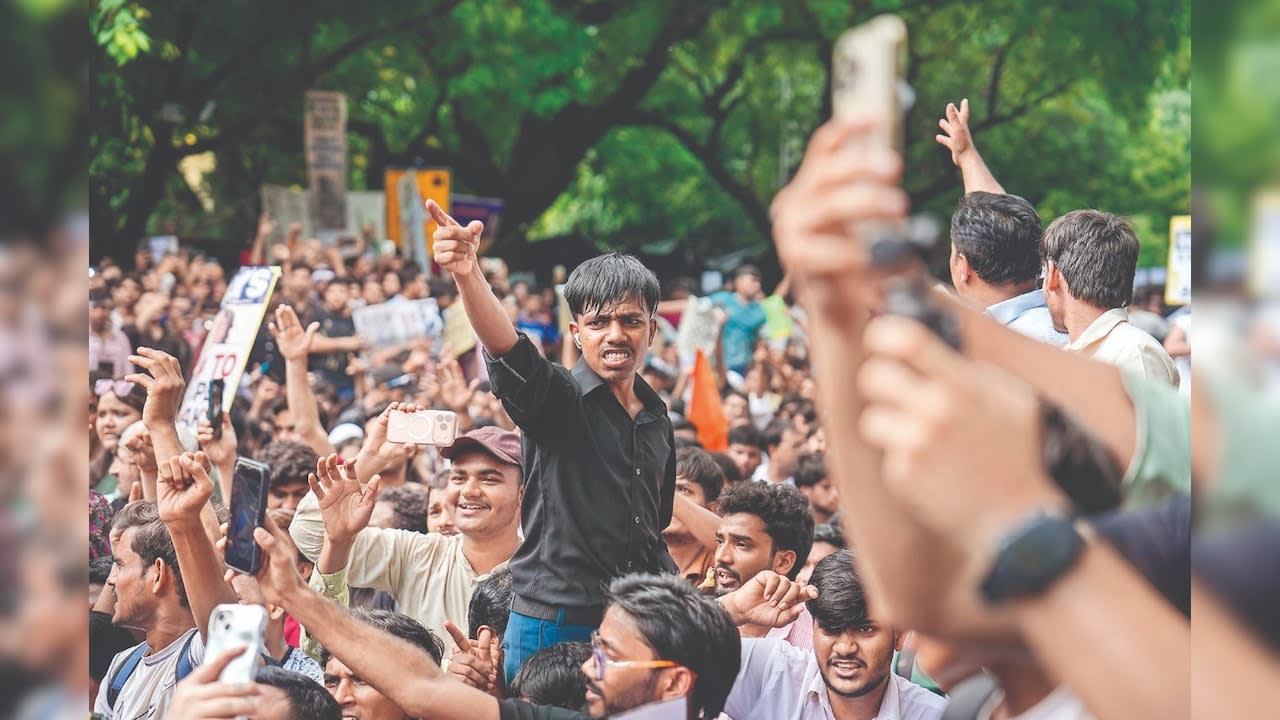
The Delhi High Court dismissed a PIL seeking an NIA probe into the Cockroach Janta Party's recent 'Chalo Sansad' march. Meanwhile, security in Delhi has been intensified with additional CRPF deployment as protests over the NEET-UG paper leak continue.
Judicial Intervention and the Limits of PILs
On July 24, 2026, the Delhi High Court delivered a significant ruling regarding the limits of judicial oversight in matters of law enforcement. A Bench comprising Chief Justice D. K. Upadhyaya and Justice Tejas Karia refused to entertain a Public Interest Litigation (PIL) that sought to mandate an investigation by the National Investigation Agency (NIA) into the 'Chalo Sansad' march conducted by the Cockroach Janta Party (CJP) on July 20. The court's decision underscores a fundamental constitutional principle: the judiciary is not the primary body for directing specific investigative agencies to take over local law-and-order incidents.
The Legal Reasoning Behind the Dismissal
The court’s rationale was clear and rooted in the separation of powers. The Bench emphasized that the alleged incidents of vandalism, which occurred during the CJP-led march, were already within the knowledge and notice of the relevant authorities. By stating that it is the prerogative of the Central government—and not the judiciary—to refer cases to specialized agencies like the NIA, the court effectively maintained the autonomy of the executive branch in managing internal security and criminal investigations. Consequently, following the intervention of Solicitor General Tushar Mehta, the petition was withdrawn.
Contextualizing the NEET-UG Protests
The protest march was a direct response to the ongoing turmoil surrounding the NEET-UG paper leak, an issue that has sparked nationwide student demonstrations. The CJP has centered its movement on the demand for the resignation of Education Minister Dharmendra Pradhan, labeling this demand as "non-negotiable." This protest, which has now lasted for over a month at Jantar Mantar, highlights the deep-seated frustration among students and activists regarding the integrity of national competitive examinations.
Security Escalation in the Capital
As the political climate remains tense, the government has responded with a significant increase in security infrastructure. With Independence Day approaching, authorities have airlifted additional CRPF companies to Delhi to bolster the existing security apparatus. This reinforcement is not merely a response to the ongoing Jantar Mantar protests but a precautionary measure to maintain public order in the capital during a period of heightened national sensitivity.
The Path Toward Resolution
The current impasse between the CJP leadership and the government remains complex. While the judicial route for an NIA investigation has been closed, the government continues to engage in discussions with protest leaders. The goal of these dialogues is to achieve a peaceful resolution to the month-long standoff. As the situation evolves, the government faces the dual challenge of addressing the structural concerns regarding the NEET-UG paper leak while managing the persistent civil unrest in the heart of the national capital.
Multiple Citing Sources
Verification Required?