What’s happening at Jantar Mantar? CJP’s ‘cockroaches’ grounded before anti-SIR showdown
Source Entity
ABHISHEK MISHRA
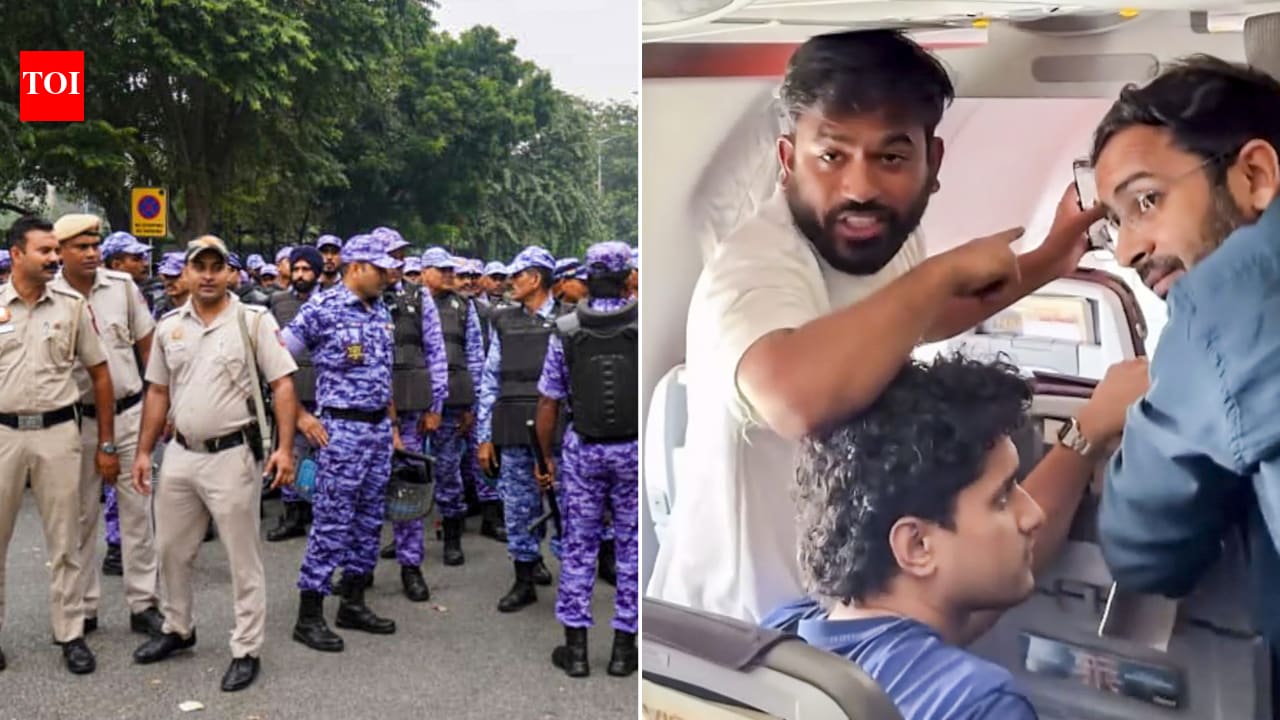
Delhi authorities have implemented massive security measures, including the closure of 45 Metro stations and widespread road blocks, to suppress a planned protest at Jantar Mantar. Over 400 individuals have already been detained as police deploy tear gas and specialized units to maintain control.
Security Lockdown in the National Capital
On October 10, the national capital witnessed an unprecedented security mobilization as authorities moved to preemptively neutralize a planned protest at the Jantar Mantar site. The scale of the response, characterized by the closure of 45 Delhi Metro stations and the deployment of specialized units, underscores the gravity with which the administration views this mobilization. By 6 a.m., traffic restrictions were fully operational, creating a vacuum of movement across critical arteries such as Janpath and Ashoka Road, effectively cordoning off the heart of New Delhi from the surrounding National Capital Region (NCR).
The Mechanics of Containment
The logistical strategy employed by the Delhi Police and security forces involved a multi-layered approach to crowd control. Beyond mere barricades, the administration utilized 'Pink Force' units and personnel equipped with tear gas munitions to enforce the perimeter. The early-morning debriefing sessions involving large numbers of officials indicate a high state of readiness, suggesting that the state anticipated significant attempts by protesters—particularly those traveling from Gurugram and Faridabad—to breach the security cordon.
Impact on Urban Mobility
The decision to shutter 45 metro stations—including major transit hubs like Rajiv Chowk, Central Secretariat, and Kashmere Gate—represents one of the most significant disruptions to public infrastructure in recent memory. This mass closure was designed not only to prevent protesters from gathering but to systematically paralyze the logistics of the demonstration. Commuters were forced to contend with a city effectively split into sectors, with major thoroughfares and transit nodes rendered inaccessible under the guise of public safety and traffic management.
Escalation and Detentions
Despite the formidable security net, early-bird protesters managed to reach the Ashoka Road entrance, leading to immediate confrontations. Reports indicate that over 400 people have already been detained, with security forces utilizing buses to rapidly clear the area. The speed of these detentions highlights the shift toward a 'zero-tolerance' approach regarding unauthorized gatherings in high-security zones, with the police prioritizing the physical clearance of the site over negotiation or containment.
Broader Implications and Future Trends
This incident reflects an evolving trend in how the Indian state manages civil dissent in the capital. By leveraging infrastructure—such as the metro network—as a tactical tool for restriction, the state has signaled a move toward more aggressive, technology-assisted crowd management. The reliance on body cameras and specialized forces like the 'Pink Force' suggests that future protests will likely be met with even more sophisticated surveillance and rapid-response tactics, potentially setting a precedent for how public spaces are governed during periods of political tension.
Conclusion
The situation in New Delhi remains fluid, with a massive security presence continuing to monitor the city. As the administration continues to prioritize the maintenance of public order through widespread detentions and infrastructure lockdowns, the tension between the right to assemble and the state's prerogative to ensure security remains a defining feature of the political landscape in the capital.
Multiple Citing Sources