Modi govt has turned ‘mother of democracy’ into ‘muzzled democracy’, says Kharge
Source Entity
India Latest News: Top National Headlines Today & Breaking News | The Hindu
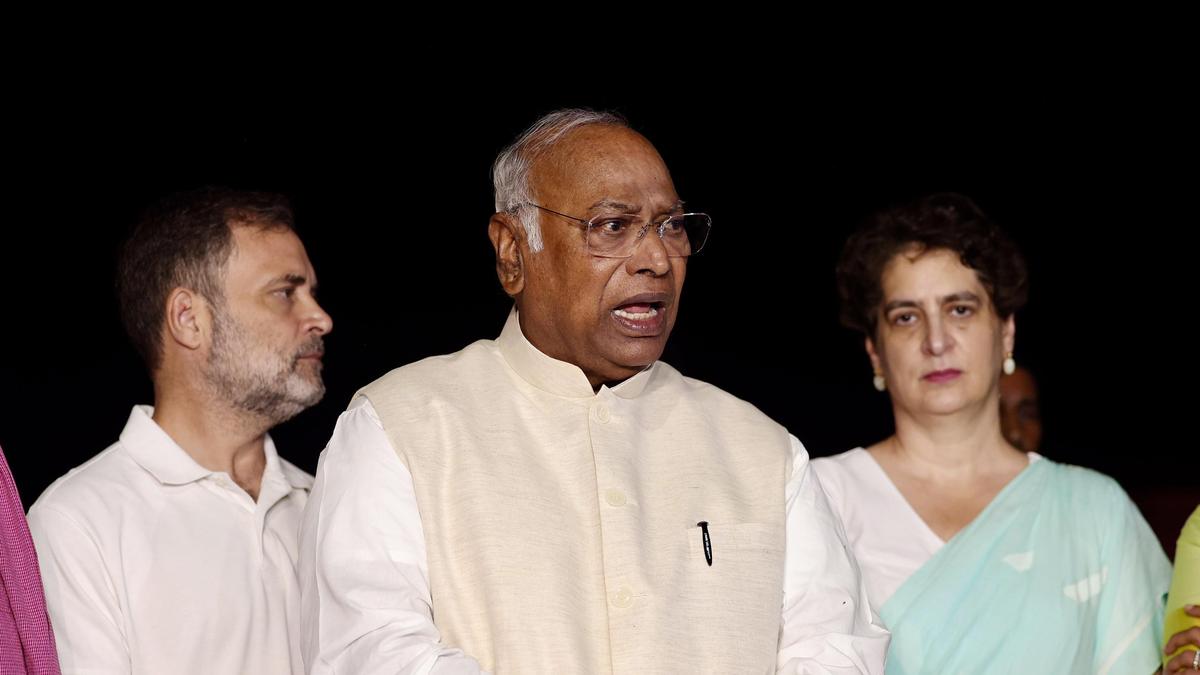
Congress President Mallikarjun Kharge has accused the Modi government of suppressing dissent and stifling democracy by barricading Delhi. The criticism follows the detention of various protestors ahead of youth-led demonstrations scheduled for October 10, 2026.
The Erosion of Democratic Space: A Critique of Governance
On October 10, 2026, the political landscape in India faced heightened tensions as Congress President Mallikarjun Kharge launched a scathing attack on the Narendra Modi administration. Kharge characterized the government's recent actions as a transformation of the nation from the "mother of democracy" into a "muzzled democracy." This critique centers on the security measures implemented in the national capital, which Kharge described as "converting Delhi into a fortress" to prevent youth-led protests from gaining momentum.
The Mechanics of Suppression
The core of the controversy lies in the preemptive detention of various societal stakeholders, including students, lawyers, journalists, social activists, and content creators. By targeting these specific groups, the government is accused of systematically dismantling the mechanisms of public accountability. Kharge’s assertion that the BJP-RSS ideology is demonstrating "cowardice" highlights a deepening divide between the ruling establishment and those who utilize digital platforms, such as YouTube, to challenge official narratives. This reliance on administrative containment suggests a shift in how the state manages dissent, prioritizing perimeter security over public engagement.
Historical Context of Protest Management
Historically, the use of Delhi as a "fortress"—replete with barricades and heavy police deployment—has become a recurring feature of modern Indian political discourse. From the farmers' protests to various student-led movements, the state has increasingly relied on logistical isolation to neutralize large-scale demonstrations. Critics argue that this approach undermines the constitutional right to peaceful assembly, while the government typically maintains that such measures are necessary to prevent public disorder and ensure national security in a high-stakes capital environment.
The Digital Frontier and Information Control
An interesting facet of this specific event is the inclusion of "YouTubers" and "content creators" in the list of those detained. This reflects the evolving nature of political mobilization in India, where digital creators have become influential voices capable of mobilizing crowds independent of traditional political parties. By detaining these figures, the government is signaling a broader strategy to exert control over the digital information ecosystem, which has become a primary battlefield for competing political narratives.
Political Ambiguity and Opposition Strategy
While Kharge has been vocal in his condemnation of the government's heavy-handed tactics, the situation is complicated by the Congress party's reported reluctance to fully endorse the protests called by the "Cockroach Janata Party." This hesitation highlights the complexities of opposition politics in India, where parties must balance ideological support for grassroots movements against the risks of associating with smaller, potentially radical, or fringe organizations. This tension suggests that the broader opposition remains fragmented even in the face of shared grievances regarding civil liberties.
Future Trends in Civic Engagement
Looking ahead, the events of October 2026 indicate a trend toward increasingly restrictive environments for public dissent. If the government continues to employ "fortress" tactics, it may succeed in the short term by suppressing immediate unrest, but it risks fostering long-term resentment among the youth and professional classes. The reliance on detention as a tool of governance will likely remain a central point of contention in future electoral cycles, as the debate over the definition of "democracy" in India continues to polarize the electorate.
Verification Required?