More than 100 detained in Delhi during latest protest march against Election Commission chief
Source Entity
Pragynesh
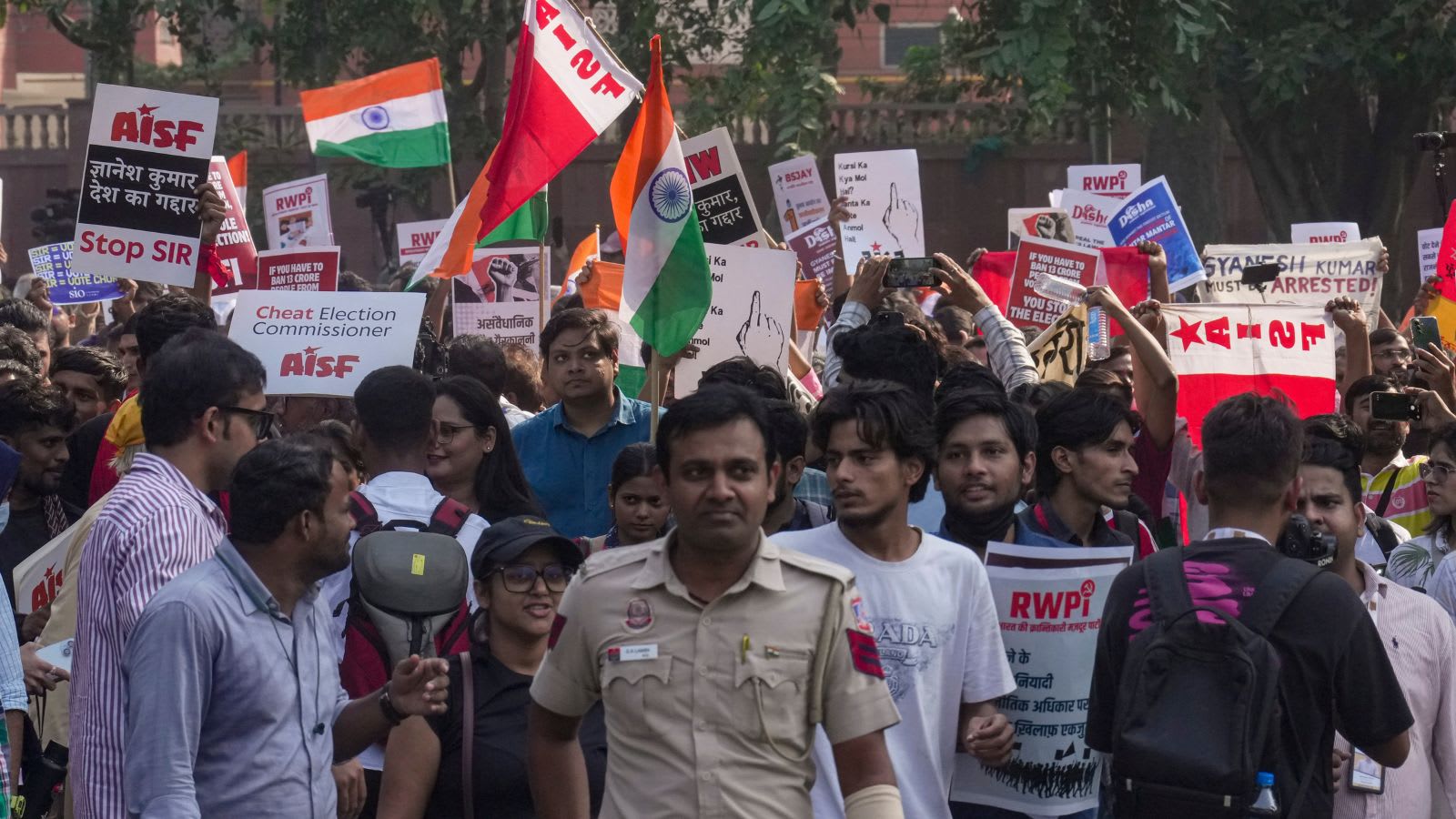
Protesters led by the 'People Against SIR' collective and the Samyukt Kisan Morcha marched in Delhi to demand the resignation of CEC Gyanesh Kumar. The demonstration, which saw over 100 detentions, targeted the Special Intensive Revision of electoral rolls.
The 'People Against SIR' Movement: Challenging Electoral Integrity in Delhi
On Friday, a significant wave of civil unrest unfolded in the heart of the national capital as the 'People Against SIR' collective and the Samyukt Kisan Morcha (SKM) mobilized a march toward the Election Commission of India (ECI) headquarters. The protest, which originated from key transit points including Gurudwara Bangla Sahib and Gole Dak Khana, was rooted in a singular, urgent demand: the immediate resignation of Chief Election Commissioner (CEC) Gyanesh Kumar and the total scrapping of the Special Intensive Revision (SIR) of electoral rolls.
Origins of the 'No SIR' Campaign
The movement gained formal structure on October 14 at Surjeet Bhavan, New Delhi, where a coalition of farmers, workers, women, and student organizations coalesced to address alleged irregularities in the electoral process. The platform introduced the evocative slogan, "Har Gali Jantar Mantar, Har Gaon Jantar Mantar, Mera Ghar Jantar Mantar," aiming to decentralize protest culture and bring the spirit of civic dissent directly into local neighborhoods. This tactical shift reflects a growing frustration among civil society groups regarding the transparency of the current electoral roll revision exercises.
Key Figures and Broad Coalitions
The scale of the protest was underscored by the diverse array of prominent figures invited to participate. The list included high-profile activists such as CJP founder Abhijeet Dipke, senior advocate Prashant Bhushan, farmer leader Rakesh Tikait, activist Tushar Gandhi, and student leaders like Neha Bora and Aishe Ghosh. Actor Prakash Raj was also cited as a notable invitee, signaling the movement's attempt to bridge the gap between grassroots organizational power and mainstream public intellectual discourse.
Confrontation and Police Intervention
Despite the organizers' firm stance—declaring on October 18 that the "People’s March to Reclaim Democracy" would not seek police permission—the demonstration met immediate administrative resistance. As the participants, carrying national flags and banners, attempted to progress toward the ECI headquarters, the situation escalated rapidly. Reports confirm that over 100 individuals were detained by Delhi authorities as they moved through the intersection of Kalibari Marg and Bhai Vir Singh Marg, highlighting the tense relationship between state security apparatuses and these civil society collectives.
Implications for Electoral Governance
The detention of over 100 protesters marks a critical juncture in the ongoing debate over the ECI's administrative autonomy and the legitimacy of the SIR process. By targeting the ECI headquarters, the protestors are aiming to force a national conversation on the mechanisms of voter registration and the potential for systemic exclusion in electoral rolls. The involvement of the SKM, a powerful entity known for its sustained influence in national agrarian protests, suggests that this movement may have the organizational capacity to evolve into a prolonged challenge to current institutional practices.
Future Trends and Conclusion
As the 'People Against SIR' campaign seeks to expand its reach, the future of this movement will likely depend on its ability to maintain momentum despite police detentions and the lack of official dialogue with the Election Commission. The demand for the CEC's resignation represents a hardening of positions that may lead to further nationwide mobilizations. Whether this collective can successfully translate its "Har Gali Jantar Mantar" strategy into tangible policy changes or electoral reforms remains to be seen, but the events in Delhi indicate a deepening divide between civil society activists and the nation's primary electoral watchdog.
Multiple Citing Sources