Amritsar police crack down on crime, arrest nine with pistols, 4kg heroin
Source Entity
Latest News: Todays Latest News Headlines from India & World | Hindustan Times
Law enforcement agencies in Delhi and Punjab have conducted major operations, seizing over 8 kg of heroin and multiple illegal firearms. These busts highlight the growing challenge of interstate drug trafficking and the increasing use of cross-border drones for smuggling.
Intensified Crackdown on Narcotics Networks in North India
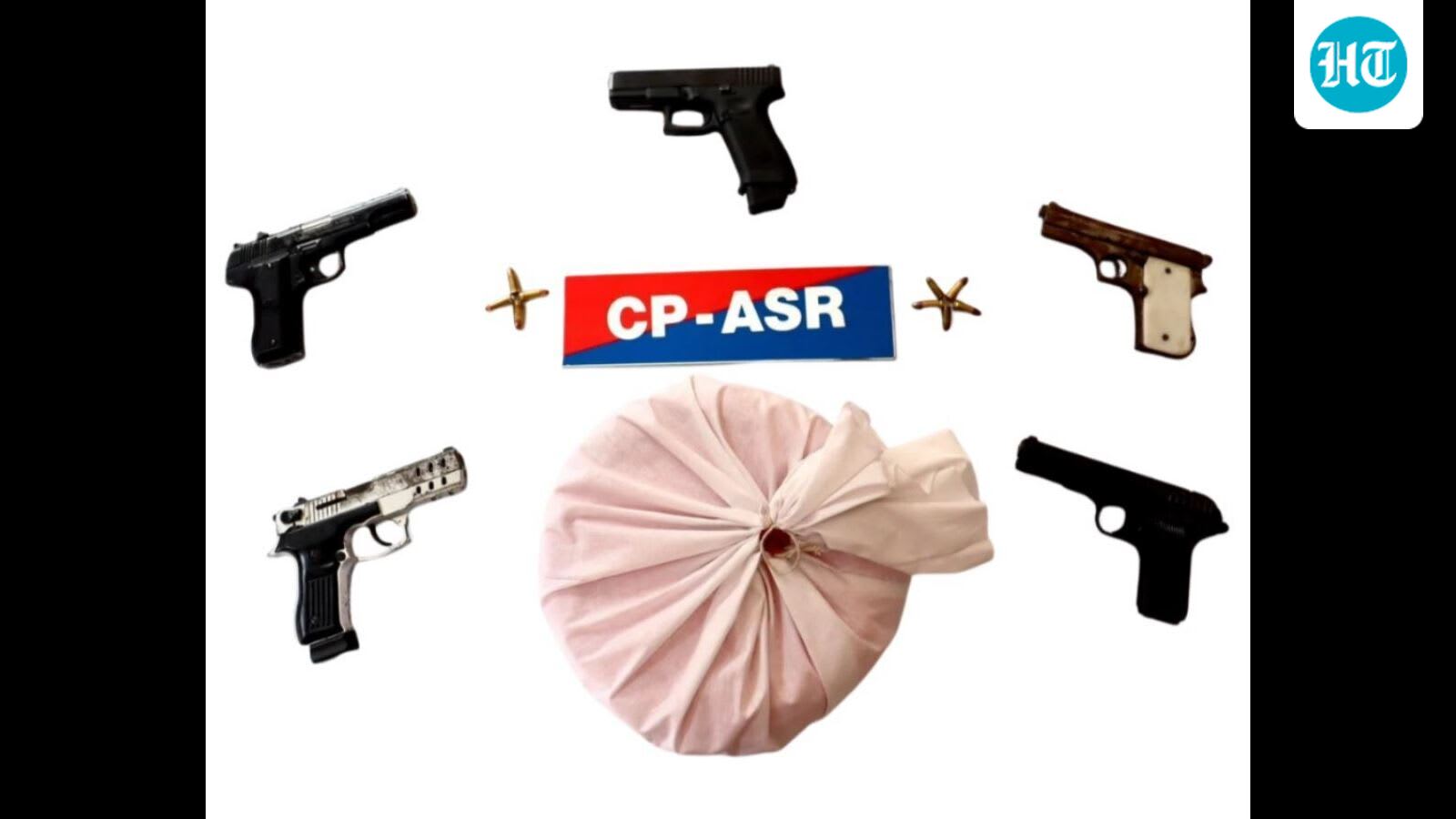
Recent law enforcement operations in Delhi and Punjab have unveiled a multi-pronged crisis involving the trafficking of narcotics and illegal weaponry. In Delhi, the police successfully dismantled a 'family-run' heroin cartel, leading to the arrest of six individuals and the seizure of 2.25 kg of heroin valued at ₹5 crore. Simultaneously, Punjab authorities have reported significant breakthroughs, recovering 4 kg of heroin and five pistols in Amritsar, alongside 1.8 kg of contraband intercepted via drone operations in the Ferozepur district.
The Delhi 'Family-Run' Cartel
The Delhi investigation, which began on September 11, highlights the sophisticated nature of domestic drug distribution. By acting on specific intelligence, the Anti-Narcotics Task Force intercepted key members of the Divakar family—Rohit, his wife, and his brother Vishal—while they were transporting contraband near Signature Bridge. The recovery of over 2 kg of heroin from a backpack underscores the brazen methods used by local syndicates to move illicit substances across interstate boundaries, necessitating a robust legal response under the Narcotic Drugs and Psychotropic Substances (NDPS) Act.
Escalating Violence and Arms Proliferation in Punjab
In Amritsar, the situation presents a broader security concern as the police arrested nine individuals, including two juveniles. The recovery of five high-grade pistols, including a Glock 9MM, indicates that narcotics trafficking is increasingly intertwined with organized crime, robbery, and attempted murder. The fact that many suspects possessed prior criminal records related to the NDPS Act and Arms Act suggests a cycle of recidivism that continues to challenge local law enforcement.
The Drone Menace at the Border
Perhaps the most technologically concerning development is the use of drones to facilitate cross-border smuggling in Ferozepur. The Border Security Force (BSF) intercepted 1.8 kg of heroin in two separate incidents near Border Outposts (BOPs) at Kassoke and Pachharian. This method of delivery allows traffickers to bypass traditional border checkpoints, posing a persistent threat to national security and internal stability.
Broader Implications and Future Trends
These events collectively illustrate a changing landscape in Indian narcotics enforcement. The transition from traditional human smuggling to drone-assisted delivery, coupled with the involvement of family-based domestic syndicates, indicates that drug cartels are adapting to modern surveillance techniques. Moving forward, the effectiveness of these operations will likely depend on enhanced inter-agency coordination between the BSF, Punjab Police, and Delhi Police to disrupt the supply chain before it reaches urban centers.
Conclusive Summary
The simultaneous busts across Delhi and Punjab serve as a stark reminder of the persistent threat posed by narcotics syndicates. While the recovery of nearly 8 kg of heroin and multiple weapons is a significant victory for law enforcement, the reliance on drone technology and the persistence of local cartels necessitate a continued, intelligence-led approach to safeguarding public safety and national borders.
Verification Required?