CPI(M) decries detention of protesting leaders, says ‘an Emergency-like situation prevails in Delhi’
Source Entity
India Latest News: Top National Headlines Today & Breaking News | The Hindu
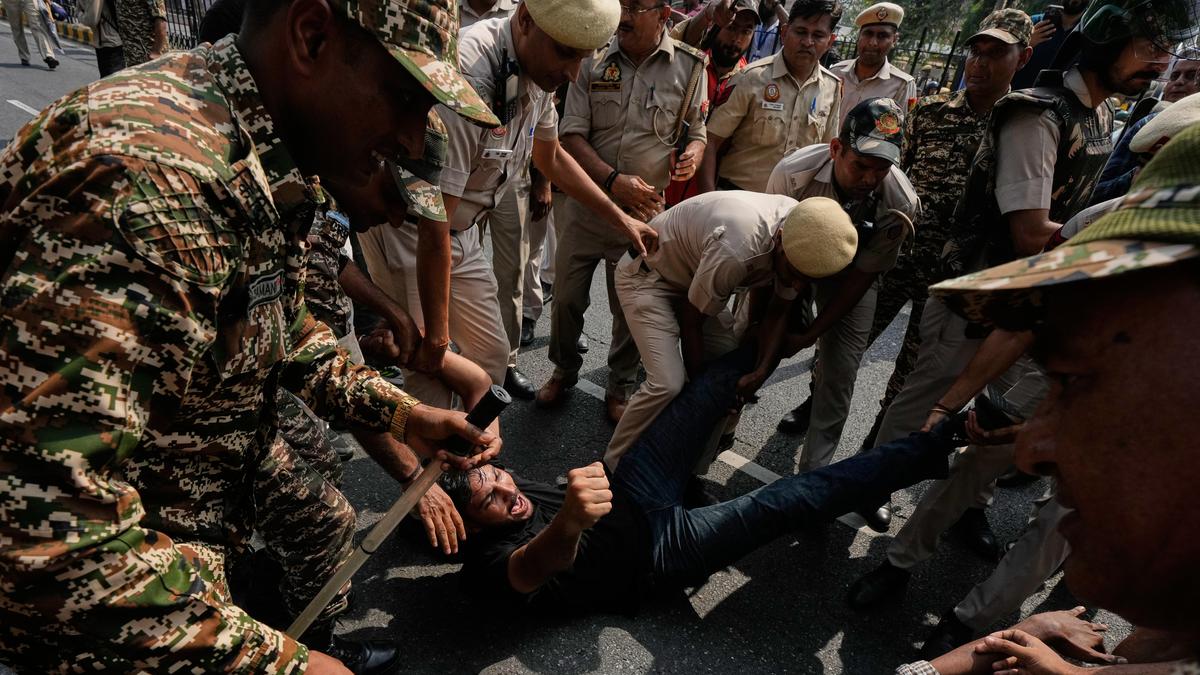
Delhi is under tight security measures as authorities shut 45 Metro stations and deploy the 'Pink Force' to manage protests. Over 400 demonstrators have been detained, while daily wage workers face significant disruptions to their livelihoods due to identity verification protocols.
Security Lockdown and Public Order in Delhi
The national capital of Delhi is currently experiencing a significant disruption to public life, characterized by a massive security operation aimed at containing protests centered around the 'Jantar Mantar 2.0' movement. Authorities have implemented a comprehensive lockdown strategy, which includes the closure of 45 Delhi Metro stations—ranging from central hubs like Rajiv Chowk to transit points like Kashmere Gate—to prevent large-scale gatherings. This preemptive measure, extending from Friday night through Saturday evening, reflects an aggressive state approach to managing civil unrest.
The Human Impact on the Workforce
The collateral damage of these security protocols is most acutely felt by the city’s vulnerable daily wage laborers. Reports indicate that migrant workers and employees in sectors such as construction and retail, specifically in areas like Khan Market, have been turned away at police barricades in locations like Nizamuddin. For individuals like Devender Chauhan, whose employment relies on physical access to workplaces in central Delhi, the inability to present formal identity documentation has turned a routine commute into an impossible barrier. This highlights a systemic friction between high-security mandates and the informal economy that powers the city.
Implementation of Specialized Security
Central to the state's response is the deployment of the 'Pink Force'—a specialized security unit—and the widespread utilization of body cameras. By incorporating these visual monitoring tools, the police are signaling a shift toward high-surveillance crowd control. The immediate result of this tactical deployment has been the detention of over 400 individuals who were attempting to congregate for the protests. This indicates that the state is not merely managing traffic but is actively disrupting the organizational capacity of the protest groups.
Broader Implications of Transit Restrictions
The closure of nearly 45 stations across the Delhi Metro network represents one of the most significant logistical interruptions in the city’s recent history. Beyond the immediate protest, this creates a ripple effect, forcing residents to navigate complex traffic diversions and police checkpoints. The Delhi Traffic Police’s advisory underscores the severity of the situation, cautioning citizens against unnecessary travel. Such measures are indicative of a broader trend where urban transit infrastructure is increasingly utilized as a defensive tool by the state to suppress mobilization.
Future Trends in Urban Governance
Looking ahead, the events of October 10, 2026, suggest a hardening of urban governance strategies in Delhi. As protests evolve, the reliance on digital surveillance and the physical immobilization of transit networks is likely to become a standard operating procedure for law enforcement. While these actions are framed under the guise of public safety, they raise critical questions regarding the balance between maintaining order and protecting the freedom of movement for the city’s working-class residents. The tension between institutional security and the socio-economic rights of daily wage earners remains a central, unresolved challenge for the capital's administration.
Multiple Citing Sources
Verification Required?