10L people, Rs 10k cr loss: Why traders' body want Rahul's Nov 1 rally postponed
Source Entity
AASTHA JHA
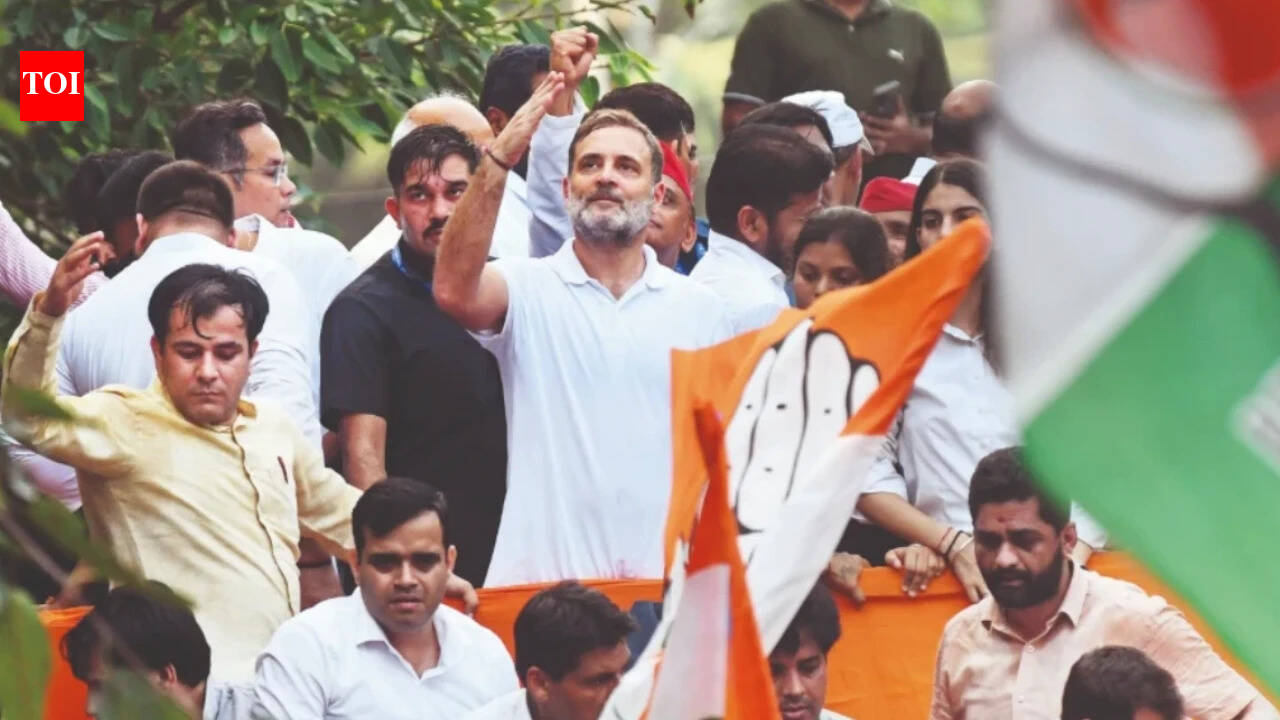
Delhi traders are urging Rahul Gandhi to postpone his November 1 rally to prevent an estimated Rs 10,000 crore loss during the peak festive season. While the VHP has criticized the move as an attack on Hindu festivals, Rahul Gandhi has acknowledged the traders' concerns while blaming administrative restrictions for the economic disruption.
The Economic Impact of Political Rallies in Delhi
The Chamber of Trade and Industry (CTI) has issued a stark warning regarding the upcoming Congress rally scheduled for November 1 at Delhi's Ramlila Maidan. Representing a significant portion of the city's commercial backbone, the traders have estimated that the event could result in losses of up to Rs 10,000 crore. With 10 lakh people expected to congregate and upwards of 20,000 vehicles potentially clogging transit routes, the logistical strain is poised to cripple operations in 21 major wholesale and retail markets during the height of the festive shopping window.
The Timing Dilemma and Festive Commerce
The timing of the rally is central to the controversy, as it coincides with critical pre-Diwali preparations. Traders are particularly sensitive to this period, as the festive season represents the largest share of their annual revenue. The memory of recent losses—reportedly Rs 3,000 crore following previous protests in October—has heightened anxiety within the business community. The overlap with Ahoi Ashtami, a significant day of observance, has further intensified the backlash, as traders and observers argue that such large-scale political gatherings prioritize political messaging over the economic stability of the capital's citizens.
Political Friction and Ideological Critiques
The situation has transcended economic grievances, drawing in broader political and ideological players. The Vishva Hindu Parishad (VHP) has entered the fray, accusing the Congress party and the broader INDIA bloc of deliberately targeting Hindu festivals. VHP spokesperson Vinod Bansal characterized the refusal to postpone the rally as a calculated move, alleging that the party would have been more accommodating to other interest groups. This rhetoric highlights the increasing polarization surrounding public space usage in Delhi, where political demonstrations are now being framed as existential threats to traditional festivals.
The Administrative Factor and Public Transit
Amidst the tension, Rahul Gandhi has addressed the traders directly with a message stating, "We hear you." However, the narrative remains complex. Gandhi has shifted a portion of the blame toward the current administration, citing the suspension of metro services and the blocking of arterial roads as the primary drivers of the economic disruption. This finger-pointing underscores a recurring issue in Delhi governance: the friction between the right to protest and the necessity of maintaining urban functionality. When the government restricts movement to manage crowds, the collateral damage is often borne by the small and medium-sized enterprises that rely on accessibility.
Broader Implications for Urban Governance
This standoff highlights a systemic tension in modern Indian politics. As urban centers become denser, the conflict between political expression and economic survival becomes more acute. The reliance on centralized venues like the Ramlila Maidan for massive political rallies creates a bottleneck that effectively halts commerce for the surrounding districts. Future trends suggest that unless there is a shift toward decentralized protest management or a more collaborative approach between political parties and local business unions, these clashes will continue to occur during every major festive season, potentially leading to long-term regulatory changes regarding the use of public spaces for political events.
Conclusion
The standoff over the November 1 rally serves as a microcosm of the challenges facing Delhi's economy. While the right to assemble is a cornerstone of democratic expression, the economic consequences cited by the CTI—ranging from lost footfall to logistical gridlock—pose a tangible threat to the livelihood of thousands. As the debate continues, the resolution of this specific event will likely set a precedent for how future political demonstrations are balanced against the essential needs of the city's commercial sectors during sensitive festive periods.
Multiple Citing Sources