Dharmendra Pradhan's old post with Sonam Wangchuk, his wife goes viral: 'Appreciate their passion'
Source Entity
Latest News: Todays Latest News Headlines from India & World | Hindustan Times | Hindustan Times
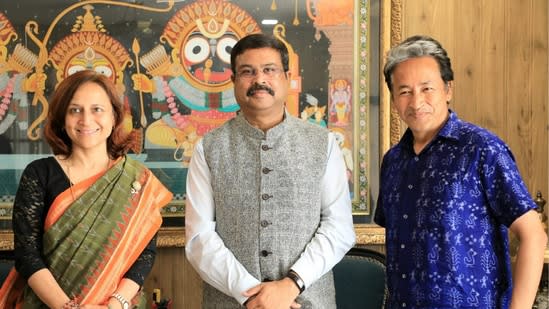
An old social media post from Union Minister Dharmendra Pradhan praising activist Sonam Wangchuk has resurfaced amid Wangchuk's ongoing protest. The irony of the post has gained traction as Wangchuk currently demands Pradhan's resignation.
The Resurfacing of a Past Alliance
A social media post from three years ago, featuring Union Education Minister Dharmendra Pradhan alongside climate activist Sonam Wangchuk and his wife, Gitanjali J. Angmo, has suddenly gained significant traction in the public discourse. In the original post, Pradhan lauded the couple for their dedication to education reform, experiential learning, and sustainable development. This digital artifact, once a symbol of collaborative spirit between government leadership and grassroots innovators, is now being viewed through a starkly different lens as the political landscape shifts.
The Irony of Current Political Tensions
The viral nature of this post is not incidental; it is deeply rooted in the current confrontation between the two parties. Sonam Wangchuk is currently engaged in a hunger strike, a form of protest that has drawn thousands of supporters to Delhi. The core of his demand is the resignation of Dharmendra Pradhan, the very individual who once publicly championed his efforts. This juxtaposition highlights the volatile nature of political relationships, where past mutual appreciation can rapidly devolve into public confrontation when policy objectives diverge.
Contextualizing the Protest
For nearly a month, the protest led by Wangchuk has mobilized thousands of participants. The movement serves as a barometer for the growing friction between climate and educational activists and the central government. By calling for the resignation of the Minister of Education, Wangchuk is effectively challenging the current administration's stance on regional governance and developmental policies. The resurfaced post serves as a narrative tool for observers to highlight the perceived disconnect between the government's past rhetoric and current ground-level realities.
Implications for Public Discourse
The viral circulation of the old post underscores the power of historical digital records in modern political accountability. In an era where every public statement is archived, politicians often face the challenge of reconciling their past endorsements with current policy conflicts. For Pradhan, the post serves as a reminder of his previous alignment with Wangchuk's goals, while for the protesters, it provides a powerful visual aid to critique the state of the relationship between the Ministry and the activist community.
Future Trends in Activist-Government Relations
As this situation unfolds, it highlights a broader trend where activists are increasingly utilizing digital history to hold public officials accountable. The reliance on hunger strikes as a protest mechanism indicates a high level of desperation and a breakdown in traditional dialogue channels. Moving forward, the government will likely face increased scrutiny regarding how it manages relationships with prominent civil society figures, particularly when those figures transition from being potential policy partners to vocal political adversaries.
Conclusion: A Fractured Consensus
Ultimately, the viral post is more than just a social media curiosity; it is a reflection of a fractured consensus. The transition from mutual appreciation to a public demand for resignation speaks volumes about the current state of governance and the challenges inherent in balancing national policy with regional concerns. As Wangchuk’s fast continues, the digital memory of this past endorsement will remain a central point of contention, symbolizing the distance between the collaborative hopes of three years ago and the rigid political realities of today.
Verification Required?