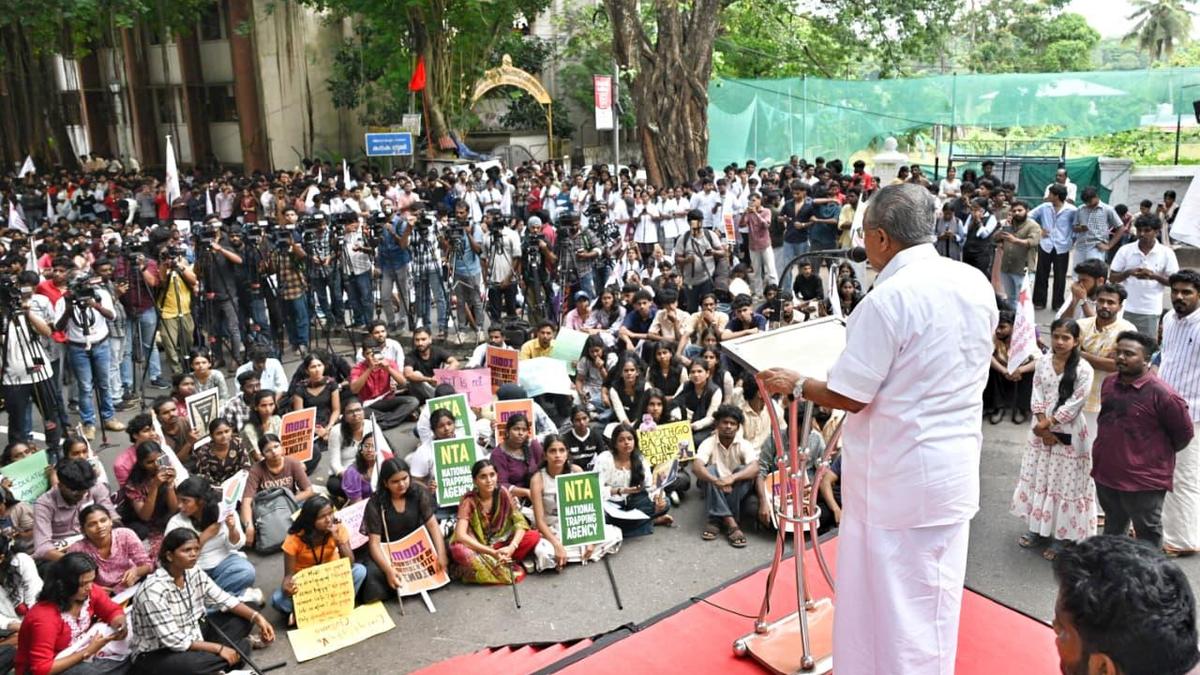
Leader of the Opposition in Kerala Pinarayi Vijayan targets Prime Minister Narendra Modi over NEET irregularities; hits out at Centre for police crackdown on student protests in New Delhi
Source Entity
India Latest News: Top National Headlines Today & Breaking News | The Hindu
Public support for the NEET protest movement has spread nationwide, featuring solidarity demonstrations in Kochi and a viral act of kindness from a Nagaland resident. Prominent figures like Shubman Gill have also publicly voiced their respect for the students' peaceful advocacy.
The NEET Protest Movement: A Wave of Nationwide Solidarity
The ongoing protests led by the Cockroach Janta Party (CJP) regarding the NEET paper leak controversy have transcended the boundaries of the national capital. What began as a localized student movement in Delhi has evolved into a broader national conversation, characterized by a diverse coalition of supporters ranging from remote sympathizers to high-profile public figures.
Digital Solidarity and Acts of Kindness
One of the most notable manifestations of this support came from a Nagaland-based social media user, @adiespoems, who sought to bridge the physical distance between himself and the protesters. By ordering 150 Domino's Farmhouse Cheese Burst pizzas—totaling ₹67,734—for the demonstrators at Jantar Mantar, he highlighted the emotional toll the controversy has taken on the youth. His act, fueled by the feeling of being unable to join his "brothers and sisters" in person, underscores the profound sense of communal identity fostered by the digital age in modern Indian activism.
Institutional and Cultural Support
The protests have also garnered attention from the sporting world. India’s ODI and Test captain, Shubman Gill, publicly expressed his "immense respect" for the students. By emphasizing that his generation deserves the opportunity to "learn, dream and shape the future," Gill’s intervention lends significant cultural weight to the protesters' cause, framing the NEET issue not merely as a technical failure, but as a fundamental challenge to the aspirations of Indian youth.
Expanding the Protest Horizon
The movement has found a physical foothold in other parts of the country, most notably in Kochi, Kerala. On July 23, 2026, a diverse group comprising techies, students, writers, and activists gathered at the Kerala High Court Junction. This cross-section of society, holding copies of the Indian Constitution, signifies that the grievances surrounding the NEET examination are being interpreted as a broader struggle for democratic rights and educational integrity.
The Role of Intellectual and Artistic Advocacy
Prominent voices in Kerala, such as actor Mathew Thomas and writer N.E. Sudheer, have utilized their platforms to urge for greater visibility for the student cause. By framing the protest as a defense of constitutional rights against perceived political pressures, these influencers are helping to sustain public interest and pressure on policy makers. The call for maximum media coverage serves as a strategic move to ensure that the students' demands remain at the forefront of the national discourse.
Future Trends and Implications
The convergence of digital activism, celebrity endorsements, and regional solidarity suggests that the NEET controversy will remain a focal point of political contention. As the movement continues to draw support from varied demographic groups, the pressure on administrative bodies to provide transparency and reform in examination processes will likely intensify. This event serves as a bellwether for how future student-led movements in India may utilize decentralized support networks to sustain long-term engagement.
Multiple Citing Sources
Verification Required?