‘I had no money, so I told Modi to buy my ticket’: Shivakumar recounts Pink Line ride on Bengaluru metro
Source Entity
Latest News: Todays Latest News Headlines from India & World | Hindustan Times
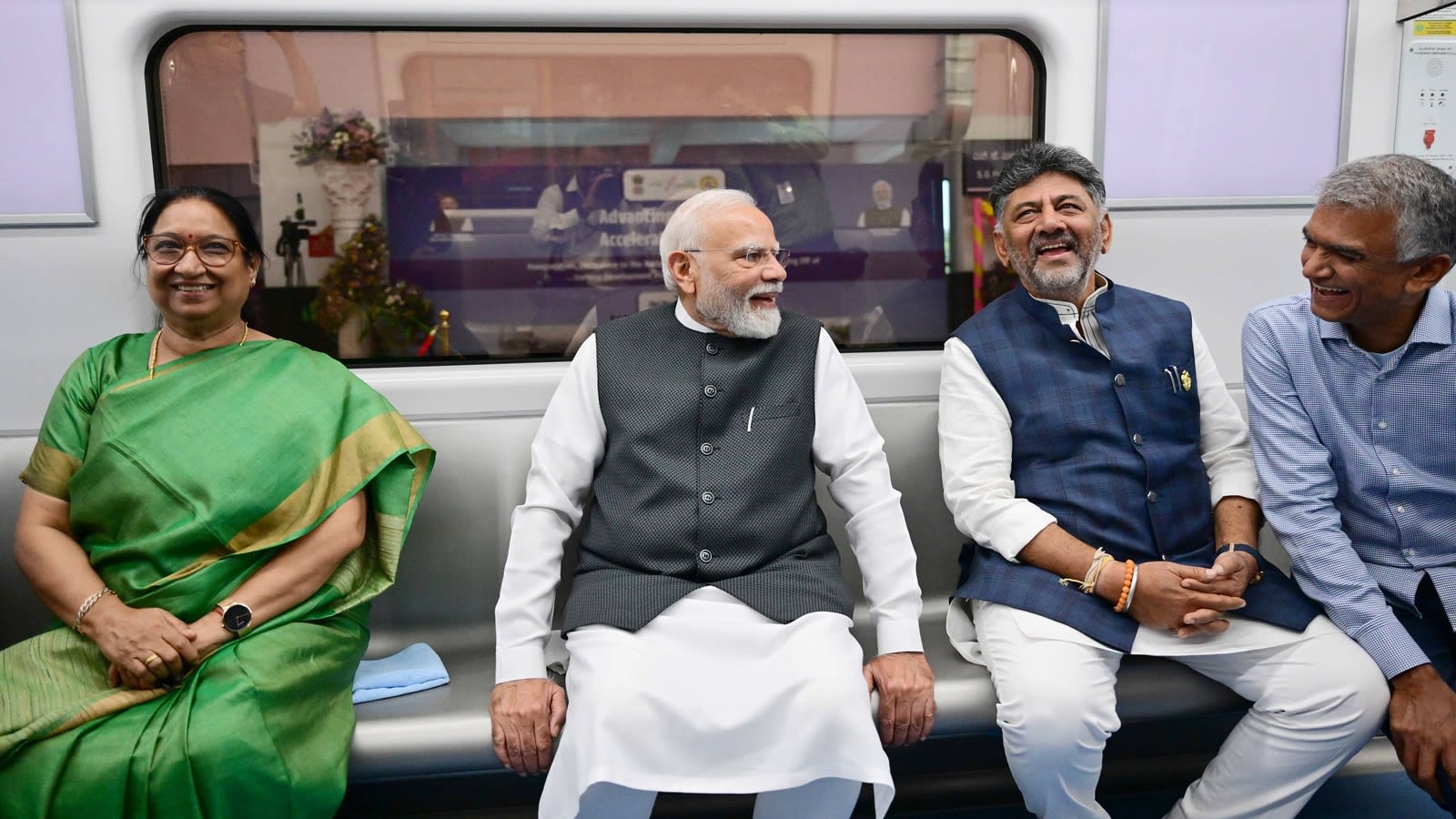
Karnataka Deputy Chief Minister DK Shivakumar recounted a light-hearted moment where Prime Minister Narendra Modi paid for his Bengaluru Metro ticket. This interaction occurred amid ongoing debates regarding the financing of the city's metro expansion projects.
A Moment of Bipartisan Interaction on the Pink Line
During a recent inspection of Bengaluru’s newly inaugurated Pink Line, a notable moment of camaraderie unfolded between Karnataka Deputy Chief Minister D.K. Shivakumar and Prime Minister Narendra Modi. As the leaders prepared to board the metro, Shivakumar jokingly remarked to the Prime Minister that he lacked the necessary funds for his ticket, prompting the Prime Minister to cover the cost by swiping his own card for both of them. This light-hearted exchange, recounted by Shivakumar to reporters, offered a brief departure from the often-tense political climate that characterizes state-center relations in India.
Separating Development from Political Rivalry
Beyond the humor of the ticket incident, Shivakumar used the opportunity to emphasize a broader philosophy regarding governance. He explicitly stated that political competition should be confined strictly to election cycles, while the pursuit of infrastructure and public development should remain an independent, collaborative priority. By publicly acknowledging the Prime Minister’s support for Bengaluru’s development, Shivakumar signaled a desire to insulate vital urban projects from the friction of partisan politics.
The Backdrop of Financial Tensions
This interaction is significant because it occurs against a backdrop of persistent friction between the Karnataka state government and the central government regarding the financing of Bengaluru’s extensive metro expansion. The Namma Metro project, which is essential for alleviating the city's notorious traffic congestion, has frequently been a point of contention involving budget allocations and project timelines. The visibility of both leaders on the Pink Line serves as a symbolic gesture of alignment, even as the underlying fiscal negotiations remain complex.
Infrastructure as a Common Goal
Bengaluru, often referred to as India’s Silicon Valley, faces immense pressure to modernize its transit infrastructure to keep pace with its rapid population growth and economic output. The Pink Line represents a crucial artery in this expansion. The cooperative imagery of the Prime Minister and the Deputy Chief Minister sharing a commute underscores the reality that major urban infrastructure projects in India require a synchronized approach between state and federal authorities to reach successful completion.
Future Implications for Cooperation
While the ticket-swiping incident was undeniably informal, it reflects a strategic shift in how high-level political figures engage in public. By framing the interaction around shared development goals rather than political disputes, Shivakumar is positioning the state government as a willing partner to the center on issues of public utility. Moving forward, observers will be watching to see if this rapport translates into more streamlined funding approvals and faster execution for the remaining phases of the metro network, proving that development can indeed transcend political boundaries.
Multiple Citing Sources
Verification Required?