Judo champion shakes up French presidential race with surprise candidacy
Source Entity
BBC News
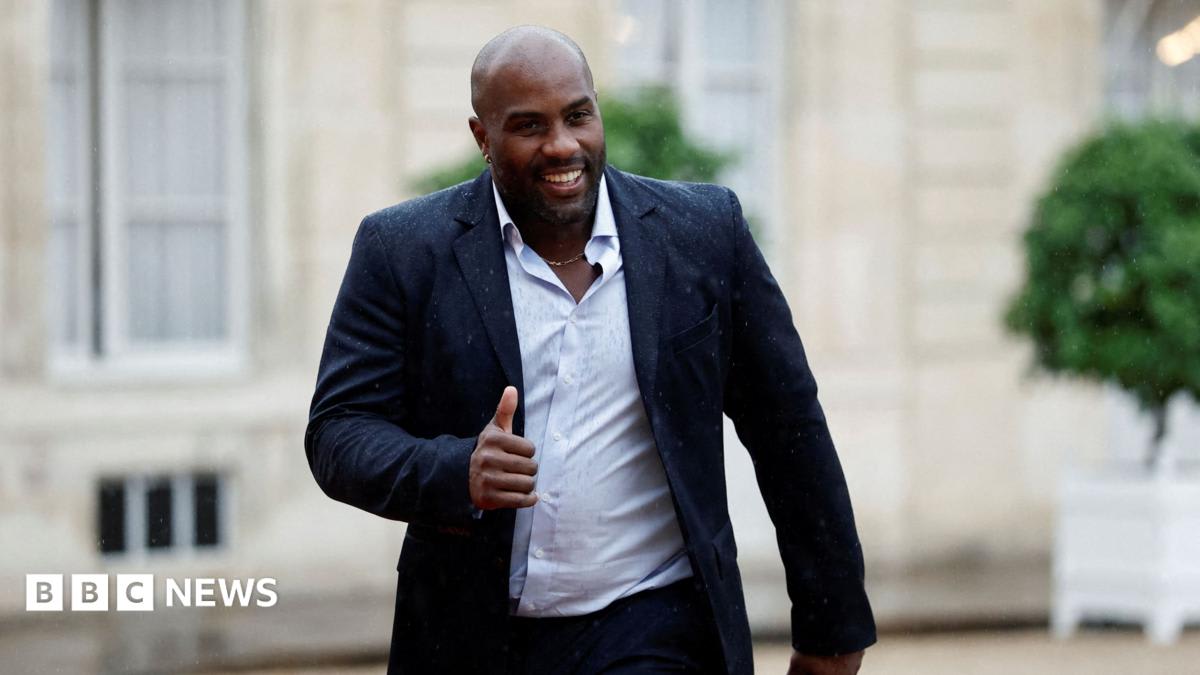
Judo champion Teddy Riner has unexpectedly entered the French presidential race, leveraging his immense national popularity. Despite his lack of political experience, his campaign has already captured the attention of one in five voters.
The Rise of an Unlikely Candidate
The French political landscape has been rocked by the sudden entry of Teddy Riner, a heavyweight judo champion, into the upcoming presidential race. Riner, a 37-year-old Guadeloupe-born athlete, has transitioned from the mats to the political arena, challenging the traditional establishment with a campaign built on national sentiment rather than partisan policy. While the connection between elite sports and high-level governance is tenuous, Riner’s entrance represents a growing global trend of celebrity figures leveraging their public profiles to disrupt established political orders.
The Power of Popularity
At the core of Riner's early momentum is his status as one of France’s most beloved figures. With one in five voters indicating a potential willingness to support him, Riner bypasses the typical barrier to entry that plagues independent candidates: name recognition. In a political climate often characterized by voter disillusionment with career politicians, Riner’s lack of experience is being framed not as a liability, but as a breath of fresh air. His ability to connect with the populace on an emotional level provides him with an unconventional but potent foundation for his campaign.
Campaign Strategy and Challenges
Currently, Riner’s campaign is in its nascent stages. Operating without a traditional party apparatus or a detailed legislative manifesto, he has relied on the slogan La France qu'on aime (The France we love). His recent visit to a hospital in the Seine-Saint-Denis suburb signals an intent to engage with pressing domestic issues, such as public healthcare and social welfare. However, the lack of a structured platform remains a significant hurdle; transitioning from a symbolic figure of national pride to a candidate capable of navigating the complex machinery of the French presidency will require a rapid professionalization of his campaign team.
Historical Context and Political Disruption
Historically, France has seen various outsiders attempt to influence the presidential race, but rarely with the immediate polling traction seen by Riner. His candidacy reflects a broader societal shift toward anti-establishment politics, where the personality of the leader often supersedes the ideological rigidity of traditional parties. By positioning himself as a candidate for all French people rather than a specific political faction, Riner is attempting to capitalize on a desire for national unity, a recurring theme in modern French political discourse.
Future Trends and Punditry
While critics argue that judo and governance share little in common, it would be a mistake to dismiss Riner’s potential impact. In an era where social media allows candidates to communicate directly with their base, Riner’s existing platform provides him with an efficient tool for mobilization. Whether he can sustain this momentum as the election cycle intensifies depends on his ability to articulate concrete solutions to France's economic and security challenges. If he succeeds, he could redefine the criteria for presidential viability in France for years to come.
Conclusion
Teddy Riner’s surprise candidacy is a testament to the volatility of the modern French electorate. By challenging the status quo with his immense public appeal, he has forced a reevaluation of what voters prioritize in their leaders. Whether or not he secures the presidency, his presence in the race has already fundamentally altered the strategic landscape for his more traditional competitors.