SIR row: DMK to skip INDIA bloc meet again, blames Congress for Akhilesh's 'absence'
Source Entity
ROHITASHWA RANJAN
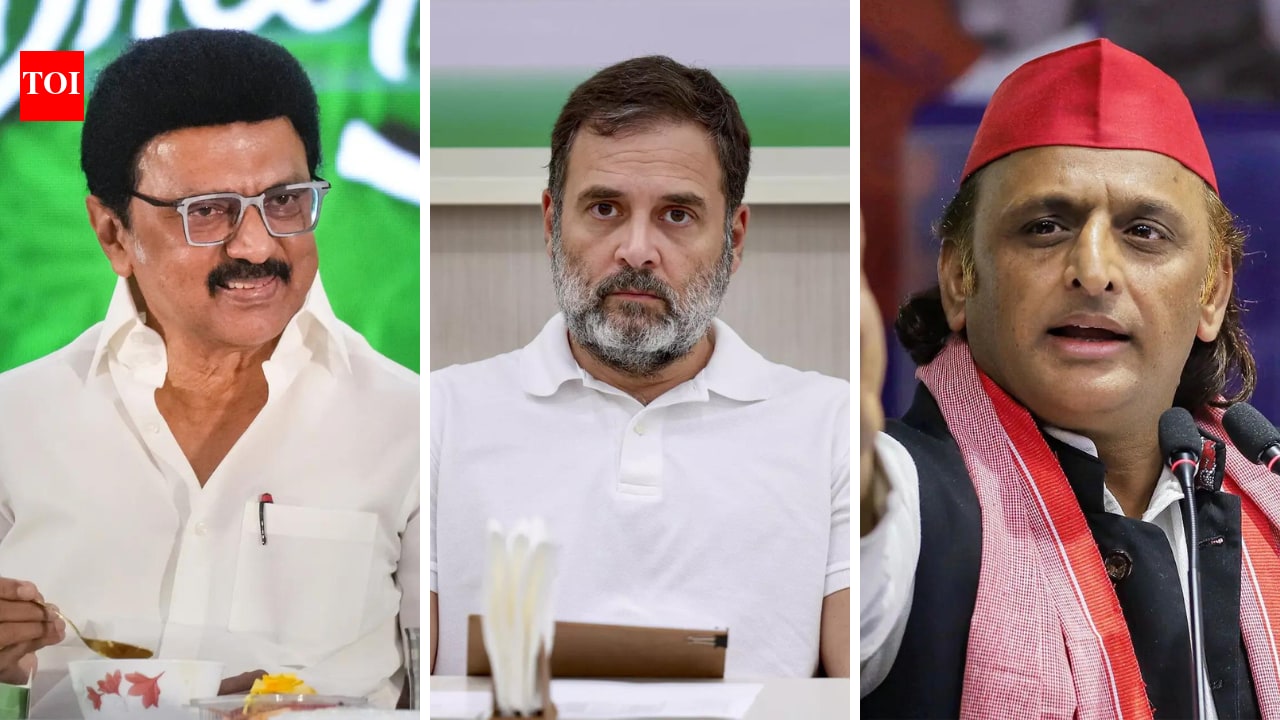
The DMK has opted to skip an INDIA bloc meeting, citing Congress's handling of Akhilesh Yadav's absence. This internal friction highlights ongoing coordination challenges within the opposition alliance.
Internal Discord Within the INDIA Bloc
The decision by the Dravida Munnetra Kazhagam (DMK) to skip the latest INDIA bloc meeting marks a significant point of tension within the opposition coalition. By publicly citing the Congress party's role in the absence of Samajwadi Party leader Akhilesh Yadav, the DMK has signaled deep-seated frustrations regarding communication and strategic alignment among alliance partners.
The Dynamics of Coordination
At the heart of this friction is the logistical and political challenge of maintaining a unified front across diverse regional interests. The INDIA bloc was formed with the primary objective of challenging the incumbent government, yet the reliance on consensus-based decision-making often falters when individual party priorities—such as those of the DMK in Tamil Nadu or the Samajwadi Party in Uttar Pradesh—are perceived to be sidelined or mismanaged by the national leadership of the Congress.
Blame Games and Political Signaling
The explicit blame placed on Congress suggests that the DMK perceives a lack of effective mediation or inclusion in high-level discussions. When a key regional ally chooses to abstain from a coordination meeting, it is rarely just about a single absence; it is a calculated political move intended to exert pressure on the coalition’s leadership to ensure that regional parties are consulted more proactively in the future.
Historical Context of Opposition Coalitions
Historically, opposition fronts in India have often struggled with the 'big tent' problem, where the interests of national parties clash with the aspirations of regional players. The DMK's move reflects a pattern seen in previous decades, where the fragility of such alliances is exposed by perceived slights. Maintaining the stability of the INDIA bloc requires a delicate balance of respect for regional mandates and centralized strategic planning.
Future Implications for the Alliance
Looking ahead, this development suggests that the INDIA bloc must address its internal communication mechanisms if it hopes to present a cohesive challenge in future electoral cycles. If the Congress cannot mitigate these grievances, the coalition risks further fragmentation, which would significantly undermine its electoral efficacy. The ability to resolve these interpersonal and inter-party disputes will be the primary test of the bloc's long-term viability.
Conclusion
In summary, the DMK's decision to skip the meeting serves as a critical indicator of the internal stress testing occurring within the opposition. While the stated reason pertains to Akhilesh Yadav's absence, the broader context is one of a struggle for influence and respect within a complex political alliance. The future of the bloc depends on its capacity to foster genuine cooperation over public finger-pointing.