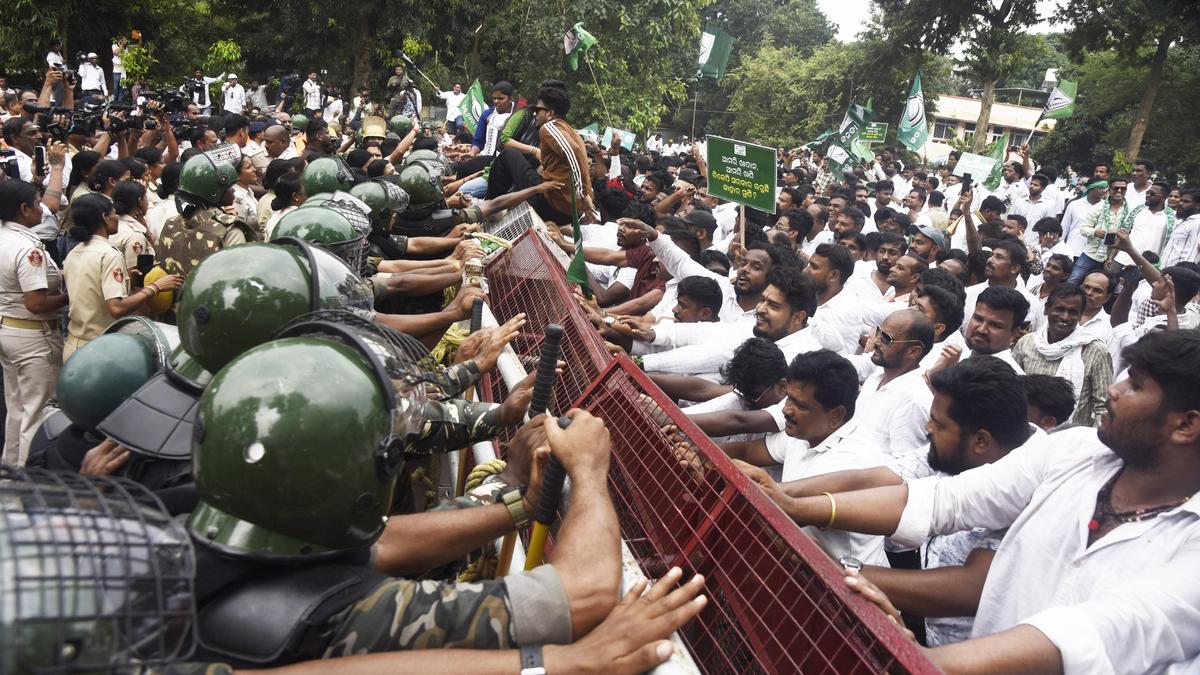
INDIA bloc announces Odisha bandh on October 8 over new mining law, other issues
Source Entity
India Latest News: Top National Headlines Today & Breaking News | The Hindu
Former Home Secretary R.K. Singh and civil society groups have leveled serious allegations of illegality against CEC Gyanesh Kumar regarding the Special Intensive Revision of electoral rolls. The Supreme Court has agreed to hear a plea seeking the CEC's suspension as pressure mounts for a return to pre-SIR voter lists.
The Crisis of Confidence in the ECI
The Indian electoral landscape is currently facing a profound institutional crisis, centered on the actions of Chief Election Commissioner (CEC) Gyanesh Kumar. Former Union Home Secretary R.K. Singh has publicly accused the CEC of engaging in "illegalities" during the ongoing Special Intensive Revision (SIR) of electoral rolls. This accusation has galvanized a segment of the political and civil society sphere, with Mr. Singh going as far as to advocate for an Opposition boycott of elections until the current ECI leadership resigns. This move underscores a growing anxiety regarding the perceived erosion of institutional independence within one of India's most vital democratic pillars.
The Controversy Over Electoral Rolls
The core of the dispute lies in the methodology and scope of the Special Intensive Revision (SIR). Civil society groups, under the banner of 'Together We Stand,' have explicitly demanded a full rollback of the SIR, calling for the restoration of voter lists to their pre-revision state. The argument posits that the SIR, as conducted, has compromised the integrity of the electorate. Critics, including senior legal minds like Kapil Sibal, have questioned the very survival of democratic norms if the foundational list of voters is perceived to be manipulated or arbitrarily altered, suggesting that future polls should revert to standard summary revision practices.
Internal Dissent and Unilateral Authority
Compounding the public outcry are reports of significant internal friction within the Election Commission of India. It has been reported that Commissioners Sukhbir Singh Sandhu and Vivek Joshi have repeatedly questioned CEC Gyanesh Kumar’s decision-making processes. These internal tensions suggest a breakdown in the collegial decision-making structure traditionally associated with the ECI. The allegation that the CEC is exercising authority unilaterally, rather than through the consensus of the three-member commission, has become a central pillar of the legal challenges now moving through the judiciary.
Legal Challenges and Supreme Court Intervention
The legal battle reached a critical juncture on September 29, 2026, when the Supreme Court of India agreed to list a petition seeking the suspension of CEC Gyanesh Kumar. Represented by senior advocate Vikas Singh, the petitioner, Rakesh Kumar Singh, has urged the court to prevent the CEC from performing his official duties pending a final hearing. Chief Justice of India Surya Kant’s decision to expedite this hearing signals the judicial branch’s recognition of the urgency surrounding the stability of the electoral body.
Broader Implications for Indian Democracy
The demands for a public social audit of the electoral rolls and the resignation of the CEC highlight a deep-seated distrust in the current administration of the ECI. If the Supreme Court finds merit in the claims of procedural illegality, the resulting fallout could necessitate a massive overhaul of recent electoral preparations. Beyond the immediate legal outcome, the situation serves as a stark reminder of the fragile balance between administrative authority and the public's right to transparent, verifiable electoral processes.
Looking Ahead: The Path to Resolution
As the nation awaits the Supreme Court’s hearing next week, the political atmosphere remains charged. The outcome of this case will likely define the parameters of ECI autonomy for years to come. Whether the court opts for a stay on the CEC's functions or mandates a return to previous electoral roll standards, the precedent set will be pivotal in restoring—or further damaging—the public’s faith in the impartiality of India's election administration.
Multiple Citing Sources
Verification Required?