DUSU counting: ABVP dominance under duress, show initial trends
Source Entity
India Latest News: Top National Headlines Today & Breaking News | The Hindu
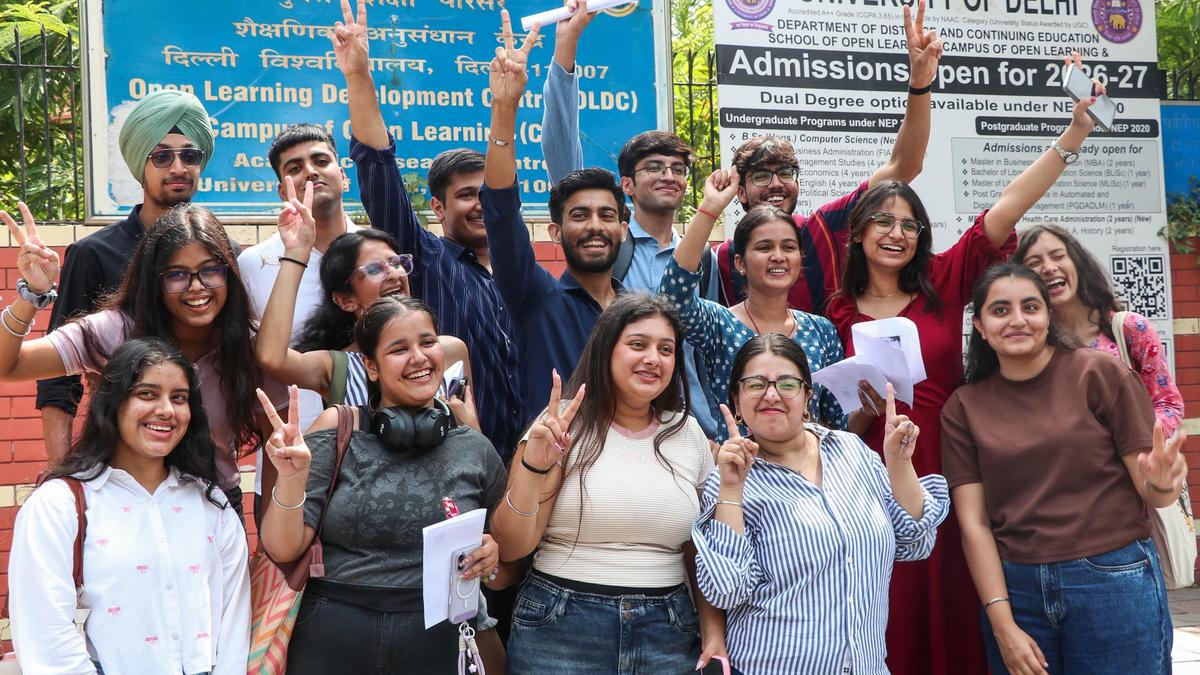
The DUSU 2026 election results are currently being counted following a 40.46% voter turnout. Initial trends indicate a tight competition between the ABVP, NSUI, and various independent and alliance candidates for the four central panel posts.
The 2026 DUSU Electoral Landscape: A High-Stakes Contest
The Delhi University Students’ Union (DUSU) elections of 2026 have emerged as a pivotal political barometer, with vote counting currently underway to determine the leadership for the 2026-27 academic session. Following a voter turnout of approximately 40.46%, the atmosphere remains tense as the major student organizations—the Akhil Bharatiya Vidyarthi Parishad (ABVP) and the National Students’ Union of India (NSUI)—vie for control over the four central panel posts: President, Vice-President, Secretary, and Joint Secretary.
Current Trends and Competitive Dynamics
As the counting progresses, the initial trends highlight a fragmented mandate rather than a clear sweep for any single organization. While the RSS-affiliated ABVP has shown strength in the races for President and Secretary, independent candidates have surprisingly surged ahead in the Vice-President and Joint Secretary categories. This shift suggests a potential move toward localized or candidate-specific voting patterns rather than strict adherence to national party lines, complicating the traditional binary competition between ABVP and NSUI.
Historical Context and Political Stakes
Understanding the current contest requires a look at the previous electoral cycle, where the ABVP dominated by securing three out of the four central panel seats. The NSUI, seeking to recover ground, has fielded a full slate of candidates, including Vijay Shankar Meena for the presidency. Meanwhile, the emergence of the Samajwadi Chhatra Sabha (SCS)—which has not held a central panel post since 2009—and the AISA-SFI left-wing alliance indicates a diversifying ideological field that challenges the entrenched duopoly of the two major national student wings.
The Impact of Recent Student Unrest
These elections are occurring against a backdrop of significant volatility. Recent protests at Jantar Mantar, fueled by grievances over alleged paper leaks and student welfare concerns, have set a combative tone for the campaign season. This environment of dissatisfaction has directly influenced the platforms of all participating groups, as candidates are forced to address systemic issues within the university administration rather than relying solely on traditional campaigning methods.
Future Implications for Student Governance
The outcome of this election will not only define the immediate governance of Delhi University but also serve as a signal for the broader political climate in student circles across India. With ten rounds of counting remaining, the final composition of the DUSU panel remains uncertain. The eventual winners will face the immediate challenge of addressing the student unrest that defined the pre-election period, making their mandate critical for maintaining stability on campus.
Concluding Outlook
As the counting continues, all eyes remain on the evolving margins between the ABVP and the NSUI. Whether the current trends hold or shift as the remaining rounds are tallied will ultimately determine if the student body favors the continuity represented by the ABVP or seeks a change through the NSUI or the independent and alliance candidates. The 2026 DUSU election thus stands as a significant test of student sentiment in the face of ongoing administrative and academic pressures.
Multiple Citing Sources
Verification Required?