One more dies in elephant attack in Hassan’s Belur taluk
Source Entity
India Latest News: Top National Headlines Today & Breaking News | The Hindu
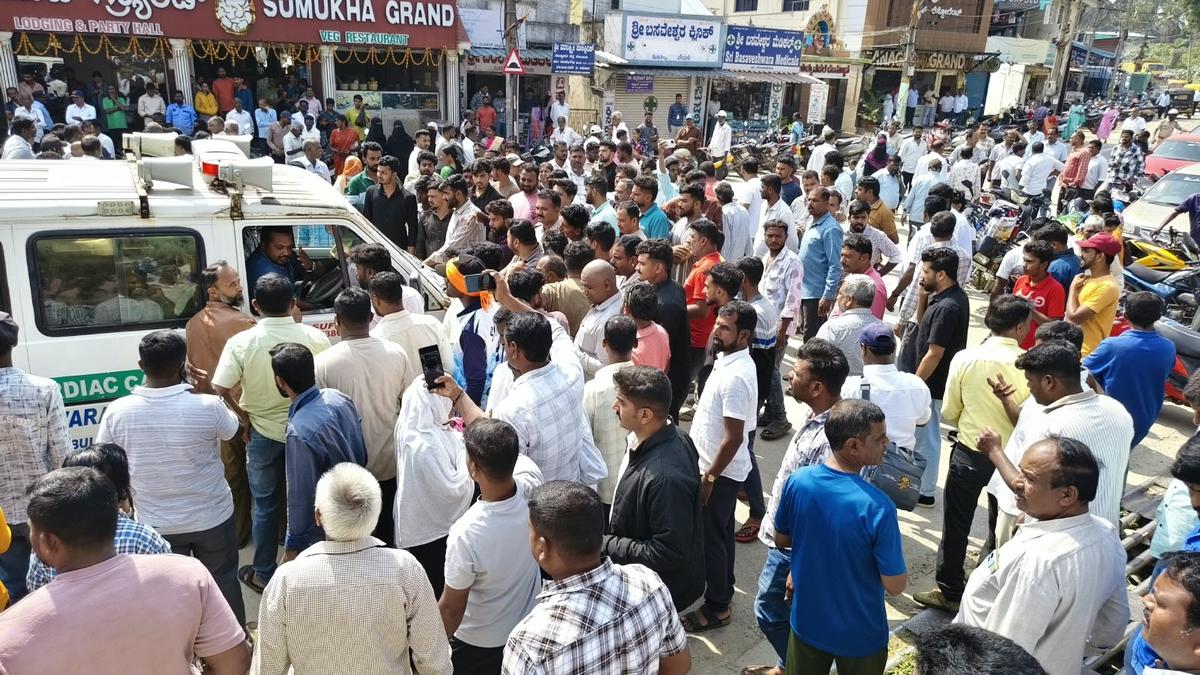
Two consecutive elephant attacks in Karnataka's Belur taluk have resulted in two deaths within three days. Local residents are staging intense protests, demanding direct intervention from the Forest Minister to address the escalating human-elephant conflict.
Escalating Human-Elephant Conflict in Belur
The recent surge in fatal elephant attacks in the Belur taluk of Hassan district, Karnataka, highlights a critical breakdown in human-wildlife coexistence. Within a harrowing 48-hour window in November 2026, two residents—65-year-old Jayamma and 60-year-old Hafees Ur Rahman—lost their lives in separate encounters. These tragedies have transformed local grief into widespread civil unrest, underscoring the severity of the human-elephant conflict in regions where agricultural zones overlap with elephant corridors.
The Impact of Habitat Encroachment
Coffee estates and grazing lands in Belur are increasingly becoming sites of lethal confrontation. As elephants move through these landscapes, they often cross paths with laborers and farmers. The death of Hafees Ur Rahman while working at a coffee estate serves as a stark reminder of the vulnerability of rural workers. These incidents are rarely isolated; they are the byproduct of shrinking habitats and fragmented corridors that force elephants into closer proximity with human settlements.
Civil Unrest and Public Demand
Following the death of Jayamma on November 14, the community responded with immediate protests, refusing to move the body until authorities addressed their grievances. The subsequent death of Hafees Ur Rahman on November 16 catalyzed further agitation, with hundreds of residents blocking roads in Belur. The protesters are not merely seeking compensation; they are demanding systemic change and direct accountability from state leadership, specifically requesting a visit from Forest Minister Ramalinga Reddy.
The Failure of Mitigation Measures
Local residents have explicitly blamed the Forest Department for what they characterize as negligence in managing the human-elephant conflict. Despite the presence of district administration officials and police, the failure to provide a 'permanent solution' has left the populace feeling abandoned. The heated arguments between protesters and police underscore the lack of trust in current mitigation efforts, such as elephant tracking or deterrent measures, which clearly have not been sufficient to prevent these recent fatalities.
Political Implications and Future Outlook
The political pressure on Minister in charge of Hassan district, K.M. Shivalinge Gowda, and Forest Minister Ramalinga Reddy is reaching a boiling point. The demand for high-level ministerial intervention suggests that local administrative measures have lost their efficacy in the eyes of the public. If the government fails to provide a long-term strategy—such as better corridor management, compensation reform, or improved early warning systems—the region is likely to witness continued social instability and further tragic losses of life.
Conclusion: A Need for Sustainable Coexistence
These tragic events in Belur are a microcosm of a larger national challenge in India: balancing economic development and agriculture with wildlife conservation. The immediate priority remains the safety of the local population, but the long-term solution requires a science-based approach to spatial planning that reduces the intersection of human activity and elephant movement. Until such measures are implemented, the tension between the residents of Belur and the Forest Department will likely remain unresolved.
Verification Required?