After signing letter to bring back Jensen Huang, Elon Musk tells how he struck deals
Source Entity
TOI TECH DESK
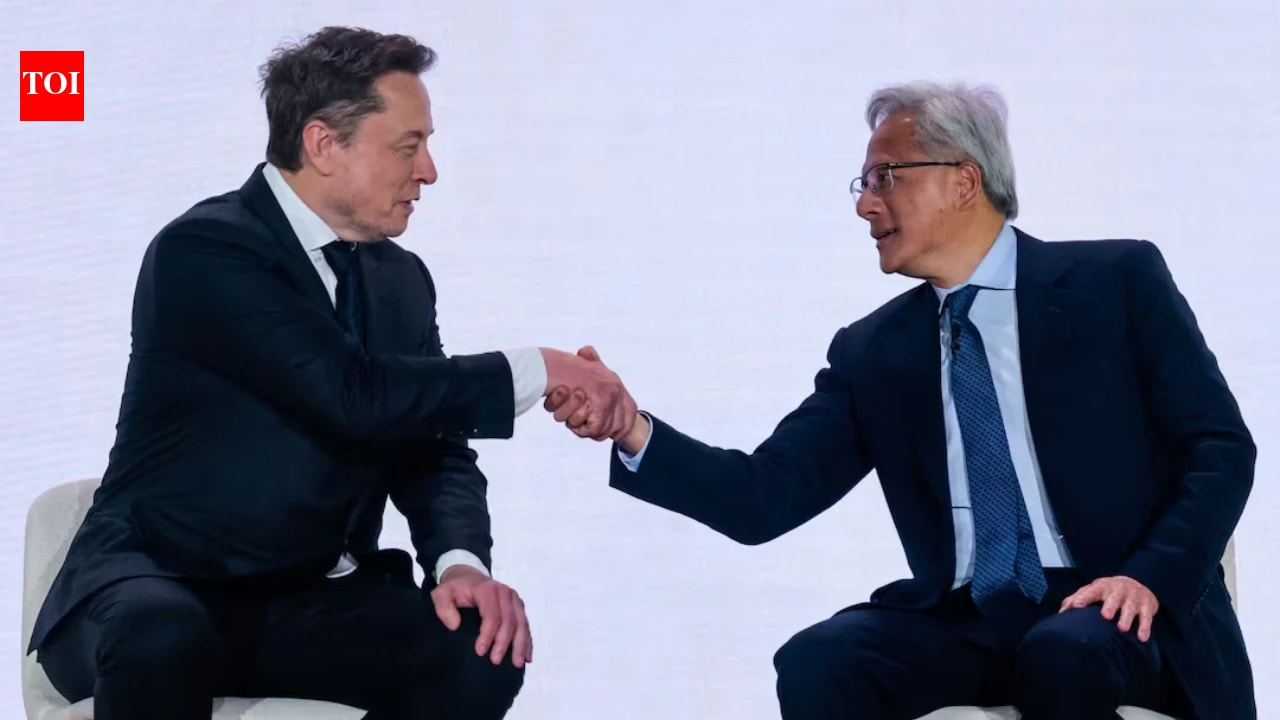
Elon Musk has joined a campaign to reinstate Jensen Huang as Nvidia's CEO, warning that the company's reliance on his personal handshake deals puts critical supply chains at risk. Huang resigned following an admission of an affair with a suspected foreign intelligence agent, leaving the firm's future leadership in flux.
The Crisis of Personal Leadership at Nvidia
The sudden resignation of Nvidia co-founder and CEO Jensen Huang on November 12 has triggered a wave of corporate uncertainty, casting doubt on the stability of the company’s complex global supply chain. Huang, who co-founded the semiconductor giant in 1993, has become synonymous with the brand. His departure, following the admission of an affair with an individual identified as a suspected Chinese spy, has created a leadership vacuum that industry leaders like Elon Musk argue could have catastrophic consequences for the company’s operational continuity.
The 'Handshake' Economy and Supply Chain Vulnerability
Elon Musk has emerged as a vocal proponent for Huang’s reinstatement, signing an open letter alongside 40,000 others urging the Nvidia board to reverse its decision. Musk’s primary concern centers on the nature of Nvidia’s supply chain management. According to Musk, many of the company’s most critical procurement and manufacturing agreements were never formalized through rigid, written contracts. Instead, they functioned as high-stakes 'handshake deals' predicated on deep personal trust and long-term professional credibility cultivated by Huang over decades.
Geopolitical and Operational Risks
This reliance on personal rapport—particularly with manufacturers and suppliers in Asia—creates a fragile ecosystem. In the semiconductor industry, where lead times are long and technical specifications are highly proprietary, these personal relationships often act as the primary glue holding production schedules together. Without Huang at the helm, these suppliers may feel no obligation to honor verbal commitments, potentially leading to a massive disruption in the supply of high-end chips that power everything from AI development to advanced computing.
The Challenge of Institutional Transition
Currently, CFO Colette Kress is serving as interim CEO, tasked with stabilizing a company that is essentially defined by its founder’s unique networking style. The board now faces a monumental challenge: proving that Nvidia’s institutional processes are robust enough to survive without the man who built them. Critics argue that if the company fails to secure these informal agreements, it could face a significant competitive disadvantage in an industry where speed-to-market is everything.
Future Implications for Nvidia
While the open letter signed by Musk and others holds no formal legal power over the board’s decision-making, it signals a significant loss of confidence from major industry players. The long-term trend for Nvidia will likely involve a painful shift toward more formal, contract-heavy operational structures to replace the lost 'handshake' era. Whether the firm can pivot quickly enough to maintain its dominance without the person who, for many, 'is' Nvidia, remains the central question facing the technology sector.
Multiple Citing Sources