Firefighters struggle to contain Madrid wildfires, as more than 140,000 evacuated in France and Spain
Source Entity
BBC News
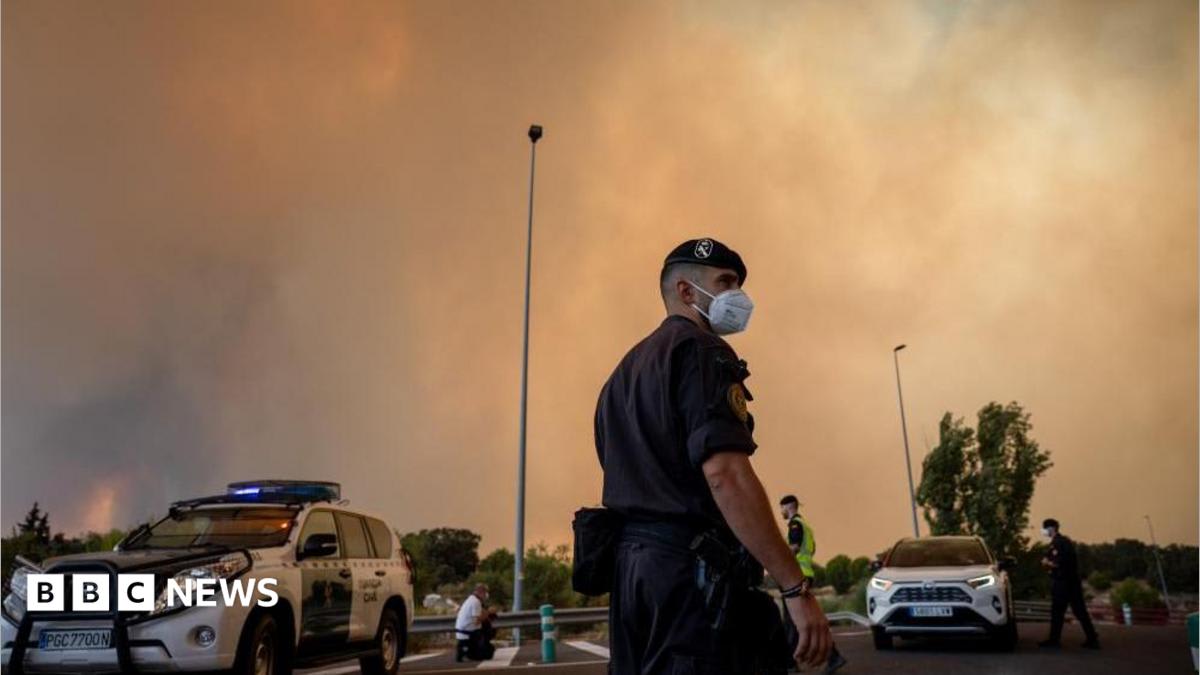
Devastating wildfires driven by an extreme European heatwave have forced over 140,000 evacuations across France and Spain. Authorities are struggling to contain these historic blazes as climate conditions create a perfect storm for fire spread.
A Crisis of Fire: Europe's Historic Wildfire Emergency
Southwestern Europe is currently grappling with a catastrophic wildfire crisis that has displaced over 140,000 people across France and Spain. Triggered by a persistent and intense heatwave, these blazes have ravaged tens of thousands of hectares, overwhelming local emergency services and prompting national emergency declarations. The scale of the displacement, particularly in the Gironde and Landes regions of France and the areas surrounding Madrid, underscores the unprecedented nature of these environmental disasters.
The Meteorological 'Perfect Storm'
The current crisis is being driven by a convergence of extreme weather factors. Climate researchers have identified a 'perfect storm' consisting of soaring ambient temperatures, exceptionally dry conditions, and strong, unpredictable winds. These elements have exacerbated the difficulty for firefighting teams, as seen near Madrid, where three separate fires merged into a single, uncontrollable front. In France, the situation is similarly dire, with fires spreading from the village of Saumos toward the Cap-Ferret peninsula, an area known for its dense pine forests and high tourist concentration.
Institutional Response and Resource Strain
The sheer magnitude of these fires has pushed local resources to their breaking point. In Spain, officials have officially described the situation as the worst fire in the history of the Madrid region, noting that the intensity is currently beyond the containment capacity of local forces. France, recognizing the limitations of its domestic resources, has formally requested assistance via the European Union’s Civil Protection Mechanism. This reliance on inter-governmental support highlights the reality that modern wildfire events often transcend national borders and require a unified, international response strategy.
The Role of Marine Heatwaves
Compounding the terrestrial heat, experts have pointed to the influence of a severe marine heatwave gripping the Mediterranean Sea. When sea surface temperatures reach such abnormally high levels, they contribute to the overall destabilization of regional weather patterns. This creates a feedback loop where the heat from the sea fuels the heatwaves on land, creating the 'Dantesque' scenarios that researchers have warned may become a recurring reality if current climate trends persist.
Socio-Economic and Environmental Impacts
The evacuations of tens of thousands of people, including residents and tourists in popular destinations, have caused significant social disruption. Beyond the immediate human impact, the ecological damage to regions like the Gironde is profound. The destruction of pine forests and the encroachment of fires toward major cities like Bordeaux threaten both the local economy and the regional biodiversity. As these areas face the loss of their natural landscapes, the long-term recovery process will likely require significant investment and a reevaluation of forest management strategies in the face of a changing climate.
Future Trends and Concluding Summary
As we look forward, the trend of increasingly volatile fire seasons in Southern Europe appears to be a direct consequence of shifting global climate patterns. The combination of prolonged droughts and record-breaking heat creates a landscape primed for ignition, making fire prevention and rapid response capabilities critical. The events in France and Spain serve as a grim indicator that traditional firefighting methods are being challenged by modern climate extremes, necessitating a shift toward more robust, collaborative, and preventative environmental policies to mitigate future disasters.
Multiple Citing Sources