How the words we teach English language learners changed
Source Entity
Hacker News
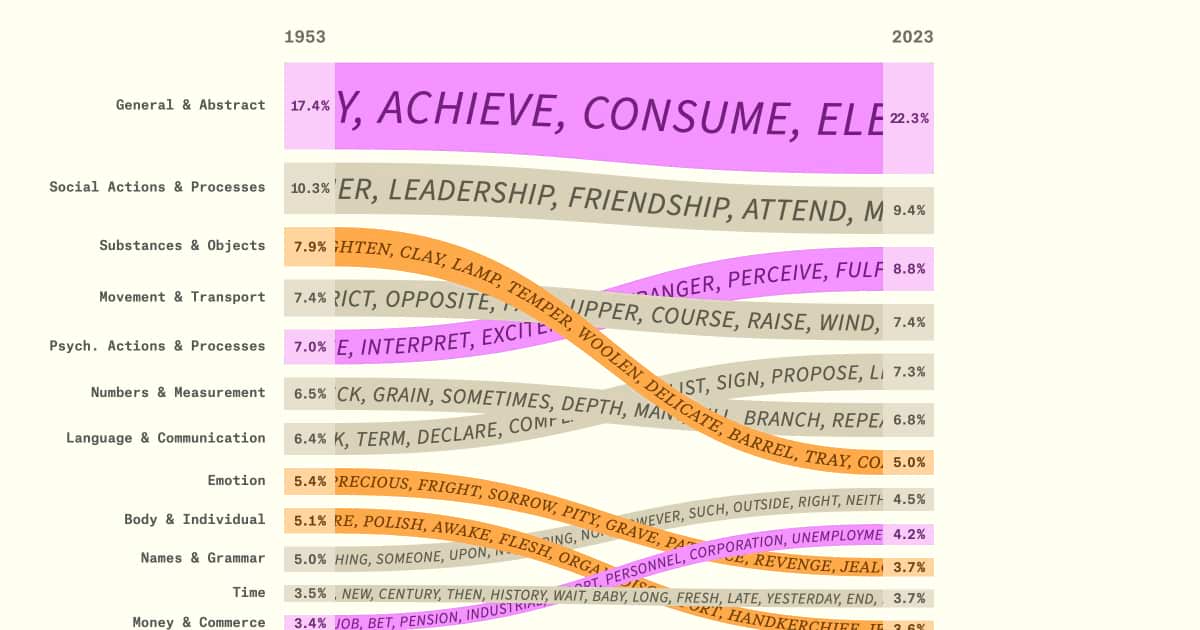
The evolution of English teaching tools is marked by the General Service List and its modern successor, the New General Service List. These resources prioritize high-frequency vocabulary to ensure learners gain maximum comprehension of everyday English.
The Evolution of Essential Vocabulary in English Language Learning
For decades, the field of English Language Teaching (ELT) has relied on empirical data to streamline the acquisition process for non-native speakers. Central to this pedagogical strategy are the General Service List (GSL) of 1953 and its modern successor, the New General Service List (NGSL), most recently revised in 2023. These lists serve as the foundational bedrock for curriculum designers, providing a scientifically curated selection of words that represent the most frequent and functional elements of the English language.
Data-Driven Pedagogy: From 1953 to 2023
The transition from the 1953 GSL to the 2023 NGSL represents a significant leap in linguistic accuracy. While the original 1953 list provided a solid framework for learners, it was constrained by the computational limitations of its era. By contrast, the 2023 list leverages contemporary corpus linguistics, tracking vast amounts of real-world usage data. This shift allows educators to move away from intuitive guessing and toward a model where a word’s inclusion is strictly determined by its utility and prevalence in modern communication.
The Metric of Coverage
The primary objective of these lists is to achieve maximum "coverage"—the percentage of words a learner will encounter in a typical text. The 1953 list offered approximately 84% coverage of everyday English, a remarkable feat for its time. However, the 2023 list has pushed this threshold to over 90%. This improvement is not merely numerical; it represents a fundamental change in how learners interact with the language, allowing them to decipher the vast majority of common speech and literature with a relatively small, highly optimized vocabulary.
The Selection Criteria: Frequency and Context
What makes these lists indispensable is the rigorous selection process. A word does not earn its place on the NGSL through arbitrary choice; it must demonstrate high frequency across diverse contexts. By analyzing what native speakers are actually reading and saying in a wide array of social and professional settings, researchers identify the "unavoidable" vocabulary. This ensures that learners are not wasting time on archaic or overly specialized terms, but are instead mastering the core lexicon necessary for survival and integration in an English-speaking society.
Broader Implications for Global Communication
As English continues to serve as the global lingua franca, the importance of these lists grows exponentially. They provide a roadmap for efficient learning, reducing the barrier to entry for millions of people worldwide. By focusing on the most functional vocabulary, these tools empower learners to attain communicative competence more rapidly. This democratization of language learning is essential in a globalized economy where English proficiency remains a primary driver of social and economic mobility.
Future Trends and Conclusion
Looking forward, the methodology behind the NGSL suggests a future where language teaching is increasingly adaptive. As digital communication patterns shift—incorporating new jargon and evolving syntax—the lists will likely undergo further iterations to maintain their 90%+ coverage rate. Ultimately, the GSL and NGSL stand as testaments to the power of data in education. By grounding teaching tools in empirical evidence, we ensure that the next generation of English learners is equipped with the most relevant and powerful linguistic weapons at their disposal.