How family legacy translates into political leadership
Source Entity
India Latest News: Top National Headlines Today & Breaking News | The Hindu
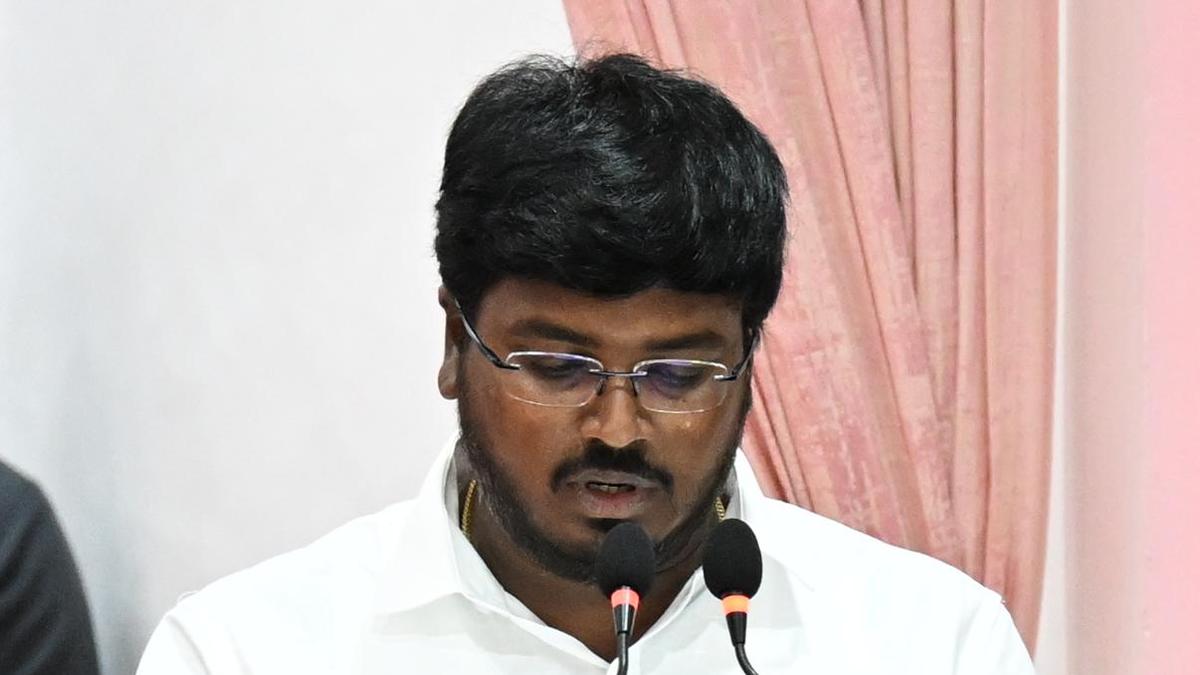
The narrative explores how personal reputation and social standing in local communities serve as foundational political capital. Through the lens of a reporter's experience in Ramanathapuram, it illustrates how influence is cultivated and maintained.
The Architecture of Influence: Reputation as Political Capital
In the intricate landscape of regional politics, the transition from social standing to political influence is rarely a sudden event. Instead, it is a process built upon the bedrock of reputation. As seen in the case of Veluchamy, a civil contractor in Ramanathapuram, the ability to command respect within a community often precedes formal political power. His stature, characterized by a quiet demeanor and the deference shown to him by others, demonstrates that true influence is often exercised through informal networks before it manifests in public office.
The Role of Social Infrastructure
For a reporter entering an unfamiliar territory, the 'lodge' acts as a microcosm of local power dynamics. By observing who controls these spaces and how they manage them, one can discern the hierarchies of a town. Veluchamy’s role as both a business owner and a community figure highlights how professional success—in his case, specializing in ONGC works—often serves as a gateway to broader social leadership. This economic stability provides the necessary independence for an individual to act as a patron or a mentor, further cementing their status among the local populace.
Generational Continuity and Civic Trust
Family legacy often functions as a shorthand for trust in political contexts. When a family has established a track record of reliability, whether through civil works or community management, that trust is inherited by the next generation. This 'political capital' is a tangible asset. It allows individuals to navigate complex social situations with ease, as seen when Veluchamy was able to immediately assess a newcomer’s character and provide them with the resources needed to succeed in their work.
The Mechanics of Informal Power
It is essential to understand that political leadership is not solely defined by electoral victories; it is fundamentally about the ability to influence outcomes. Veluchamy’s 'Man Friday' arrangement for the reporter serves as a perfect example of how power is exercised on the ground. By providing support and facilitating access, a person of standing effectively shapes the environment around them. This level of control, while subtle, is the primary indicator of how family names become synonymous with regional authority.
Broader Implications for Political Dynamics
Looking forward, the persistence of these local power structures suggests that grassroots politics will continue to rely heavily on personal histories. In an age where digital influence is rising, the traditional model of the 'local patriarch' remains a dominant force, particularly in non-metropolitan areas. Understanding this dynamic is crucial for any analysis of regional governance, as it highlights why certain families retain their relevance across decades regardless of shifting political tides.
Conclusion
Ultimately, the story of Veluchamy illustrates the bridge between private reputation and public leadership. By leveraging his standing as a contractor and a respected community elder, he exemplifies the quiet, steady accumulation of political capital that defines much of the local political landscape in India. This legacy-based approach ensures that influence is not merely held, but actively cultivated through daily interactions and community service.
Verification Required?