BBC Verify speaks to woman who filmed ICE agent pointing gun at her
Source Entity
BBC News
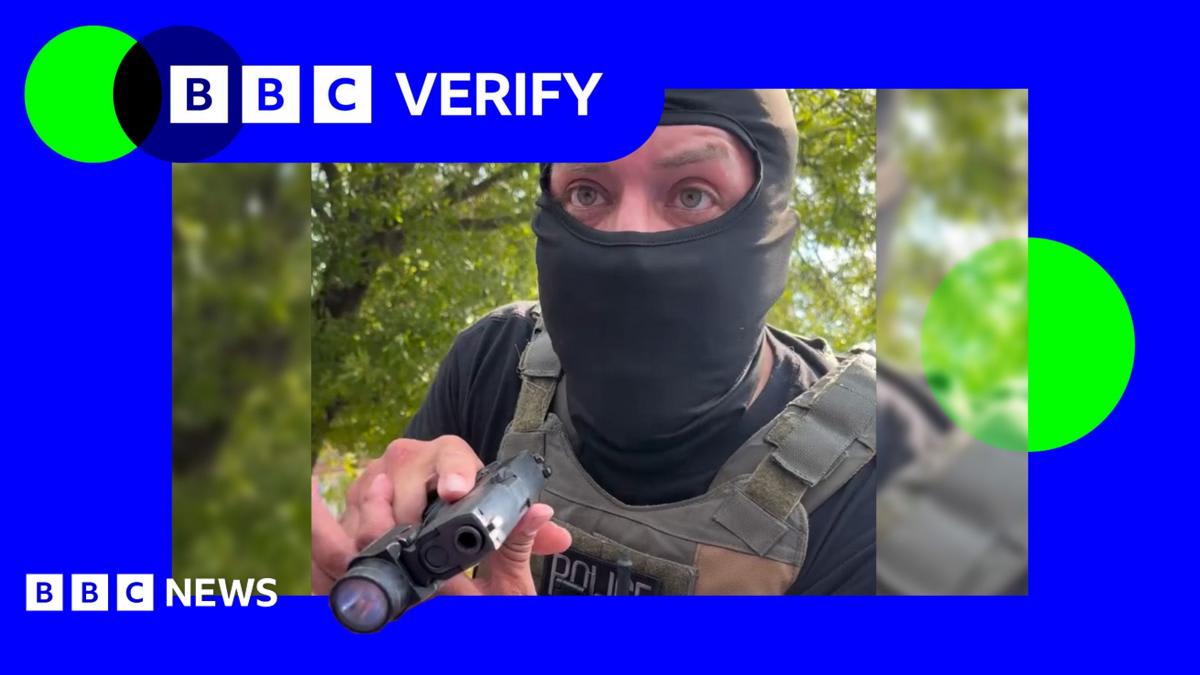
A viral video in Falls Church, Virginia, shows an ICE agent pointing a weapon at a woman during an encounter. While the woman claims she was simply distributing business cards, the Department of Homeland Security alleges she attempted to use her vehicle as a weapon.
Confrontation in Falls Church: Analyzing the ICE Incident
Recent footage surfacing from Falls Church, Virginia, has ignited a significant public debate regarding the conduct of U.S. Immigration and Customs Enforcement (ICE) agents. The video, which has garnered millions of views since being shared on Instagram by Carolina Molina, captures a tense interaction in which an armed federal agent points his weapon directly at the civilian. This visual evidence has prompted an investigation by BBC Verify, which sought to dissect the sequence of events leading to the escalation.
Conflicting Narratives and Official Responses
The core of this incident lies in the starkly different accounts provided by the parties involved. Carolina Molina maintains that she was engaged in the routine task of delivering business cards when she was suddenly surrounded by federal agents. Conversely, the U.S. Department of Homeland Security (DHS) has issued a statement asserting that Molina 'attempted to harm officers by weaponising her vehicle.' This direct contradiction highlights the high-stakes nature of federal enforcement encounters and the difficulty in discerning truth without comprehensive, multi-angle evidence.
The Role of Digital Verification
In the modern era, dashcam and mobile footage serve as critical tools for accountability. BBC Verify’s involvement underscores the necessity of independent scrutiny when official accounts are challenged by citizen-recorded media. By analyzing the provided footage, journalists aim to bridge the gap between subjective experience and objective reality. This process is essential for maintaining public trust, particularly when federal agents are accused of using lethal force or threatening behavior during routine or non-lethal operations.
Broader Implications for Federal Enforcement
This incident touches upon broader concerns regarding the operational tactics of immigration enforcement agencies. When agents are perceived as aggressive or overstepping, it can erode community relations and create an atmosphere of fear that hinders cooperation. The allegation of 'weaponizing a vehicle' is a serious charge that suggests an immediate threat to officer safety; however, the public release of the footage forces a necessary conversation about the threshold for drawing a firearm in a civilian encounter.
Historical Context and Future Trends
The tension between federal enforcement agencies and the communities they operate within is not a new phenomenon. Historically, such interactions have often led to calls for increased body-worn camera mandates and stricter protocols for the use of force. As dashcam technology becomes ubiquitous, the frequency of such 'he-said, she-said' scenarios will likely increase, placing greater pressure on agencies to provide transparency and clear justification for their tactical decisions. This case serves as a poignant reminder of the ongoing struggle to balance national security mandates with individual civil rights.