Shuffle the back rank, keep the score: A guide to Chess960, the Fischer variant that will get an official Fide rating
Source Entity
Latest News: Todays Latest News Headlines from India & World | Hindustan Times | Hindustan Times
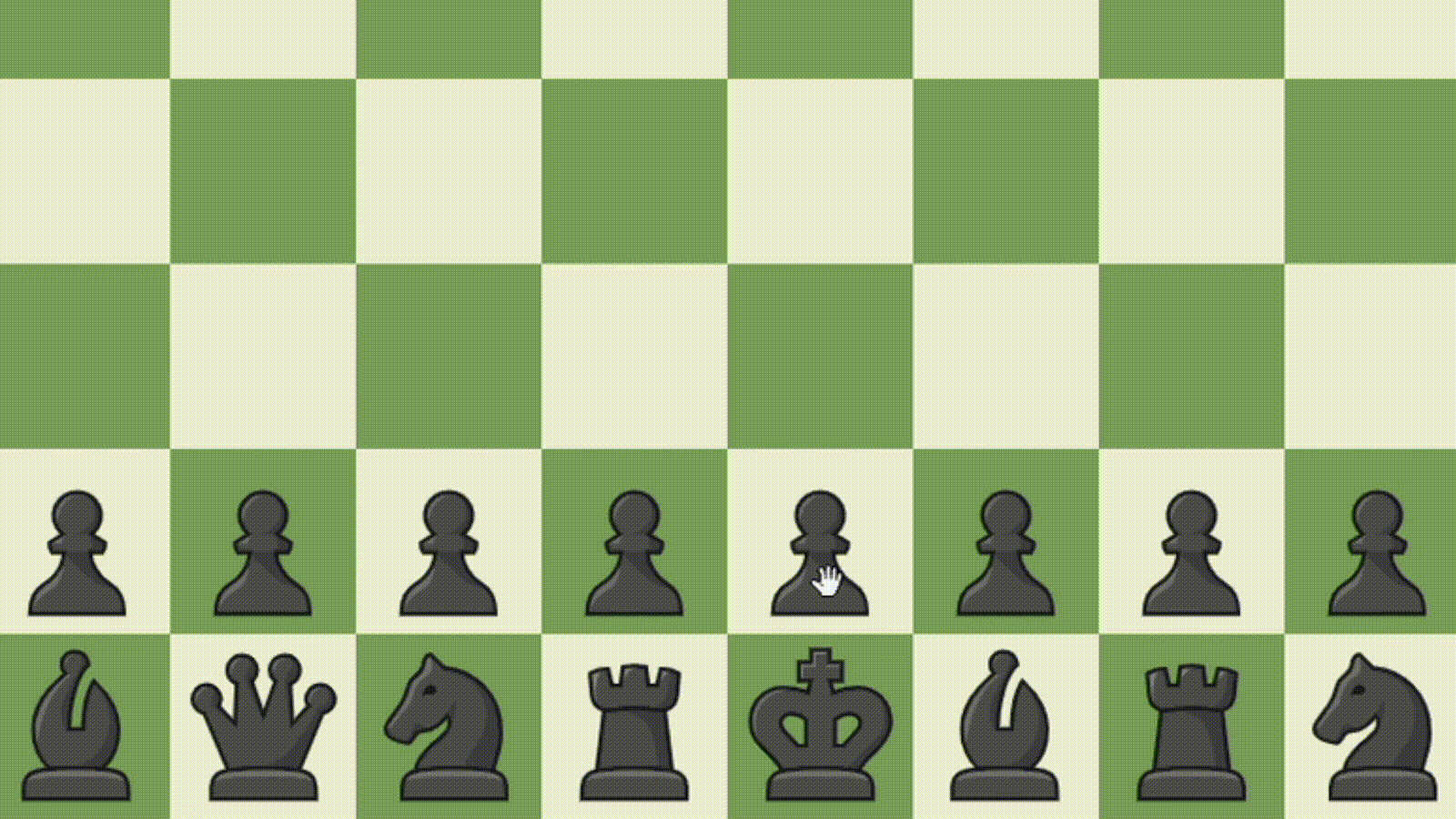
FIDE has officially approved a rating system for Chess960, a variant created by Bobby Fischer that randomizes starting piece positions. This move aims to prioritize player creativity over memorized opening theory, marking a significant evolution in competitive chess.
The Evolution of Strategy: FIDE Embraces Chess960
A New Era for Competitive Chess
The International Chess Federation (FIDE) has officially signaled a major shift in the professional landscape by approving a dedicated rating system for Chess960, also known as Fischer Random. This decision marks the formal institutional recognition of a variant that has long existed on the fringes of elite competition. By legitimizing Chess960, FIDE is acknowledging that the traditional game, while historically rich, faces a modern crisis of "theory overload" where top-level matches are often decided by deep memorization of opening lines rather than immediate, intuitive problem-solving.
The Philosophy of Bobby Fischer
Conceived by Bobby Fischer in the 1990s, the variant was designed as a direct response to the increasing reliance on computer-assisted preparation. The core mechanism is elegant yet disruptive: the back rank of the chessboard is randomized at the start of each game. Adhering to specific constraints to ensure the game remains playable—such as keeping the bishops on opposite-colored squares and ensuring the king is placed between the rooks for castling—the system generates 960 possible starting configurations. This effectively nullifies years of rote learning and forces players to rely on their fundamental understanding of tactical motifs and strategic positioning from the very first move.
Breaking the Chains of Preparation
In traditional chess, elite grandmasters frequently navigate the first 20 to 30 moves using pre-analyzed lines generated by powerful chess engines. This reliance on "book moves" has led to a high draw rate at the highest levels, which some critics argue stifles the creative spirit of the game. Chess960 addresses this by stripping away the safety net of preparation. When the starting position is unknown until the clock starts, the game becomes a test of pure chess intuition and adaptation, effectively leveling the playing field between players with massive research teams and those who rely on raw talent.
Global Implications and Growth
The decision to implement an official rating system is a response to the surging popularity of the format among both amateurs and professionals. By providing an official FIDE rating, the governing body is incentivizing players to treat the variant with the same seriousness as classical chess. This move is likely to attract sponsorships for new tournaments, encourage chess software developers to update their engines for non-standard positions, and fundamentally change how chess is taught at the youth level, where the focus may shift toward universal principles over specific opening traps.
Future Trends in the Sport
Looking ahead, the integration of Chess960 into the professional circuit suggests a future where "Freestyle Chess" may eventually occupy a significant portion of the international calendar. As the game continues to evolve, we may see a bifurcation of professional chess careers, where players specialize in either traditional, theory-heavy classical chess or the volatile, creative environment of Chess960. This diversification will likely enhance the overall appeal of chess as a spectator sport, as the unpredictability of the initial setup promises more decisive results and dynamic encounters that are less susceptible to engine-induced stagnation.
Conclusion
FIDE’s formal recognition of Chess960 is more than just an administrative update; it is a profound nod to the necessity of innovation within a centuries-old tradition. By prioritizing the human element of creativity over the deterministic nature of computer-aided preparation, the chess world is ensuring that the game remains a vibrant, challenging, and evolving test of human intellect. This transition to a rated format secures the legacy of Fischer’s vision and sets the stage for a new generation of players defined by their agility and strategic versatility.
Verification Required?