Bolsonaro declares himself Brazil’s ‘true president’, vows to lead opposition from US
Source Entity
PRISHA PATNAIK
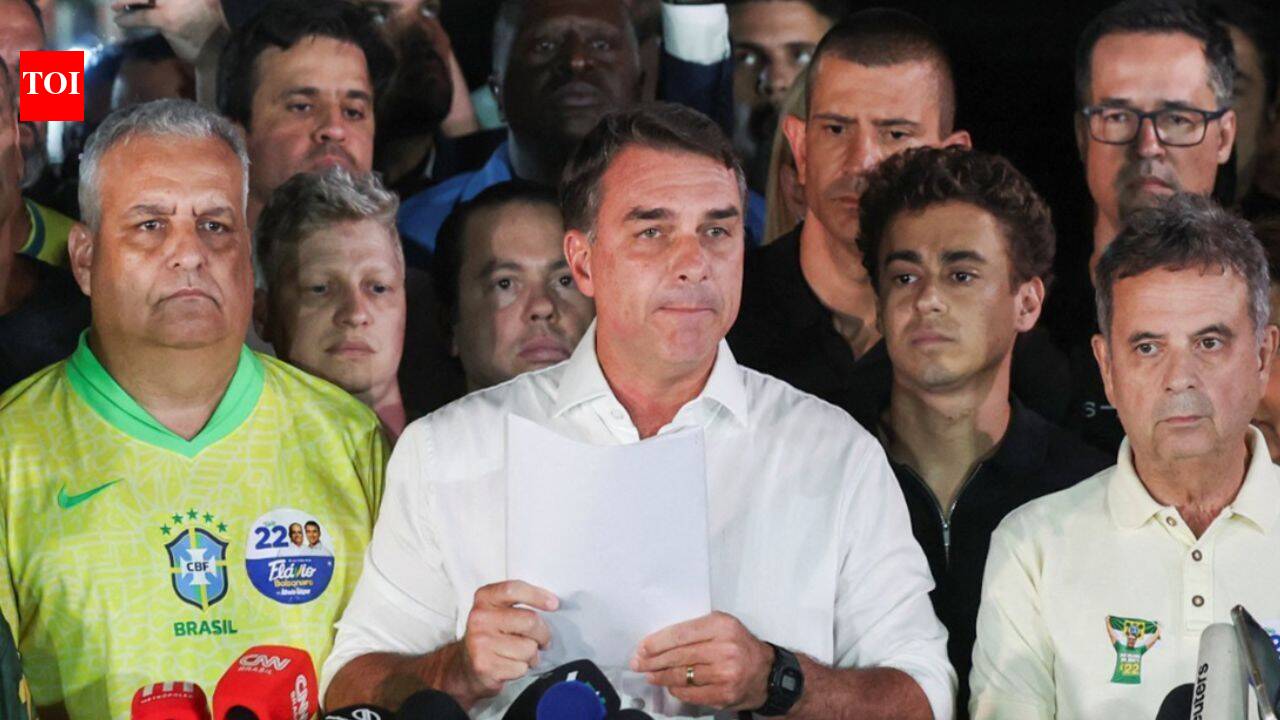
Senator Flávio Bolsonaro has fled to the U.S. following his defeat in the Brazilian presidential election and his failure to comply with a court order to surrender his passports. Brazilian authorities have subsequently cancelled his travel documents amid an ongoing money laundering investigation.
The Political Exile of Flávio Bolsonaro
A Contested Exit Amidst Legal Turmoil
Senator Flávio Bolsonaro’s departure to the United States marks a volatile turn in Brazilian politics following his defeat to Luiz Inácio Lula da Silva. With Lula securing over 64 million votes against Bolsonaro’s nearly 60 million, the margin of 4.4 million votes was decisive. Yet, the transition is marred by the senator’s refusal to concede, citing alleged voter irregularities—a strategy that mirrors the confrontational political rhetoric often employed by his father, former president Jair Bolsonaro.
The Passport Controversy and Judicial Oversight
The situation escalated rapidly when the Brazilian Supreme Court mandated that Flávio Bolsonaro surrender his passports within 24 hours as part of an active money-laundering investigation. Despite his public assurances that he intended to remain in Brazil to lead the opposition, the senator failed to comply with the deadline. Consequently, Brazilian authorities moved to cancel his travel documents, attempting to curb his movement as federal officers began monitoring border crossings to determine his exact location and departure route.
International Dimensions and US Visa Policy
Despite the legal restrictions placed upon him by Brazilian authorities, the U.S. State Department confirmed that it would grant visas to Flávio Bolsonaro and his family. This decision highlights the complex intersection of diplomatic relations and personal legal battles. The State Department's move to facilitate his entry, notwithstanding the ongoing corruption and tax evasion investigations in Brazil, underscores the high-stakes nature of international political asylum and the diplomatic complexities surrounding high-profile figures fleeing domestic legal accountability.
Echoes of the Past: The Bolsonaro Precedent
This event draws immediate and inevitable comparisons to the trajectory of his father, Jair Bolsonaro, who similarly traveled to the United States following his 2022 electoral loss to Lula. The elder Bolsonaro’s eventual return to Brazil and subsequent 27-year prison sentence serve as a stark backdrop to the current crisis. For the younger Bolsonaro, the departure represents an attempt to evade the immediate reach of the Brazilian judiciary, mirroring a pattern of behavior that has defined the family's recent political history.
Future Implications for the Brazilian Opposition
As Lula prepares to take office on January 5, 2027, for his fourth non-consecutive term, the absence of a key opposition figure like Flávio Bolsonaro creates a power vacuum within the Liberal Party. By choosing to flee rather than contest the results through formal domestic channels, the senator risks alienating his base and weakening the structural integrity of his party. The long-term impact of this self-imposed exile will likely depend on whether he can maintain political relevance from abroad or if he will face eventual extradition, similar to the fate of his father.
Multiple Citing Sources