Foreign Secretary Misri meets Vice President of Chinese Communist Party Central School
Source Entity
India Latest News: Top National Headlines Today & Breaking News | The Hindu
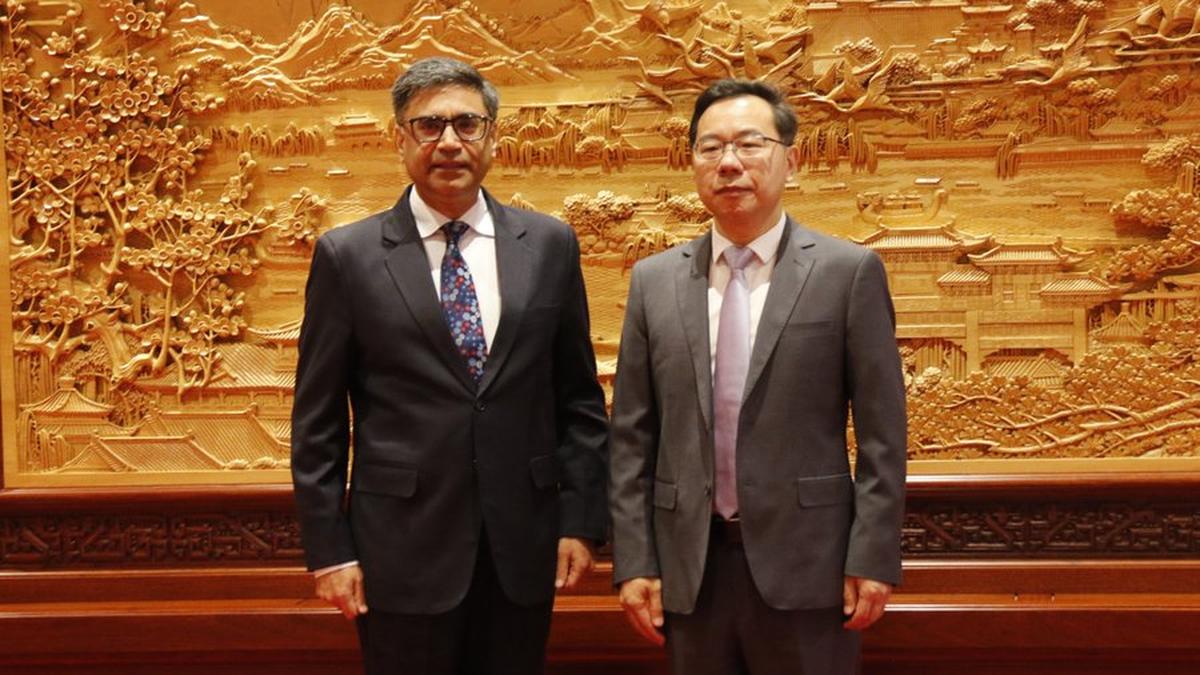
Foreign Secretary Vikram Misri met with Li Wentang, Vice President of the Communist Party of China's Central Party School, during his official visit to Beijing. The discussions focused on fostering future academic cooperation and institutional exchanges between the two nations.
Diplomatic Engagement: Misri’s Visit to Beijing
On July 28, 2026, Indian Foreign Secretary Vikram Misri conducted a significant official visit to Beijing, marking a notable moment in ongoing bilateral diplomatic efforts. A central highlight of this trip was his meeting with Li Wentang, the Vice President of the Central Party School of the Communist Party of China (CPC), an institution that serves as the premier training ground for China’s political elite and senior officials.
The Role of the Central Party School
The Central Party School, also known as the National Academy of Governance, represents the intellectual backbone of the Chinese political system. By engaging with this specific institution, the Indian delegation is participating in high-level institutional diplomacy. During the meeting, Mr. Misri was provided with insights into the school’s historical significance, its ongoing intellectual contributions, and its diverse academic programmes, as confirmed by official reports from the Indian Embassy in China.
Strategic Implications of Institutional Exchange
Foreign Secretary Misri’s visit signifies a deliberate effort to maintain channels of communication at both governmental and academic levels. While the meeting focused on the academic and historical framework of the school, such interactions often serve as a barometer for the state of bilateral relations. Exploring avenues for future cooperation and exchanges suggests a desire to foster mutual understanding, even amidst the complexities that define the India-China relationship.
Contextualizing Bilateral Relations
Historically, the relationship between India and China has been characterized by a delicate balance of competition and the necessity for diplomatic engagement. By meeting with a figure representing the ideological and administrative training hub of the CPC, the Foreign Secretary is engaging with the very mechanism that shapes Chinese governance policy. This level of interaction is critical for high-level officials to gain a deeper understanding of the internal priorities and academic discourse currently shaping Chinese leadership.
Future Trends in Diplomatic Cooperation
Looking forward, the emphasis on academic and institutional exchanges may pave the way for more structured dialogues. If both nations continue to prioritize these channels, it could lead to increased transparency and a reduction in policy miscalculations. The focus on future cooperation, as discussed by Misri and Li, indicates that despite broader geopolitical tensions, there remains a tangible interest in maintaining a functional, if cautious, bilateral dialogue.
Conclusion
In summary, Vikram Misri’s meeting at the Central Party School is a strategic move to reinforce diplomatic ties through institutional engagement. By acknowledging the academic and historical weight of the school, the Indian delegation has signaled its commitment to sustained interaction. This visit underscores the importance of continued diplomatic presence in Beijing as a means of navigating the multifaceted challenges of the 21st-century international landscape.
Verification Required?