Over 4 lakh protest across France, nearly 1,000 arrested as protesters clash with cops; pressure mounts on Macron government
Source Entity
Latest News: Todays Latest News Headlines from India & World | Hindustan Times | Hindustan Times
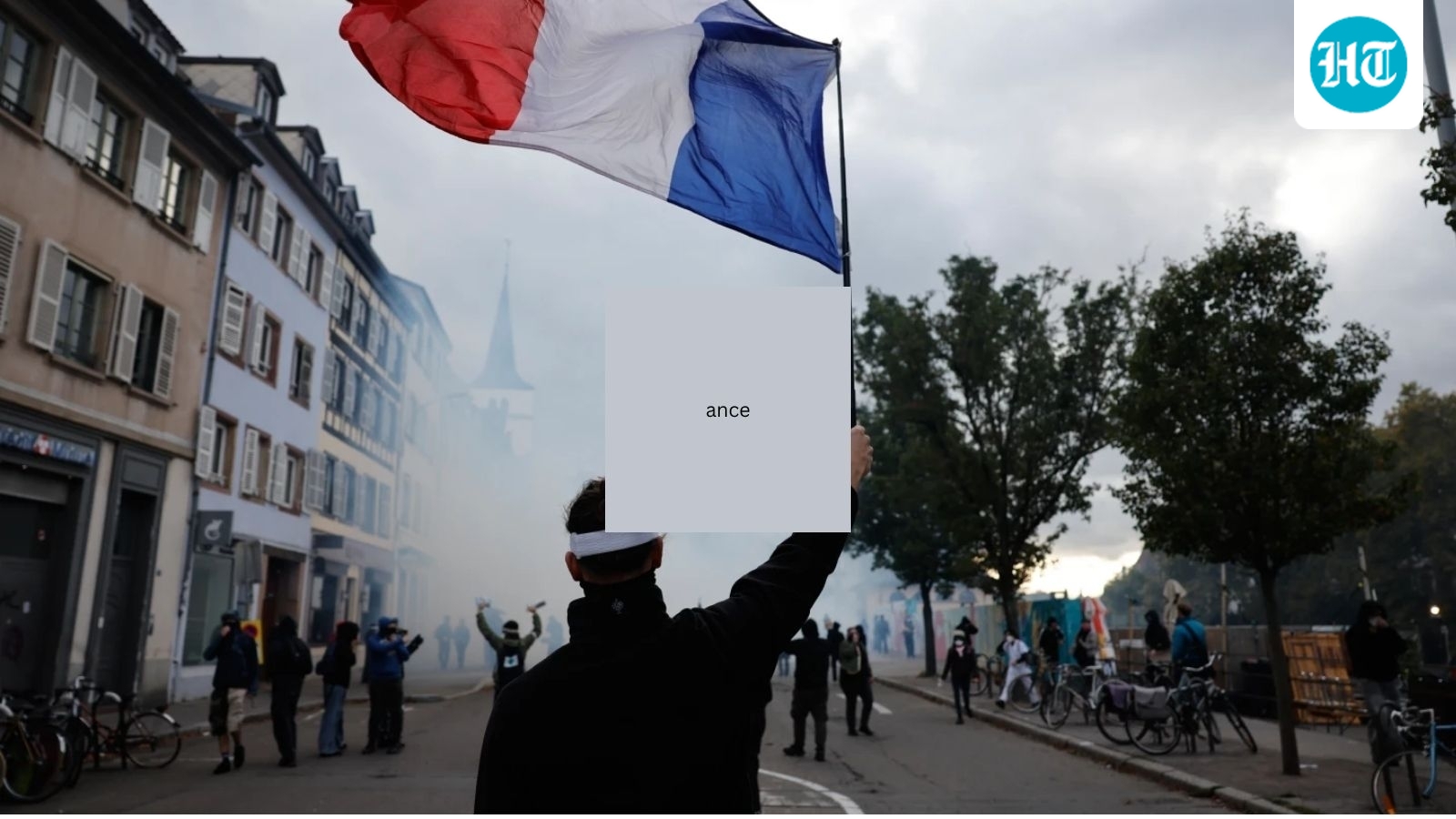
France has deployed 70,000 police officers nationwide to manage renewed anti-government protests following severe riots last week. Demonstrations, driven by cost-of-living concerns and school conditions, have prompted shopkeepers to board up businesses as authorities employ tear gas to disperse crowds.
France Braces for Renewed Unrest Amid Nationwide Protests
France finds itself at a critical juncture as the nation prepares for a second wave of demonstrations following a week of intense civil unrest. With the deployment of 70,000 police officers nationwide, the government is attempting to balance the right to assembly with the urgent need to maintain public order. This massive security operation, which includes the use of helicopters, armored vehicles, and water cannons, underscores the severity with which the administration views the potential for a repeat of the widespread looting and vandalism that characterized the events of mid-October.
Economic Drivers and Social Discontent
The current wave of unrest is fundamentally rooted in deep-seated grievances regarding the rising cost of living and specific concerns regarding school conditions. These protests have evolved into a broad-based movement, drawing participation from students, trade unions, and various anti-government factions. By framing the demonstrations around these systemic issues, organizers have successfully tapped into a vein of public frustration, leading to a turnout that has consistently challenged the government's ability to maintain control in major urban centers like Paris and Lyon.
The Impact on Local Commerce
For small business owners, the threat of renewed violence has necessitated drastic defensive measures. In Paris, the sight of shop windows being boarded up with wooden panels has become a grim symbol of the current climate. With approximately 450 shops in the capital alone suffering damage or looting during the previous week’s riots, the economic toll is significant. Business owners are now caught in a precarious position, forced to balance the hope for a return to normalcy against the reality of potential further disruption to their livelihoods.
Government Strategy and Opposition Criticism
The French government, led by the interior ministry, has adopted an uncompromising stance. Interior Minister Laurent Nuñez has signaled a zero-tolerance policy toward vandals and looters, specifically citing the danger of calls for violence circulating on social media. However, the government remains under intense scrutiny; opposition parties have accused the administration of failing to anticipate the scale of the initial unrest. This political friction adds a layer of complexity to the crisis, as the government struggles to address both the security threat and the underlying policy failures cited by its critics.
Escalation and Police Intervention
Evidence of the volatile situation was clearly demonstrated in Lyon, where police were forced to deploy tear gas to disperse protesters who attempted to block roads in areas where demonstrations were prohibited. This tactical response highlights the government's commitment to preemptively stifling unrest before it can spiral into the widespread chaos seen the previous weekend. As the authorities continue to enforce strict bans on certain gatherings, the risk of localized confrontations between security forces and demonstrators remains high.
Future Implications and Conclusion
As France moves forward, the ability of the state to manage these protests without further alienating the populace will be a test of its political resilience. The combination of economic anxiety and civil disobedience suggests that this is not a transient issue but rather a symptom of broader societal tensions. Unless the government can provide concrete solutions to the cost-of-living crisis and address the specific grievances related to school conditions, the cycle of protests and police deployments is likely to persist, leaving both the economy and social cohesion in a state of continued fragility.
Multiple Citing Sources
Verification Required?