Watch: BBC in Paris as police charge protesters and use tear gas during unrest
Source Entity
BBC News
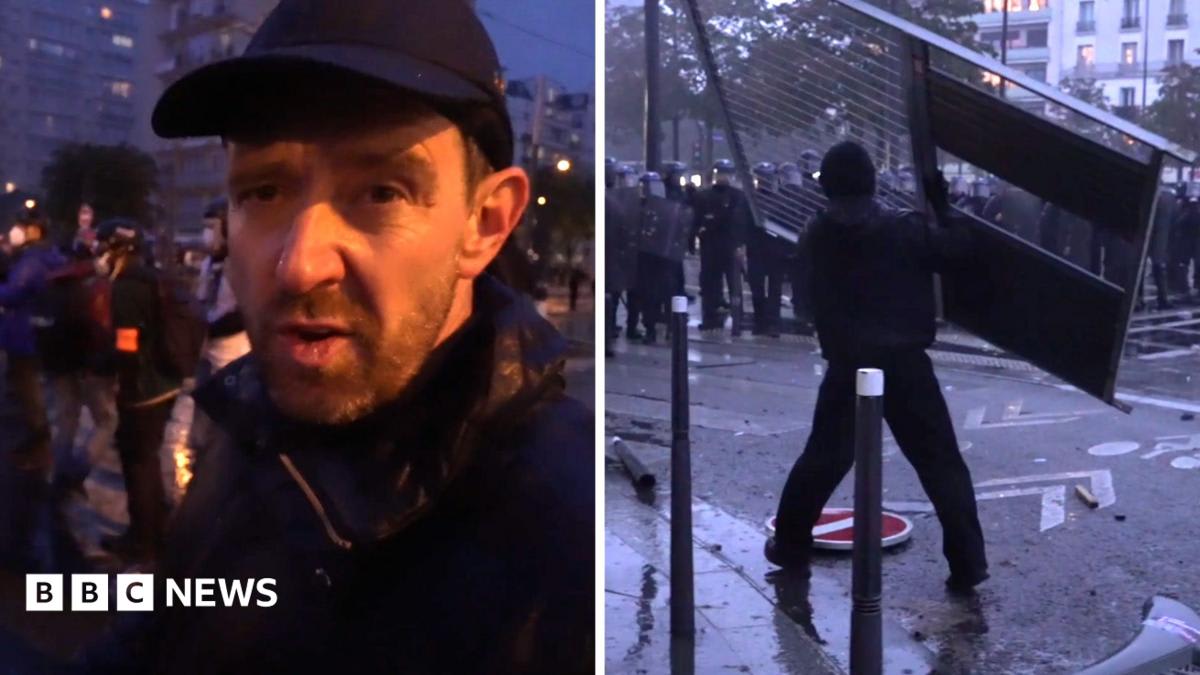
France has deployed 70,000 police officers nationwide to manage renewed anti-government protests following severe riots last week. Demonstrators are rallying against the rising cost of living and school conditions, leading to widespread business precautions and police intervention.
France Braces for Renewed Unrest Amid Nationwide Protests
France finds itself at a critical juncture as the nation prepares for a second wave of demonstrations following a week of historic unrest. With 70,000 police officers deployed nationwide, the government is attempting to strike a balance between maintaining public order and respecting the right to protest. This massive security mobilization, which includes the use of armored vehicles, helicopters, and water cannons, underscores the severity of the challenge facing the administration as it attempts to prevent a repeat of the widespread looting and vandalism that defined the previous weekend.
The Economic and Social Drivers of Dissent
The current wave of protests is rooted in deep-seated frustration regarding the rising cost of living and concerns over educational conditions. These issues have served as a catalyst, uniting students, trade unions, and various anti-government factions. By framing their grievances around immediate economic pressures, these groups have effectively tapped into a broader national sentiment of disillusionment, which has rapidly escalated from organized demonstrations into significant civil disobedience.
Business Impacts and Security Precautions
In Paris and other major cities, the business community is operating in a state of high anxiety. Following the destruction of approximately 450 shops in Paris alone during the previous riots, many proprietors have proactively boarded up windows and reinforced storefronts. This defensive posture highlights the economic toll of the protests, as local businesses struggle to survive the dual pressures of inflation and the potential for physical destruction. The visual evidence of boarded-up storefronts serves as a stark reminder of the fragile social contract currently under strain.
Government Response and Political Tensions
Interior Minister Laurent Nuñez has adopted an uncompromising stance, declaring that the state will not tolerate looting or vandalism. The government is under immense pressure from opposition parties, who have criticized the administration for allegedly failing to anticipate the scale of the initial unrest on October 17. The decision to ban protests in certain areas, such as the incident in Lyon where police deployed tear gas against a group attempting to block a road, illustrates the government's shift toward a more preemptive and restrictive security strategy.
The Role of Digital Mobilization and Future Trends
Authorities have explicitly cited social media as a conduit for calls to violence and looting, complicating efforts to manage the crowds. The ability of protest organizers to rapidly mobilize participants via digital platforms suggests that future dissent may remain highly fluid and difficult to contain. As France navigates these tensions, the long-term challenge for the government will be addressing the underlying economic discontent while preventing the escalation of street violence, which has become a recurring feature of the current political landscape.
Conclusive Summary
The situation in France remains volatile as the government struggles to contain widespread demonstrations fueled by cost-of-living concerns. With a massive police presence and a clear directive to prevent further looting, the state is attempting to restore order. However, given the broad coalition of protesters and the ongoing economic pressures, the path toward resolution remains uncertain, leaving the country on edge as it faces continued civil disruption.
Multiple Citing Sources