‘Chor hai tera chacha’: When Priyanka slapped a boy in school over Emergency taunts
Source Entity
PRISHA PATNAIK
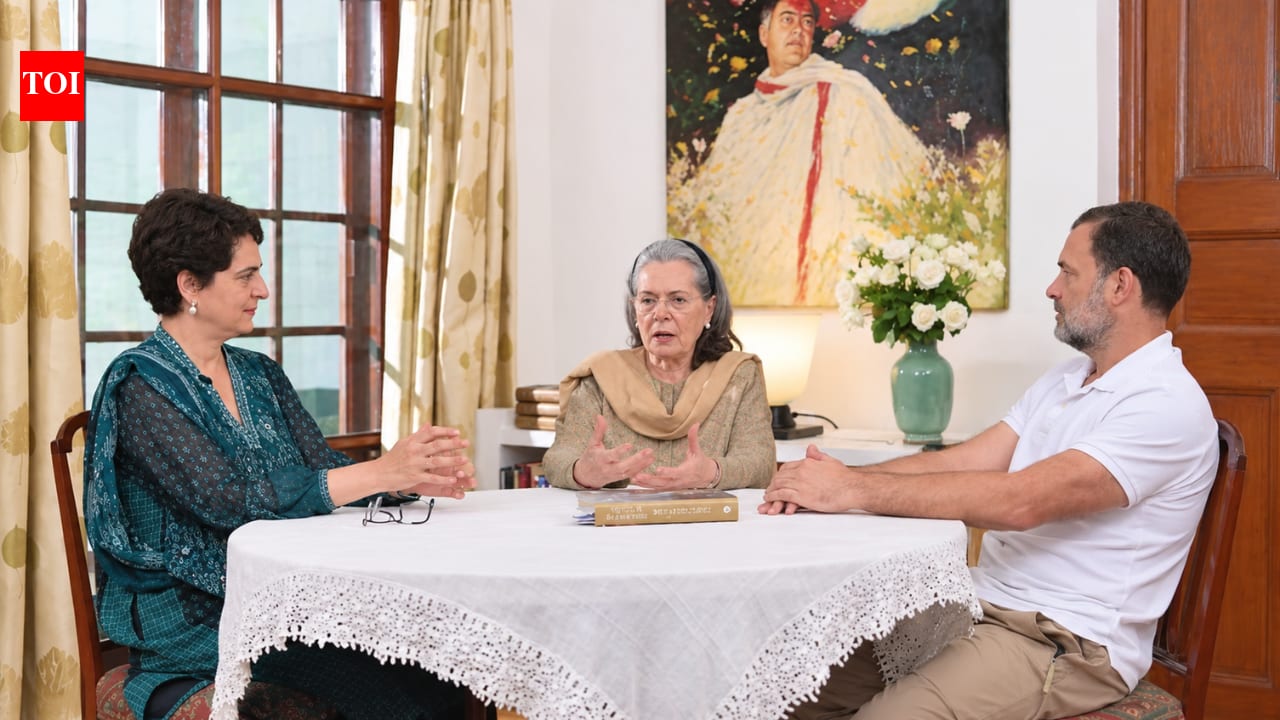
Congress leaders Rahul and Priyanka Gandhi shared intimate, previously unknown childhood stories alongside their mother Sonia. The discussion touched on the political pressures following the 1977 Emergency and the profound personal shift in Sonia Gandhi after Rajiv Gandhi's 1991 assassination.
A Candid Look into the Gandhi Family Legacy
In a recent, deeply personal discussion, Congress leaders Priyanka Gandhi and Rahul Gandhi joined their mother, Sonia Gandhi, to reflect on facets of their lives that extend beyond the narrative of Sonia’s memoir, Belonging: A Journey of Love. This dialogue provided a rare glimpse into the intersection of high-stakes national politics and the private, often turbulent domestic reality faced by one of India’s most prominent political families. By recounting memories of their childhood, the siblings offered a humanizing perspective on the weight of their legacy.
The Shadow of the Emergency
The conversation centered heavily on the aftermath of the 1977 general election—the only electoral defeat suffered by former Prime Minister Indira Gandhi and her son Sanjay Gandhi. Priyanka Gandhi recalled the palpable tension that permeated their household during this period, fueled by the public backlash against the Emergency. This political volatility manifested in the schoolyard, where Priyanka faced direct ridicule from peers regarding her family’s controversial governance. Her visceral reaction—slapping a classmate who taunted her with the phrase 'Tera chacha chor hai'—underscores the intense emotional pressure exerted on children raised in the public eye during times of national crisis.
Navigating High Expectations
Beyond political turmoil, the siblings candidly discussed the parenting style of Sonia Gandhi. Rahul Gandhi characterized his mother’s upbringing as one defined by rigorous, constant criticism, stating that she kept the bar 'very high' and frequently offered 'put-downs' rather than praise. This revelation paints a picture of a household that valued discipline and excellence, perhaps as a defensive mechanism to ensure her children could withstand the scrutiny of public life. Despite this, the siblings acknowledged their grandmother Indira Gandhi’s favoritism, noting that Rahul was frequently viewed as the 'apple of her eye.'
The Lasting Impact of Tragedy
The discussion also navigated the profound psychological shift within the family following the assassination of Rajiv Gandhi in 1991. Both Priyanka and Rahul noted that their mother underwent a fundamental change after the tragedy, losing her ability to find joy or laughter in the way she had previously. This insight suggests that the public image of the stoic political matriarch is, in part, a response to decades of profound personal loss and institutional pressure.
Historical Context and Broader Implications
These anecdotes are significant not merely for their personal nature, but for how they contextualize the resilience required to participate in Indian politics. The transition from the era of Indira Gandhi to the modern Congress leadership is marked by these formative experiences of loss, public shaming, and the necessity of maintaining composure under immense pressure. By sharing these stories, the Gandhi family is essentially bridging the gap between historical political narratives and the contemporary human experience of their leadership.
Conclusion
Ultimately, the dialogue between Sonia, Rahul, and Priyanka Gandhi serves as a bridge between the political history of India and the private realities of those who shape it. By grounding their public personas in these shared vulnerabilities—ranging from schoolyard bullying after the Emergency to the lasting trauma of assassination—the leaders provide a more comprehensive, albeit complicated, view of their family history. It is a reminder that behind the veneer of dynastic politics lies a history defined by the same universal human struggles of grief, expectation, and resilience.