The night Karachi hid Gandhi
Source Entity
G PARTHASARATHY
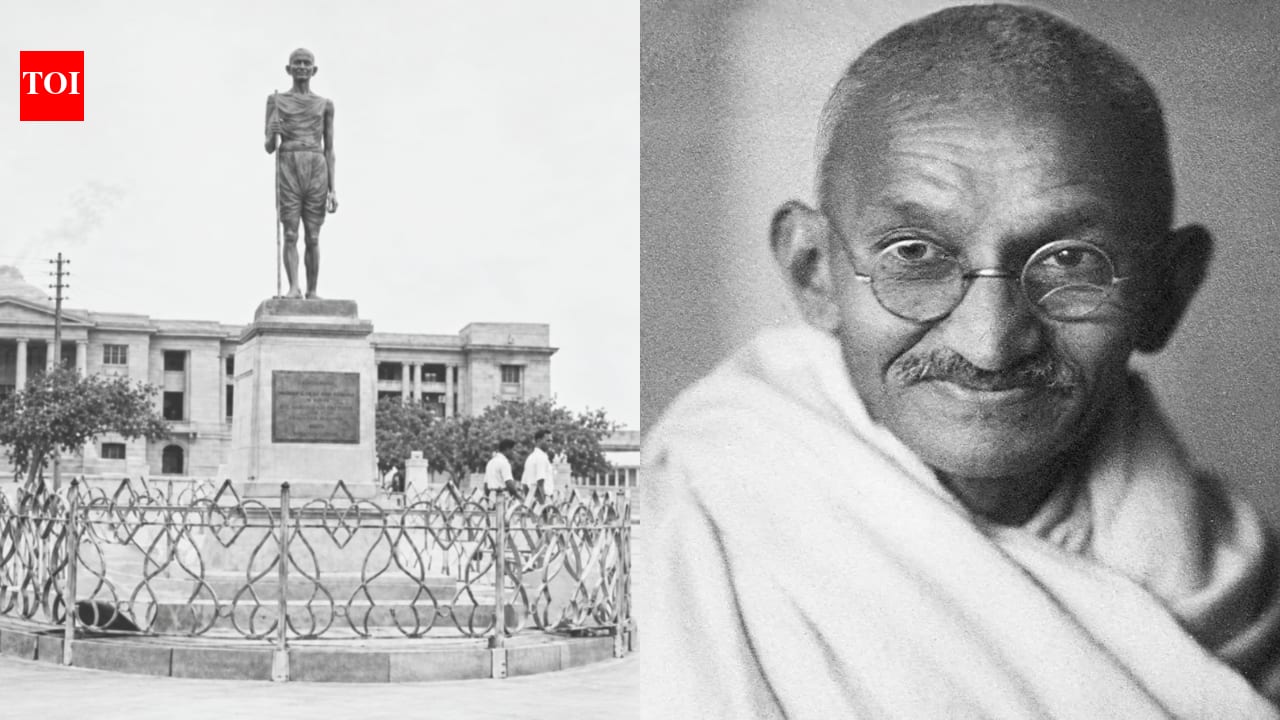
Historical reports from 1986 highlight tensions surrounding Gandhi statues in the US and language politics in India. These events reflect the enduring, often contentious, global legacy of Mahatma Gandhi's political and civil rights activism.
The Dual Legacy: Gandhi’s Global and Domestic Contradictions
The 1986 Washington Statue Controversy
In October 1986, the unveiling of an eight-foot statue of Mahatma Gandhi at Union Park in Washington became a flashpoint of diplomatic and social friction. The refusal of the New York Mayor to participate, coupled with the absence of Indian mission officials, underscored the complexities of honoring Gandhi within the American political landscape. The ceremony was eventually led by Bayard Rustin, a prominent civil rights leader and associate of Martin Luther King Jr., who had previously protested the British High Commission during the Quit India Movement. This event highlighted how Gandhi’s image served as a bridge between the American civil rights struggle and the Indian independence movement, even when official state participation faltered.
Language Politics and Federal Tensions
Simultaneously, domestic stability in India was tested by the sensitive issue of language policy. Tamil Nadu Chief Minister M.G. Ramachandran sought and received a categorical assurance from Prime Minister Rajiv Gandhi that the central government would not impose Hindi on the people of Tamil Nadu. This dialogue, held at the Prime Minister’s office in New Delhi, reflected the broader constitutional challenge of balancing national unity with the linguistic and cultural autonomy of India's diverse states—a struggle that has remained a cornerstone of Indian federal politics for decades.
Historical Foundations of Political Agency
To understand these 1986 tensions, one must look back to Gandhi’s formative years in South Africa. In 1894, his first major political endeavor was not the non-violent satyagraha he is famous for, but a legal and political battle for the Indian franchise. His petition to Lord Ripon argued that the denial of the vote was an assault on the 'self-respect' of the Indian community. This early activism set the template for his later vision of the free Indian citizen, establishing that political participation was an essential prerequisite for dignity and freedom.
The Survival of Symbols in Pakistan
Beyond the US and India, the physical representation of Gandhi has faced unique challenges in Pakistan. Former Indian diplomat G. Parthasarathy noted that during the communal riots of 1948, a Parsi group secretly saved a life-size bronze statue of Gandhi in Karachi to protect it from destruction. This act of preservation highlights the precarious nature of historical symbols in divided nations. Today, only two such statues remain in Pakistan, one of which stands in the Indian High Commission in Islamabad, serving as a silent witness to the complex, often fractured history of the subcontinent.
Concluding Perspectives
These disparate events—the Washington statue dispute, the linguistic debates in New Delhi, and the preservation of statues in Karachi—collectively illustrate the multifaceted nature of Gandhi’s legacy. Whether as a symbol of civil rights in America, a subject of constitutional debate in India, or a fragile monument in Pakistan, Gandhi remains a polarizing and powerful figure. His life’s work continues to influence global discourse, reminding us that the struggle for political representation and cultural recognition is rarely a settled matter.