‘Imminent danger?’: Gauhati High Court asks why houses were razed after 24-hour notice
Source Entity
Vineet Upadhyay
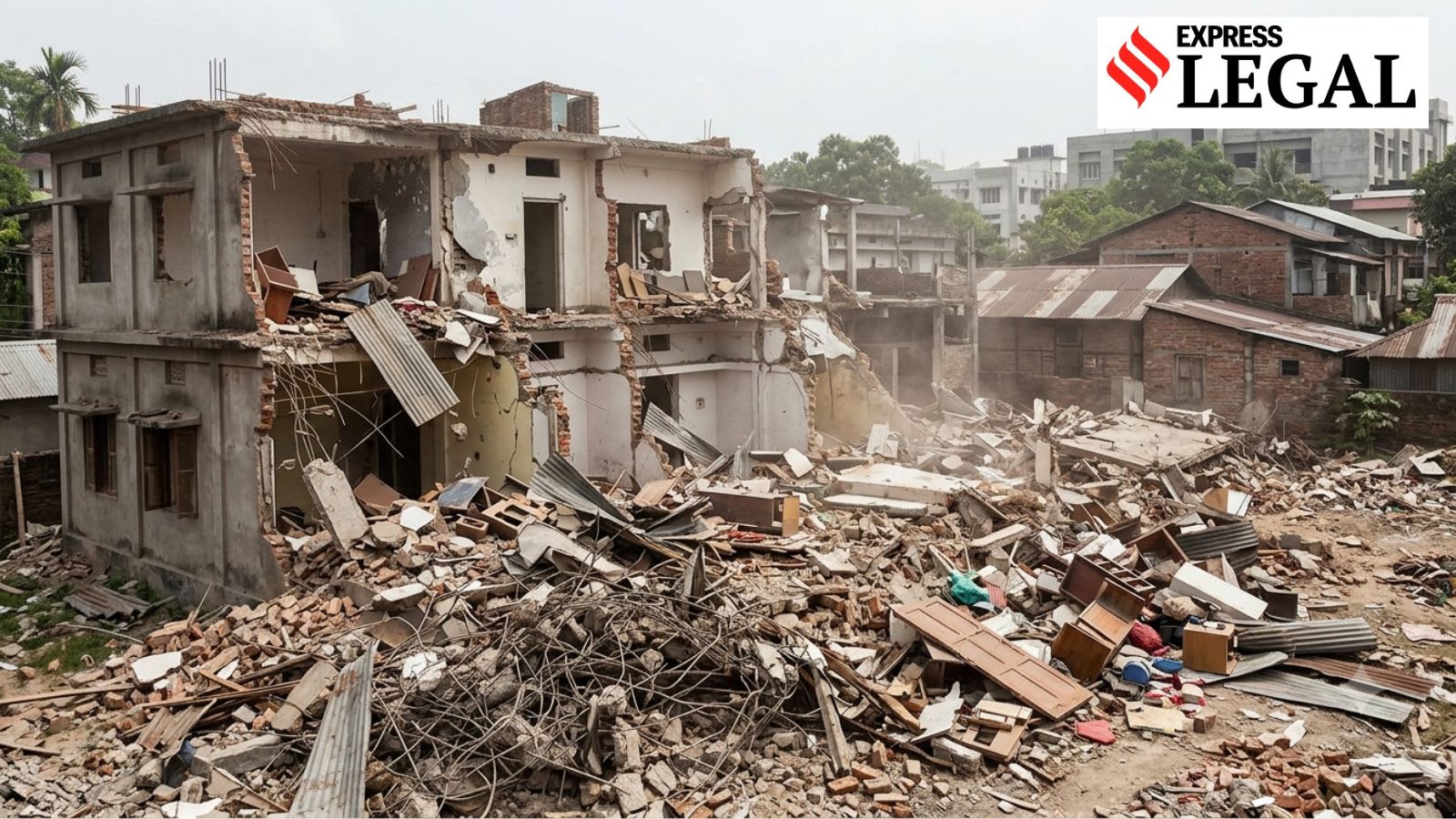
The Gauhati High Court has halted demolitions in Assam’s Goalpara district, questioning the legality of 24-hour eviction notices. The court is examining whether such drastic measures were justified by 'imminent danger' and has ordered a status quo until the next hearing.
Judicial Scrutiny of Eviction Procedures in Assam
The Gauhati High Court has intervened in a contentious series of house demolitions in Assam’s Goalpara district, raising significant legal and humanitarian questions regarding the state's enforcement procedures. Justice Devashis Baruah, presiding over a petition filed by 21 affected residents, has formally questioned the authorities on the necessity of issuing eviction notices with a mere 24-hour compliance window. This judicial inquiry highlights a growing tension between state developmental or regulatory enforcement and the fundamental rights of landholders to due process.
The Legal Basis for Intervention
At the heart of the court's concern is the procedural legality of the actions taken by the Goalpara district commissioner and the Matia revenue circle officer. The court noted that the demolition appeared to be executed without providing the residents a meaningful opportunity to be heard or to contest the claims regarding their properties. By characterizing the actions as potentially "illegal," the High Court is emphasizing that administrative power must be exercised within the bounds of constitutional fairness, regardless of the classification of the land as agricultural.
Defining 'Imminent Danger'
The central point of the judicial inquiry is the concept of "imminent danger." The authorities justified the swiftness of the demolition notices by citing a need for urgent action. However, the High Court is now forcing the state to provide evidence that a situation was so dire that it necessitated the displacement of residents within a single day. This standard is critical, as it serves as a check against the arbitrary use of emergency powers in land dispute cases where long-term residents are involved.
Implications for Land Administration
The case of the 21 petitioners challenging the notices issued on September 5 serves as a microcosm of larger challenges regarding land rights in India. The dispute stems from the construction of homes on land designated for agricultural use, a common point of contention in rapidly evolving revenue circles. The court’s directive to cease all further action until the next hearing functions as a protective measure, preventing irreversible harm while the legal merits of the eviction are thoroughly vetted.
Future Trends and Judicial Precedents
This case sets a significant precedent for how administrative authorities in Assam must approach eviction drives. By demanding accountability for the 24-hour deadline, the judiciary is signaling that administrative efficiency cannot supersede the principles of natural justice. Moving forward, this ruling is likely to influence how district administrations draft and serve notices, ensuring that the right to due process remains a central component of any land-clearing operation. The outcome of the upcoming hearings will be instrumental in balancing state authority with the protection of private property interests.