Germans wrestle with what to do with Hitler's destroyed Eagle's Nest retreat
Source Entity
BBC News
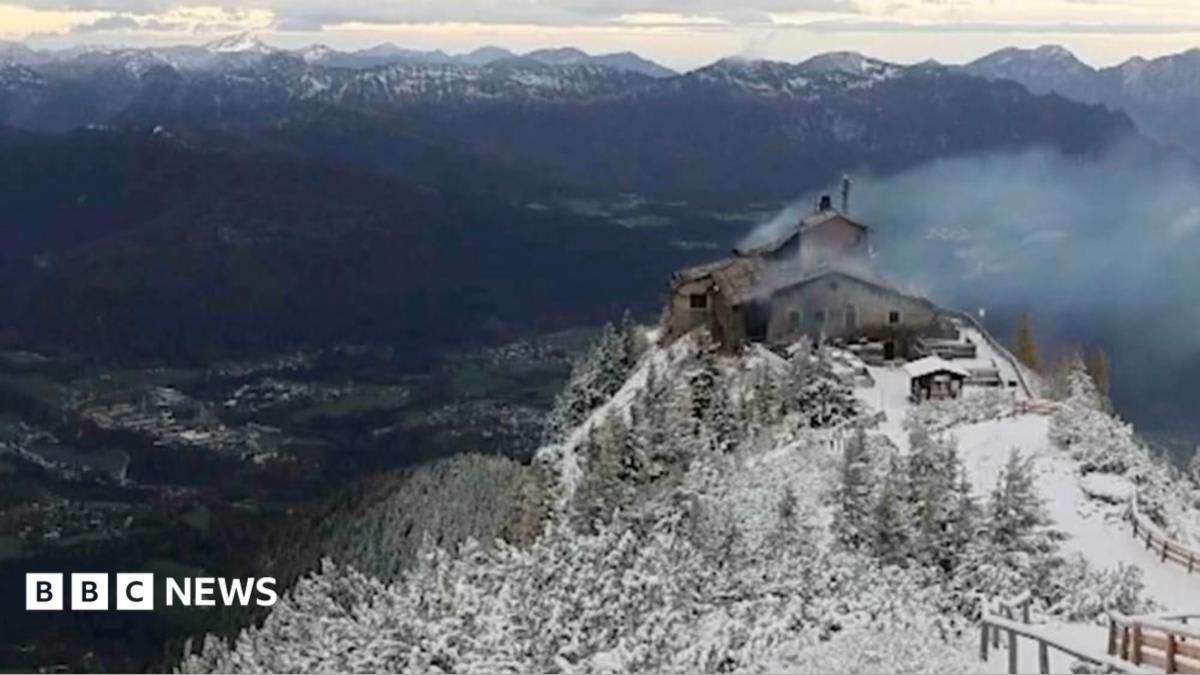
The recent arson of the Kehlsteinhaus, or 'Eagle's Nest,' has reignited a complex debate in Germany over how to manage Nazi-era historical sites. Opinions remain deeply divided between preserving the ruins as a cautionary monument or erasing the site entirely to prevent neo-Nazi glorification.
The Dilemma of Memory: The Kehlsteinhaus Arson
The recent destruction of the Kehlsteinhaus, famously known as the Eagle’s Nest, by a suspected arson attack has thrust Germany back into a profound national debate regarding the physical vestiges of the Third Reich. Perched high in the German Alps, this retreat served as a site for Adolf Hitler and his inner circle to host guests during the height of the Nazi regime. The fire has effectively forced a confrontation with the uncomfortable reality of these structures, which have long served as both historical monuments and, potentially, magnets for those who seek to romanticize a dark period of human history.
The Architecture of Controversy
Built in 1938, the Kehlsteinhaus was designed to reflect the grandeur and isolation that the Nazi leadership craved. Following the conclusion of World War II, the site was officially classified as a historical monument. This designation was intended to ensure that the site functioned as a reminder of the Nazi era rather than a celebration of it. However, the recent gutting of the structure by fire has challenged the sustainability of this approach, as the ruins themselves now stand as a symbol of the ongoing friction between historical preservation and the desire to sanitize the landscape of Nazi influence.
Preservation vs. Erasure
The core of the current debate pits two distinct philosophies against one another. On one side, proponents of total erasure argue that the site should be completely leveled and returned to nature. The objective here is to prevent the location from becoming a focal point for neo-Nazi pilgrimages. By removing the physical manifestation of the site, these advocates hope to eliminate the potential for the mountain house to serve as a shrine, effectively burying a chapter of history that many believe should no longer occupy space in the modern German consciousness.
The Risk of Neo-Nazi Pilgrimage
Conversely, others argue for partial or complete reconstruction. This school of thought posits that destroying the site constitutes a form of historical revisionism or denial. Those who favor reconstruction often argue that by maintaining the site as a monument, Germany retains control over the narrative, ensuring that the context of the location—as a site of Nazi orchestration—remains the dominant interpretation. The fear, however, is that any physical structure, regardless of its 'monumental' status, remains vulnerable to exploitation by extremist groups who view the site through a lens of reverence rather than historical critique.
Navigating a Dark Legacy
This incident highlights the broader, systemic challenge Germany faces in managing its heritage of the 1930s and 1940s. The country has spent decades refining its 'Vergangenheitsbewältigung,' or the struggle to come to terms with the past. The Kehlsteinhaus represents a unique challenge because its remote, scenic location makes it a tourist draw, which inherently blurs the line between historical education and leisure. The arson attack serves as a catalyst, forcing local and national authorities to reconsider whether the current status quo—maintaining the site as a monument—is still viable in an era of rising political polarization.
Future Trends in Historical Commemoration
As the physical evidence of the Nazi era continues to weather, decay, or face destruction, the debate over the Eagle's Nest is likely to be a harbinger of similar conflicts elsewhere. The future of such sites may lie in digital preservation or deconstruction, where the physical structure is removed to prevent physical gatherings, while the history is preserved through virtual means or museum-based education. Whatever path is chosen for the Kehlsteinhaus, it will undoubtedly serve as a critical case study in how a nation balances the imperative to 'never forget' with the need to prevent the past from being weaponized by the present.