Wind and solar overtake fossil fuels in Germany for the first time
Source Entity
Hacker News
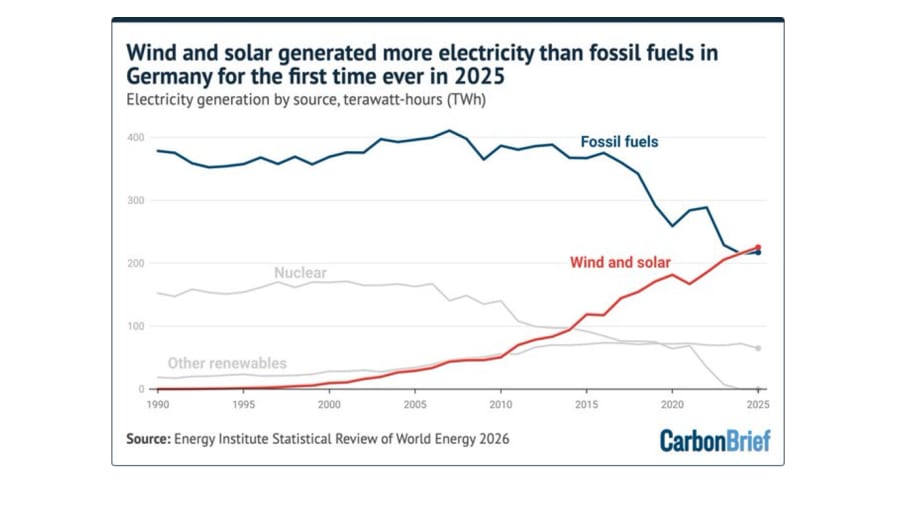
In 2025, Germany achieved a historic milestone as wind and solar power surpassed fossil fuels in electricity generation for the first time. This shift, driven by the long-standing Energiewende policy, aligns Germany with broader European Union trends in renewable energy adoption.
A Landmark Shift in Germany’s Energy Landscape
For the first time in history, Germany has reached a pivotal tipping point in its energy transition: wind and solar power have collectively outpaced fossil fuels in total electricity generation. According to data analyzed by Carbon Brief from the Energy Institute Statistical Review of World Energy, renewable sources generated 225 terawatt hours (TWh), accounting for 44% of the nation's electricity mix. In contrast, fossil fuel generation accounted for 217 TWh, or 43% of the total. This milestone marks the end of an era where coal, oil, and gas served as the primary pillars of the German grid, signaling a decisive move toward a decarbonized economy.
The Success of the Energiewende
This achievement is the direct result of two decades of sustained investment and policy implementation under Germany's signature Energiewende (energy transition) strategy. Initially launched to pivot the nation away from nuclear and fossil fuel dependency, the policy has fostered rapid growth in both solar and onshore wind capacity. By prioritizing long-term infrastructure development over short-term conventional energy reliance, Germany has successfully scaled its renewable sector to meet industrial and residential demands on a national scale.
Aligning with European Trends
Germany’s success is not an isolated development but rather part of a broader continental trend. The European Union as a whole also saw wind and solar overtake fossil-fuel generation for the first time in 2025. This synchronized shift suggests that the EU’s unified climate goals and regional integration of energy grids are beginning to yield tangible results. As Germany leads this transition, it provides a blueprint for other member states struggling to balance energy security with aggressive carbon reduction targets.
Broader Economic and Environmental Implications
The displacement of fossil fuels by renewables has profound implications for Germany’s economic resilience. By reducing reliance on imported hydrocarbons, the nation is better positioned to insulate its industrial sector from the price volatility associated with global fossil fuel markets. Furthermore, this transition reflects a shift in the physical infrastructure of the German power grid, which must now adapt to the decentralized and intermittent nature of wind and solar energy, necessitating ongoing advancements in battery storage and grid management technologies.
Future Outlook and Challenges
While this milestone is a major victory for climate policy, the path forward requires sustained effort. Maintaining this trajectory will depend on the continued expansion of offshore wind capacity and the modernization of transmission lines to transport electricity from the windy north to the industrial centers in the south. The transition from 44% to a fully renewable grid will likely involve further technological innovation, particularly in green hydrogen and demand-side management, to ensure grid stability as fossil fuel plants are phased out completely.
Conclusion
The 2025 data serves as a vindication of Germany’s long-term environmental strategy. By crossing the threshold where renewables provide more power than traditional fossil fuels, Germany has demonstrated that a major industrialized economy can successfully decouple its growth from carbon-intensive energy sources. This event is a critical indicator of the global movement toward net-zero, setting a precedent for international energy policy in the coming decade.