Dialogue is democracy’s pressure valve, and Sanatan is not the BJP: Gitanjali Angmo
Source Entity
The Indian Express
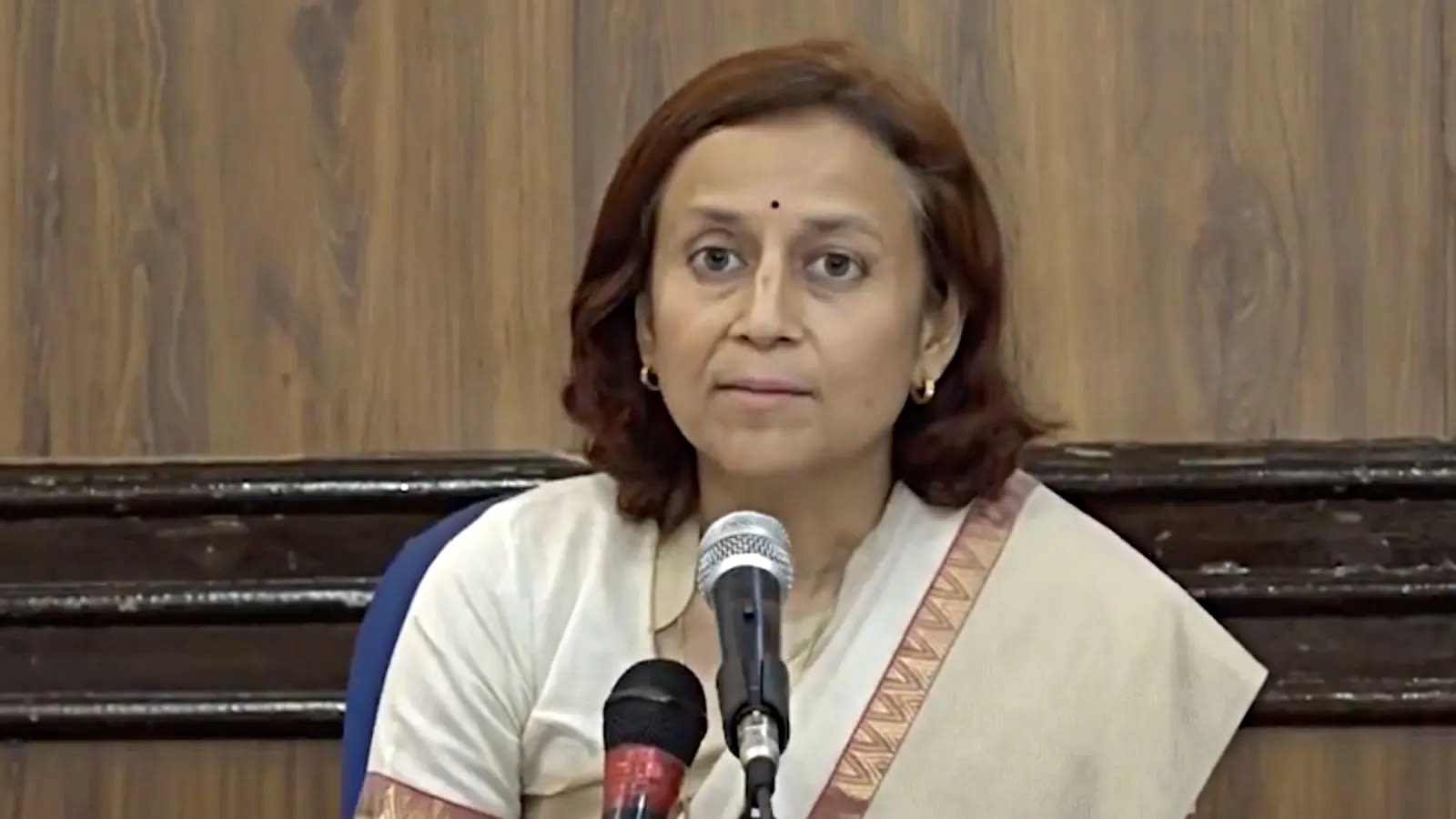
Gitanjali Angmo and Sonam Wangchuk have criticized the suppression of peaceful dissent, warning that blocking dialogue risks political instability. They emphasize that Ladakh's struggle for self-governance should not be conflated with religious-political agendas.
The Imperative of Dissent in a Functioning Democracy
Recent statements by educationist Gitanjali Angmo at the Khushwant Singh Lit Fest have reignited critical discourse regarding the role of protest in India’s democratic framework. Angmo, who is the wife of prominent climate activist Sonam Wangchuk, argued that peaceful dissent serves as a vital 'pressure valve' for society. By criticizing the restrictions placed on student protests and the systemic requirement to confine demonstrations to specific venues like Jantar Mantar, she highlighted a growing concern that the state's narrowing of public space for grievances could lead to increased societal tension rather than resolution.
The Historical and Regional Context of Political Stability
Echoing these sentiments, Sonam Wangchuk provided a stark warning regarding the consequences of stifling public frustration. Citing the recent political upheavals in Sri Lanka and Bangladesh, Wangchuk posited that the denial of peaceful avenues for dissent often leaves populations with no recourse but to engage in more radical forms of protest. This historical pattern suggests that when the state apparatus systematically ignores the voices of its citizens or criminalizes their assembly, the long-term cost is often a breakdown of institutional order, rather than the intended maintenance of peace.
Decoupling Regional Identity from National Politics
A pivotal aspect of Angmo’s commentary was the clear distinction she drew between the ethos of 'Sanatan' and the political platform of the Bharatiya Janata Party (BJP). By rejecting the conflation of religious identity with partisan political maneuvers, she sought to refocus the conversation on the specific, localized needs of the Ladakh region. This serves to clarify that the movement in Ladakh—centered on the right to self-determination through elected representation—is a struggle for governance and constitutional rights, rather than a religious or ideological proxy war.
The Struggle for Ladakh’s Governance
At the heart of the current tension is the demand for Ladakh’s right to determine its own future via elected representatives. The current administration's approach to these demands, particularly regarding student-led protests and civic engagement, has been viewed by activists as an attempt to bypass the democratic mandate of the local population. Angmo’s critique suggests that the government must pivot from a policy of suppression to one of active engagement to satisfy the aspirations of the Ladakhi people.
Future Trends and the Need for Dialogue
The ongoing standoff between activists and the state indicates a deepening divide in how constitutional rights are perceived and exercised. If the trend of restricting public assembly continues, it is likely to alienate younger generations and further erode trust in state institutions. For a healthy democracy, the path forward necessitates that the government re-establishes dialogue as a primary tool of governance, ensuring that regional voices—such as those from Ladakh—are heard and integrated into the national narrative rather than silenced.