Children and technology: Why AI needs literacy, not a blanket ban
Source Entity
Nishtha Grover
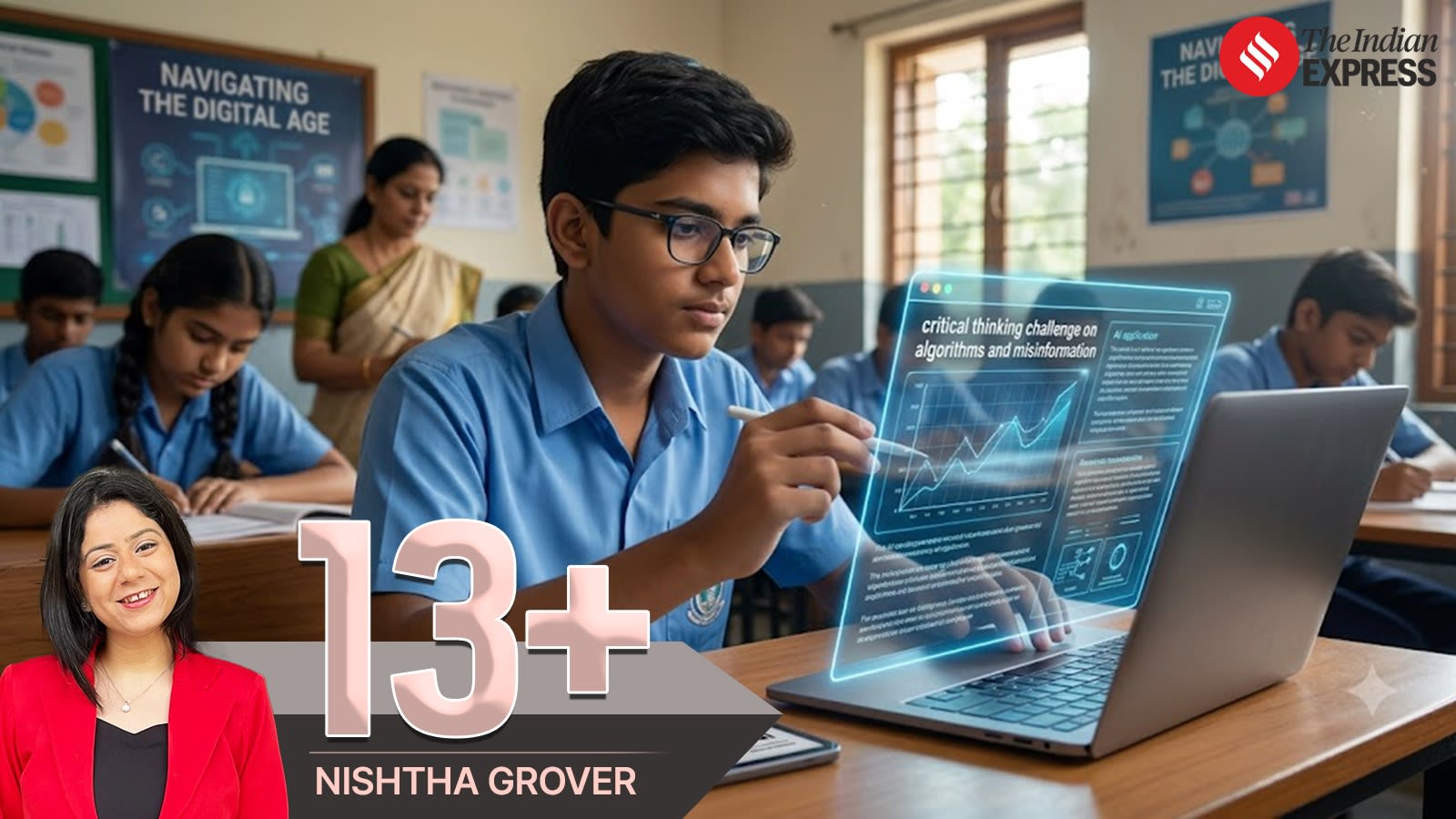
Global educational strategies regarding AI are diverging, with NYC imposing restrictions while the UAE integrates AI into its curriculum. Public sentiment, as shown in the Ipsos Education Monitor, favors AI literacy over bans despite concerns about other digital technologies.
The Global Divergence in AI Education
The integration of generative artificial intelligence into classrooms has ignited a profound debate among policymakers and educators. As artificial intelligence becomes an inescapable component of the modern professional landscape, the question is no longer whether to use AI, but how to introduce it to developing minds. We are currently witnessing two distinct philosophies: one grounded in caution and foundational development, represented by New York City's restrictions, and one centered on proactive integration, as seen in the United Arab Emirates.
The New York City Approach: Prioritizing Fundamentals
New York City’s decision to limit student-facing generative AI through the eighth grade reflects a strategic belief in the necessity of foundational skills. By curbing the use of tools like ChatGPT and Gemini during these formative years, the district aims to ensure that students develop core critical thinking and writing abilities without over-reliance on automated assistance. This 'brakes' approach suggests that premature exposure to generative AI may hinder the development of fundamental cognitive processes, favoring a wait-and-see strategy that emphasizes human-led instruction.
The UAE Model: Proactive Digital Fluency
In contrast, the United Arab Emirates has adopted a curriculum-wide integration strategy, embedding AI literacy into both public and private school systems. This policy is built on the premise that AI is an essential literacy for the future workforce. By introducing AI concepts early, the UAE aims to demystify the technology, teaching students how to interact with AI tools ethically and effectively. This model views AI not as a competitor to human intelligence, but as a necessary companion for the 21st-century learner.
Public Perception and the 'Literacy' Paradox
The Ipsos Education Monitor 2026 highlights a fascinating societal contradiction. While there is broad public support for restricting social media and smartphones—citing concerns over digital safety and distraction—there is significant resistance to banning AI in schools. With 61 percent of those surveyed opposing an AI ban, it is clear that parents and educators view AI as a productive tool rather than a disruptive one. This suggests that the public differentiates between 'consumption-based' technology, like social media, and 'utility-based' technology, like generative AI.
Navigating the Future of Learning
The tension between protecting children from digital harm and preparing them for an AI-centric world is the defining challenge of modern pedagogy. Experts suggest that the focus must shift from blanket bans to comprehensive AI literacy. As children do not experience all technology in the same way, the path forward likely involves a hybrid approach: building traditional cognitive foundations while simultaneously teaching the mechanics, biases, and capabilities of AI systems.
Conclusion: A Strategic Path Forward
The divergence between New York City and the UAE serves as a valuable case study for the global education community. While NYC prioritizes a measured, developmental approach, the UAE champions early immersion. Both strategies, however, are united by the same ultimate goal: preparing students for a future where artificial intelligence is ubiquitously embedded in their daily lives. The challenge for educators will be to balance these approaches, ensuring that students remain the masters, not the subjects, of the technology they use.