Chrome will now show a warning before you visit ‘suspicious’ sites
Source Entity
Jess Weatherbed
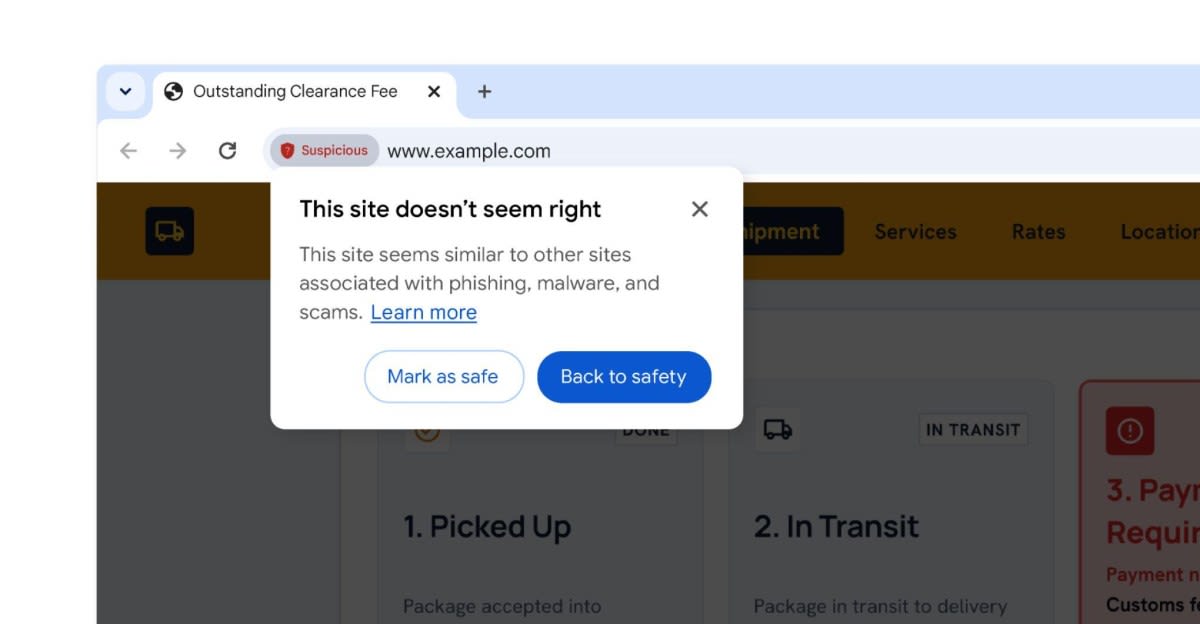
Google Chrome is enhancing its security by introducing new 'suspicious' site warnings for users with Enhanced Protection enabled. This feature flags websites that mirror known phishing or malware patterns, building on the browser's existing tiered safety system.
Strengthening the Web: Chrome’s New Defensive Layer
Google has officially announced a significant security upgrade for its Chrome browser, designed to provide users with proactive warnings before they navigate to potentially malicious websites. By leveraging real-time data, Chrome will now flag sites that exhibit characteristics synonymous with phishing, malware, and other online scams, offering a vital layer of defense in an era where cyber threats are becoming increasingly sophisticated.
The Mechanics of Enhanced Protection
This new feature is specifically integrated into Chrome’s 'Enhanced Protection' mode. By opting into this setting, users grant the browser permission to perform more rigorous checks against Google’s vast database of known threats. The system utilizes a 'lower confidence verdict' to identify sites that possess qualities similar to previously confirmed malicious domains, even if they have not yet been explicitly blacklisted. This nuance is critical, as it allows the browser to warn users about emerging threats that have not yet reached the threshold of a 'dangerous' classification.
Building on Proven Security Frameworks
This initiative is not an isolated development but rather an evolution of Chrome’s security roadmap. It draws direct inspiration from the two-stage warning system introduced for file downloads earlier in 2024. By utilizing a tiered approach—distinguishing between 'suspicious' and 'dangerous'—Google is refining how it communicates risk to the average user. This methodology reduces the 'alarm fatigue' that often accompanies blanket security warnings, allowing users to make more informed decisions based on the severity of the detected threat.
Combating the Rise of Deceptive Web Content
As cybercriminals continue to refine their tactics, the ability to identify 'suspicious' rather than just 'confirmed' threats is essential. Phishing and social engineering attacks often rely on sites that look legitimate but contain subtle markers of fraud. By flagging these sites early, Chrome aims to disrupt the attack chain before a user inadvertently exposes credentials or downloads harmful payloads. This proactive stance reflects a broader industry shift toward predictive security, where the goal is to stop the user from ever engaging with a malicious environment.
Implications for Digital Literacy
While these automated tools are powerful, they also serve as a nudge for better digital hygiene. By presenting clear, actionable warnings, Google is effectively educating users about the dangers of the open web without interrupting the browsing experience for safe sites. This feature acts as a secondary verification layer that empowers individuals, regardless of their technical expertise, to navigate the internet with a higher degree of confidence.
Future Trends in Browser Security
Looking ahead, we can expect browser security to become increasingly granular. The integration of machine learning to detect patterns in real-time—as hinted by the 'lower confidence' classification—will likely become the standard. As Chrome continues to iterate on these safety features, the gap between the speed at which attackers deploy malicious infrastructure and the speed at which browsers can identify them will continue to close, making the web a fundamentally safer space for all users.