Why the numbers matter in the renewed push for delimitation | Explained
Source Entity
India Latest News: Top National Headlines Today & Breaking News | The Hindu
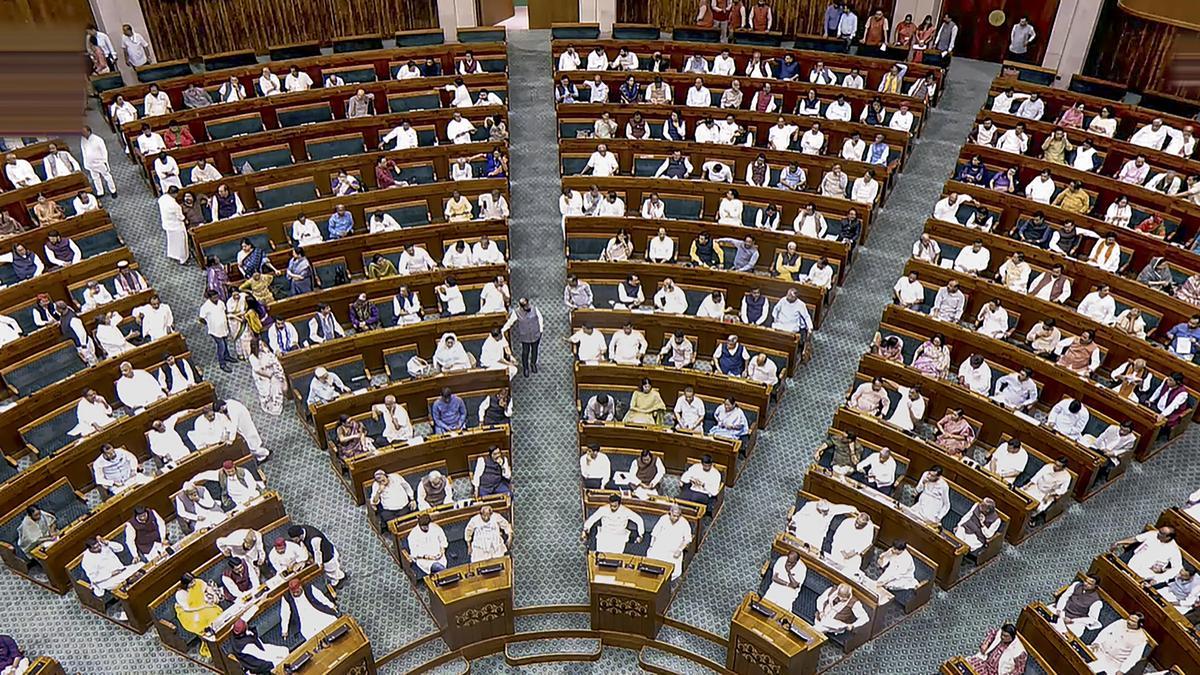
The Indian government is reviving the Constitution (131st Amendment) Bill to expand the Lok Sabha from 543 to 850 seats. This move aims to facilitate women's reservation and requires a two-thirds majority, prompting the BJP to consolidate NDA support and negotiate with regional parties.
The Strategic Push for Lok Sabha Expansion
The Indian government has reignited its legislative agenda surrounding the Constitution (131st Amendment) Bill, a pivotal piece of legislation intended to reshape the nation's parliamentary structure. By proposing an increase in the Lok Sabha's strength from 543 to 850, the administration aims to address long-standing concerns regarding representative ratios and provide the necessary constitutional framework to finally implement the women’s reservation law. This initiative is not merely a procedural adjustment but a fundamental reconfiguration of India's democratic landscape.
The Legislative Hurdle: A History of Rejection
The road to this amendment has been fraught with political difficulty. In April 2026, the government suffered a significant setback when the legislation failed to secure the mandatory two-thirds majority required for constitutional amendments. This failure highlighted a deep-seated resistance within the opposition and even some fence-sitting regional parties who viewed the proposed delimitation with skepticism. The government's inability to muster the necessary numbers necessitated a strategic retreat and a period of intense political maneuvering.
Consolidating the NDA
In the aftermath of the April 2026 failure, the Bharatiya Janata Party (BJP) has shifted its focus toward aggressive coalition building. By expanding the National Democratic Alliance (NDA), the ruling party is actively courting regional entities that previously abstained from or opposed the bill. The strategy involves a delicate balancing act, as seen in the ongoing negotiations with factions of the Nationalist Congress Party (NCP). The BJP’s offer of Union Cabinet berths, conditional on the reunification of NCP factions, underscores the high stakes involved in securing the required parliamentary threshold.
The Delimitation Debate and Opposition Faultlines
As the government prepares to reintroduce the bill during the Monsoon session, the political environment has shifted. While the opposition presented a united front in April, recent developments suggest emerging faultlines. Some opposition parties, wary of political isolation, are signaling a willingness to negotiate if their specific concerns are addressed. This fragmentation provides the government with a tactical advantage, allowing them to peel away individual parties from the broader opposition bloc.
The Rationale Behind the 50% Increase
The proposed 50% increase in seats is not purely numerical; it is designed to facilitate the implementation of women's reservation without disrupting existing proportional representations. By increasing the total pool of seats, the government hopes to mitigate the potential friction that often accompanies redistricting. This approach is intended to satisfy legal requirements while navigating the complex social and regional anxieties that have historically stalled delimitation exercises.
Future Implications and Conclusion
Looking toward the 2029 general election, the passage of this bill is viewed as a cornerstone of the government's long-term legislative legacy. If successful, the expansion will permanently alter the electoral map of India. The coming weeks will be critical as the government attempts to bridge the gap between its current support base and the necessary two-thirds majority. Whether the BJP can successfully leverage its expanded alliance and exploit the shifting allegiances within the opposition remains the defining question of the upcoming parliamentary session.
Multiple Citing Sources
Verification Required?