Daaru, not dardi’: In dry Gujarat, ambulance is caught ferrying booze, not patients
Source Entity
Brendan Dabhi
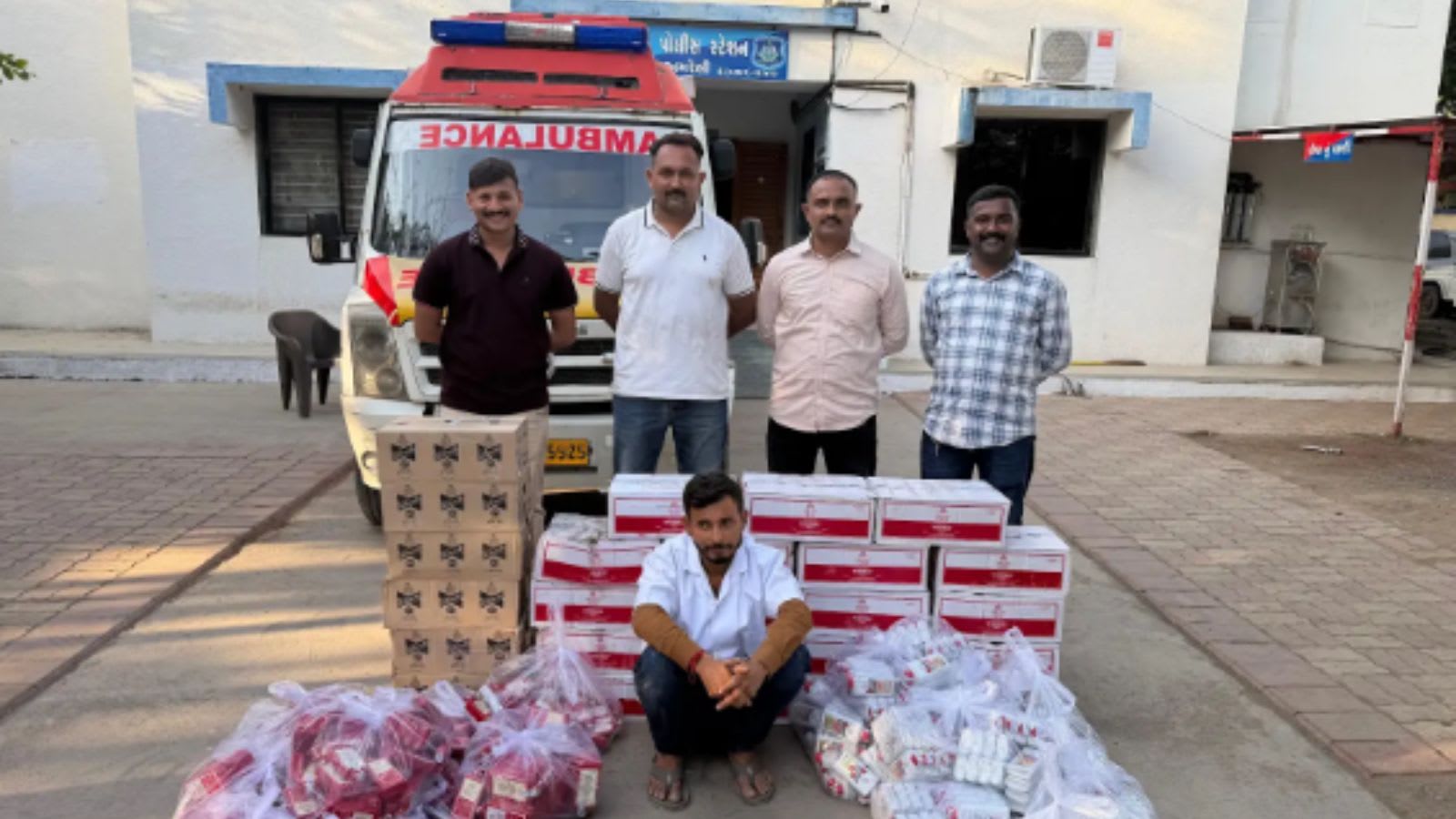
Gujarat Police intercepted an ambulance on the Bhavnagar-Rajkot highway carrying nearly 2,000 bottles of illegal liquor. The vehicle, disguised as an emergency transport, was smuggling IMFL from Madhya Pradesh into the dry state of Gujarat.
The Ambulance Smuggling Incident in Gujarat
On September 11, the Amreli Police in Gujarat executed a significant interdiction on the Bhavnagar-Rajkot highway, revealing a sophisticated attempt to circumvent the state’s long-standing prohibition laws. Acting on specific intelligence regarding the transit of illegal Indian Made Foreign Liquor (IMFL) from Madhya Pradesh into Rajkot, law enforcement intercepted an ambulance that appeared to be engaged in an emergency medical mission. Instead of a patient, however, the vehicle was found to be transporting a substantial illicit cargo.
The Nature of the Contraband
The operation led to the seizure of 1,968 flasks of IMFL, hidden within a custom-built, concealed cabinet inside the ambulance. The haul consisted of 672 flasks of McDowell’s No. 1 Original Reserve Whisky—valued at approximately Rs 1.35 lakh—and 1,296 flasks of Blender’s Pride Reserve Whisky, valued at Rs 2.21 lakh. The total recovery highlights the scale of the black market trade that continues to target the state of Gujarat, which has maintained strict alcohol prohibition policies for decades.
Challenges to Prohibition Enforcement
This incident underscores the creative and often deceptive methods employed by smuggling syndicates to bypass checkpoints. By utilizing an ambulance, a vehicle traditionally granted priority passage and subject to minimal scrutiny by traffic authorities, the perpetrators attempted to exploit the system’s inherent trust in emergency services. This misuse of essential infrastructure presents a significant challenge to the Gujarat Police, who must balance the necessity of unhindered medical transport with the need for rigorous vigilance against bootlegging.
Broader Implications for State Security
The use of medical transport for criminal activity is a disturbing trend that threatens the integrity of public health services. When ambulances are diverted for illicit trade, it not only undermines the state's prohibition mandate but also risks depleting the availability of vehicles for genuine life-saving operations. This case serves as a stark reminder of the lengths to which criminal elements will go to maintain supply chains into dry states, necessitating heightened intelligence-led policing.
Future Trends and Law Enforcement Response
Moving forward, this event is likely to prompt a review of vehicle inspection protocols on major transit corridors like the Bhavnagar-Rajkot highway. As traffickers continue to refine their methods, police departments are increasingly reliant on specific intelligence and inter-state coordination to intercept contraband before it reaches urban centers. The success of the Amreli Police in this instance demonstrates the effectiveness of targeted operations, but it also highlights the persistent demand for alcohol in regions where it is restricted, suggesting that such smuggling efforts will remain a recurring issue for state law enforcement in the foreseeable future.