Gurugram’s stilt-plus-four row: What changed, and what it means for homebuyers
Source Entity
Latest News: Todays Latest News Headlines from India & World | Hindustan Times | Hindustan Times
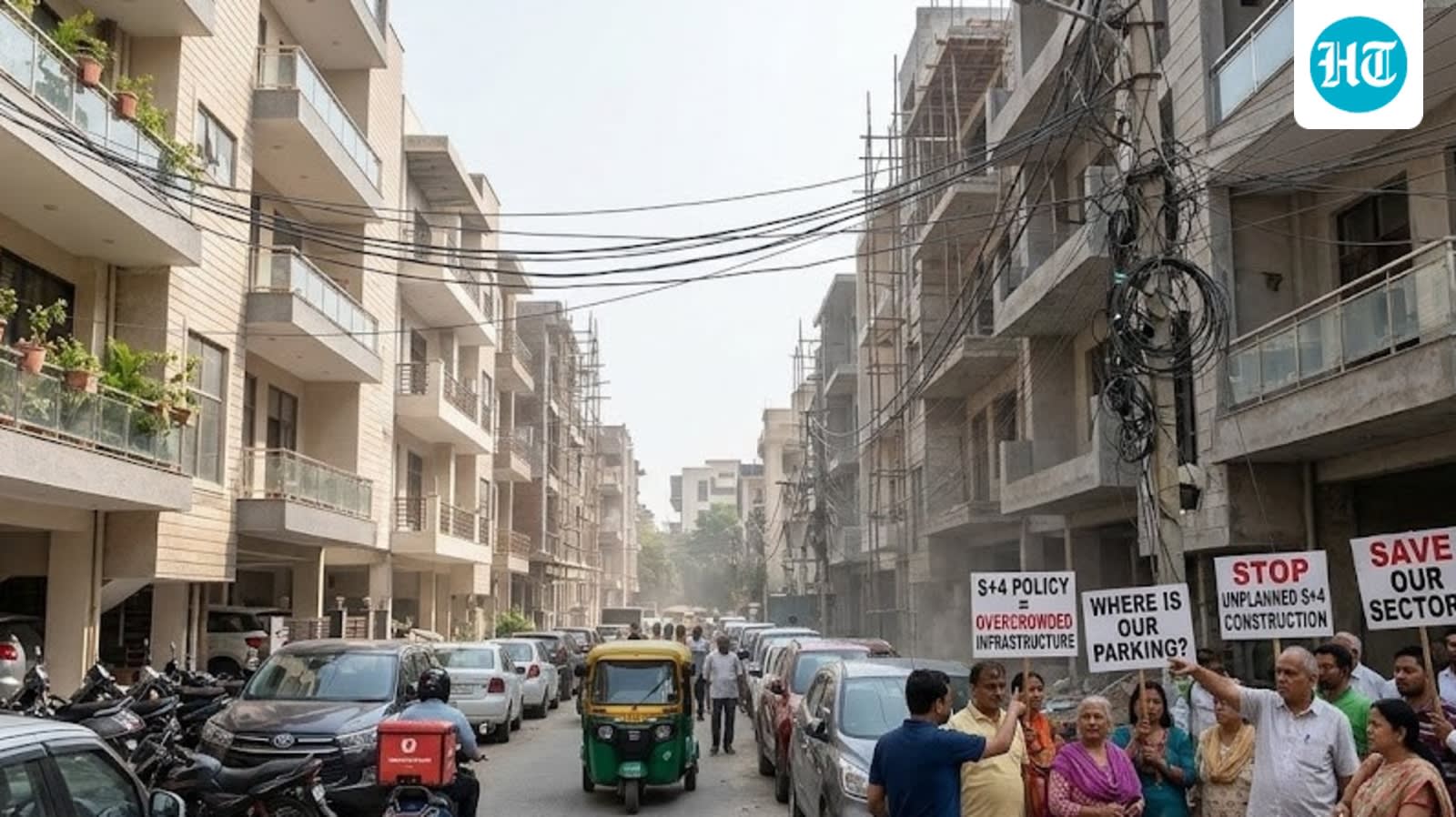
Gurugram's 'stilt-plus-four' housing policy is currently embroiled in legal and urban planning uncertainty. The controversy centers on infrastructure strain and building approvals, putting thousands of property investments and registrations at risk.
The Gurugram Stilt-Plus-Four Crisis: An Urban Planning Dilemma
The 'stilt-plus-four' (S+4) housing policy in Gurugram has emerged as a critical flashpoint, highlighting the growing friction between rapid urban expansion and the capacity of existing civic infrastructure. Designed as a mechanism to augment the supply of independent residential floors in an increasingly land-starved city, the policy has sparked a significant legal and administrative debate. At its core, the issue questions whether the densification of existing residential sectors is sustainable without a proportional upgrade to water, sewage, and parking amenities.
The Scale of the Regulatory Impasse
The sheer magnitude of the situation is reflected in data presented to the Punjab and Haryana High Court. The Haryana Department of Town and Country Planning (DTCP) confirmed that 32,024 permissions for S+4 construction were granted in Gurugram up to April 2, 2026. This massive volume of approvals underscores the reliance developers and individual plot owners have placed on this policy to maximize land utility. However, the subsequent legal challenges and the DTCP's defensive stance in court have created a climate of profound uncertainty for the real estate sector.
Implications for Homebuyers and Investors
For the average homebuyer, the S+4 controversy represents a direct threat to capital security. When building permissions become subject to judicial review, property registrations often stall, and the liquidity of these assets plummets. Investors who purchased independent floors under the assumption of legal compliance now face the prospect of their property titles being questioned or their buildings being declared non-compliant with updated zoning norms. This uncertainty ripples through the secondary market, impacting overall property valuations in established sectors.
Infrastructure and Civic Strain
Beyond the legalities, the controversy is rooted in the physical reality of Gurugram’s infrastructure. Critics of the S+4 policy argue that adding four floors atop a stilt parking level significantly increases the population density of sectors originally planned for lower-density housing. This leads to overburdened sewage systems, increased water demand, and severe street-level congestion due to overflow parking. The debate is, therefore, not merely about zoning permits, but about the long-term viability of the city’s residential layout.
Future Outlook and Policy Trends
As the Punjab and Haryana High Court continues to deliberate, the future of urban development in Haryana hangs in the balance. We are likely to see a trend toward more stringent environmental impact assessments before new building permissions are granted. Furthermore, the government may be forced to introduce a 'compensatory infrastructure' fee or halt new approvals in high-density zones to appease residents and the judiciary. For the real estate market, this signifies a shift away from 'maximum density' models toward a more regulated, infrastructure-first approach to residential growth.
Verification Required?