Haryana power plant PM emissions 38.8 times limit, faces ₹31.46 cr penalty
Source Entity
Latest News: Todays Latest News Headlines from India & World | Hindustan Times | Hindustan Times
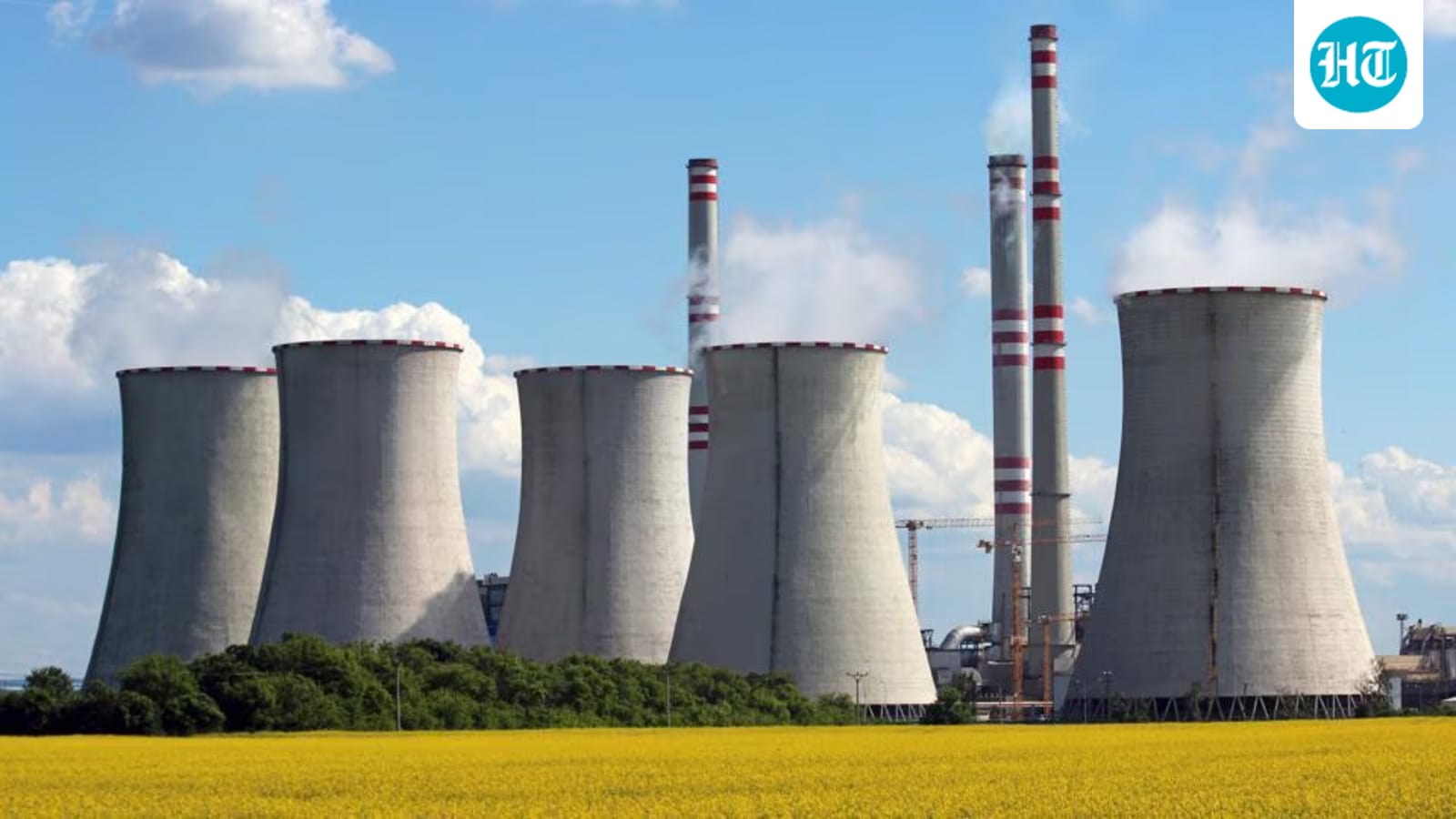
The Deen Bandhu Chhotu Ram Thermal Power Project in Haryana faces a ₹31.46 crore penalty after particulate matter emissions were found 38.8 times above the legal limit. This violation, confirmed by the CPCB, highlights critical failures in environmental compliance for plants near the Delhi-NCR region.
Environmental Crisis: Haryana Thermal Plant Faces Massive Penalty
The recent revelation that the Deen Bandhu Chhotu Ram Thermal Power Project in Yamuna Nagar, Haryana, emitted particulate matter (PM) at levels 38.8 times higher than the legally prescribed limit marks a significant escalation in the enforcement of environmental regulations in India. This data, unearthed through a Right to Information (RTI) application filed by activist Amit Gupta, exposes a severe lapse in the operational standards of a facility categorized as 'highly polluting.' The Central Pollution Control Board (CPCB) has responded to these findings by assessing an interim environmental compensation of ₹31.46 crore, covering the period from February 10 to June 15.
The Role of Regulatory Oversight and RTI
The transparency facilitated by the RTI Act has proven vital in holding state-run infrastructure accountable. By requesting stack emission studies for thermal plants located within 300 km of the Delhi-National Capital Region (NCR), stakeholders are now able to bridge the gap between regulatory intent and industrial reality. The CPCB’s confirmation of these excessive emissions underscores the necessity of continuous monitoring, as the plant’s failure to contain PM levels directly contributes to the deteriorating air quality in North India.
Broader Implications for the Delhi-NCR Air Shed
Thermal power plants situated near the Delhi-NCR are under intense scrutiny due to the region's historical struggle with hazardous air quality. When a single unit operates at nearly 40 times the permissible emission limit, it exacerbates the regional pollution load, undermining efforts to curb smog and protect public health. This specific incident highlights the challenge of balancing energy security with stringent environmental safeguards in industrial hubs that surround the capital.
The Financial and Legal Consequences
The imposition of a ₹31.46 crore penalty serves as a punitive measure intended to deter future non-compliance. However, the efficacy of such fines remains a subject of debate among environmental experts. While the penalty is a significant sum, the long-term environmental degradation caused by excessive PM emissions often carries costs that far exceed monetary fines, impacting public health outcomes and local ecosystems in the Yamuna Nagar area.
Future Trends in Industrial Compliance
Moving forward, the CPCB’s role in rigorous stack monitoring will likely become more pronounced. The 300 km radius mandate for emission studies suggests a shift toward a more regionalized approach to pollution control. As the government pushes for cleaner energy transitions, plants that fail to modernize their filtration and emission control technologies will likely face increasingly severe financial and operational sanctions.
Conclusion
The case of the Deen Bandhu Chhotu Ram Thermal Power Project is a stark reminder of the environmental costs associated with aging industrial infrastructure. By quantifying the violation and imposing a substantial penalty, the CPCB has signaled a zero-tolerance approach toward industrial pollution. Sustained monitoring and public accountability will be essential to ensure that such 'highly polluting' entities are brought into compliance with national environmental standards.
Verification Required?