The lone ‘no’ in the Constituent Assembly: Who was Hasrat Mohani?
Source Entity
Adrija Roychowdhury
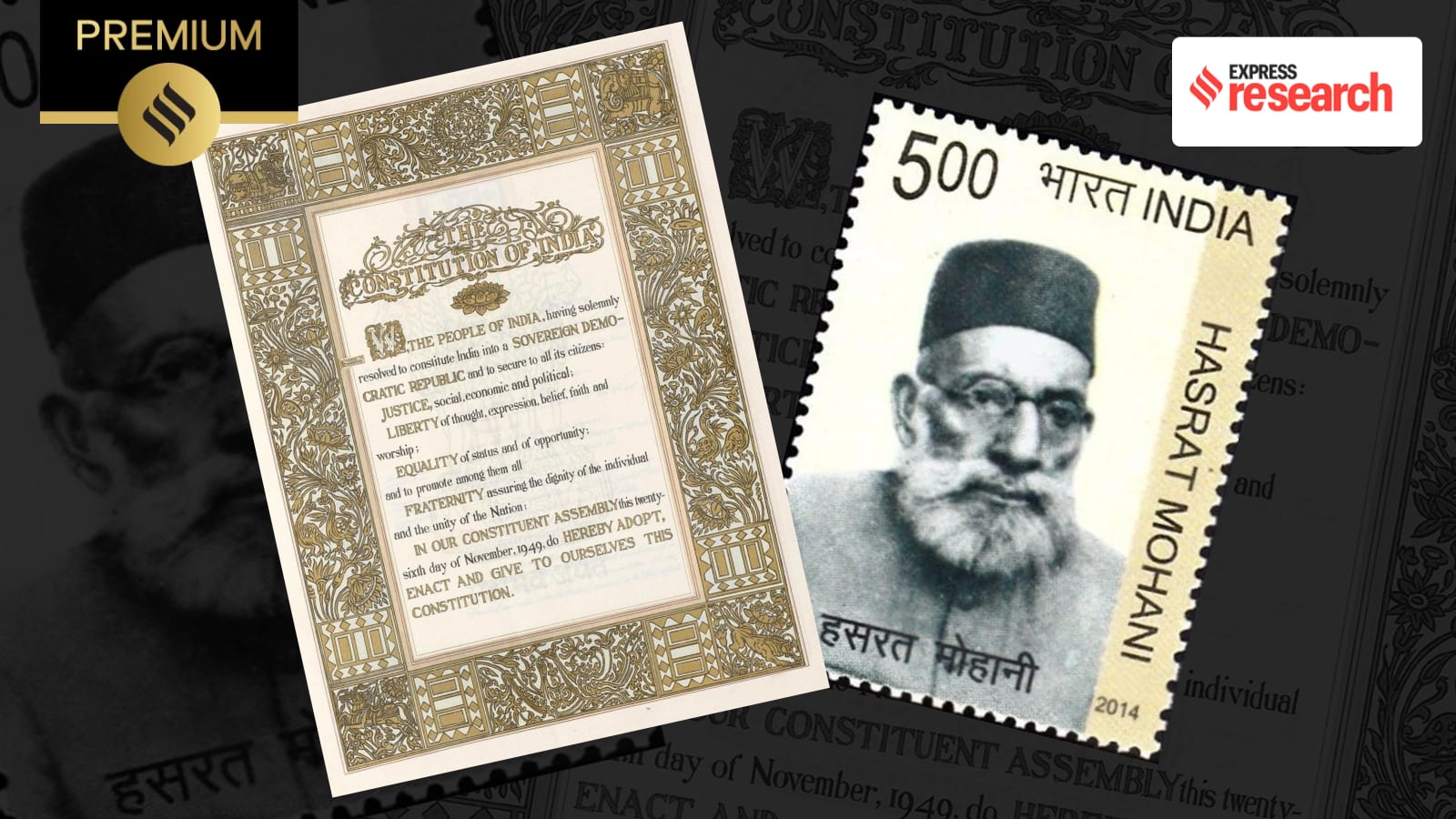
Maulana Hasrat Mohani was a notable dissenter in India's Constituent Assembly who famously voted against the final draft of the Constitution in 1949. His refusal to sign the document reflected his deep-seated ideological convictions rather than simple obstructionism.
The Lone Dissenter: Re-evaluating Hasrat Mohani’s Legacy
On November 26, 1949, the Indian Constituent Assembly reached a historic milestone with the adoption of the Constitution. Amidst the overwhelming consensus and celebration, the voice of Maulana Hasrat Mohani stood in stark contrast, as he was the sole member to record a 'no' vote. This moment remains a singular footnote in the annals of Indian parliamentary history, representing a rare instance of principled dissent during the birth of a nation.
A Profile of Intellectual Independence
Maulana Hasrat Mohani was far more than a contrarian; he was a polymath who balanced roles as an Urdu poet, a fierce journalist, and a committed freedom fighter. His political journey was marked by a restlessness that often alienated him from mainstream political organizations. His inability to find a permanent home in any single party was a testament to his rigid ideological compass, which prioritized his specific vision for India over the pragmatic compromises often required in coalition-building.
The Anatomy of Dissent
Historians such as Rohit De and Ornit Shani have emphasized that Mohani’s opposition was not the result of mere obstructionism. Throughout the three years of the Assembly’s deliberations, he was an active and conscious participant. His dissent was rooted in a profound philosophical disagreement with the direction of the document, leading him to be one of only three members who ultimately refused to sign the final draft of the Constitution in January 1950.
Philosophical Foundations of His Opposition
To understand Mohani, one must look at the tension between his revolutionary ideals and the emerging parliamentary framework of post-colonial India. Mohani’s rejection of the Constitution highlights the internal debates regarding sovereignty, governance, and the rights of the individual versus the state. By refusing to sign, he forced a historical record that suggests the consensus achieved in 1949 was not as monolithic as it is often portrayed in contemporary nationalist narratives.
Historical and Political Implications
The legacy of Hasrat Mohani serves as a reminder of the importance of dissent in a functioning democracy. While his views were ultimately sidelined in favor of the majority, his presence in the Constituent Assembly ensured that the process was not entirely devoid of critical pushback. His story encourages a nuanced understanding of history, reminding scholars and citizens alike that the foundational documents of nations are often forged through intense, sometimes irreconcilable, ideological friction.
Conclusion: The Value of the Lone Voice
In the final analysis, Maulana Hasrat Mohani remains a symbol of the uncompromising intellectual. While history has largely embraced the Constitution he opposed, his refusal to conform provides a necessary counter-narrative. His actions underscore that in the process of building a democratic republic, the role of the dissenter—even the one who stands entirely alone—is vital for the integrity of the historical record.