Third runway at Heathrow Airport would drive growth, Healey says
Source Entity
BBC News
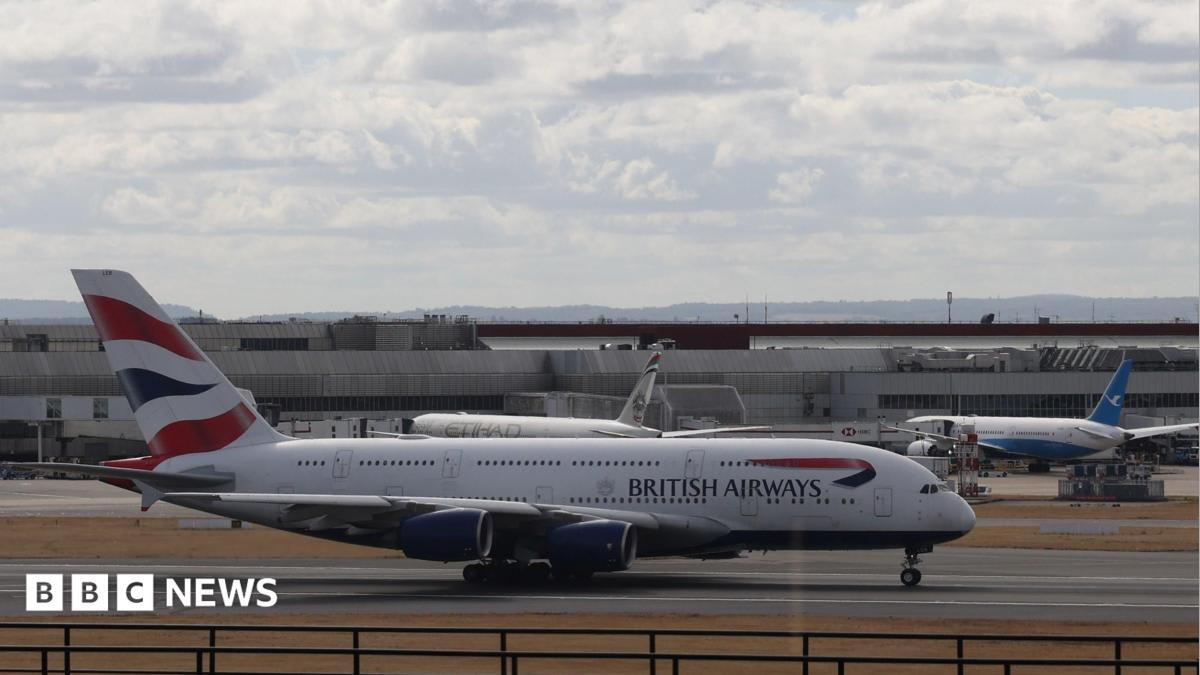
Chancellor John Healey has publicly advocated for a third runway at Heathrow, citing its potential for economic growth and job creation. His stance contrasts with Prime Minister Andy Burnham's more cautious, localized approach to the controversial expansion project.
The Debate Over Heathrow's Future
Chancellor John Healey has reignited the long-standing debate regarding the expansion of Heathrow Airport, asserting that the construction of a third runway remains a vital catalyst for national economic growth. Speaking from the International Monetary Fund meetings in Bangkok, Healey emphasized that aviation infrastructure has historically served as a cornerstone for job creation and business connectivity in the United Kingdom. This perspective aligns with previous economic strategies, such as those championed by his predecessor, Rachel Reeves, who positioned the expansion as a central pillar of the 'Britain is open for business' narrative.
Diverging Political Perspectives
The discourse surrounding Heathrow has become increasingly complex due to a noticeable rift within the current government leadership. While Healey highlights the macroeconomic benefits of infrastructure investment, Prime Minister Andy Burnham has maintained a notably more circumspect position. By characterizing the decision as primarily a matter for 'London and Londoners,' Burnham has distanced himself from an explicit endorsement, reflecting the political sensitivity of balancing national economic imperatives against regional environmental and social concerns.
Economic Implications and Competitive Pressures
At the heart of the Chancellor's argument is the necessity of maintaining the UK's global competitiveness. Heathrow, as the nation's busiest airport, acts as a primary international gateway. The chief executive of Heathrow has warned that failing to proceed with the third runway would represent a 'huge missed opportunity,' suggesting that capacity constraints could stifle trade and limit the UK's ability to attract international investment. This tension highlights the ongoing conflict between immediate economic expansion goals and the long-term logistical constraints of the London metropolitan area.
Historical Context and Policy Evolution
The proposal for a third runway at Heathrow has been a fixture of British infrastructure policy for decades, marked by repeated delays and intense public scrutiny. Historically, the project has been viewed as a litmus test for the government's commitment to large-scale infrastructure development. The shift from Rachel Reeves' aggressive promotion of the expansion to the current administration’s more cautious, divided messaging illustrates how shifting political priorities and internal party dynamics can reshape major national infrastructure projects.
Future Trends and Strategic Outlook
Looking ahead, the government faces a precarious balancing act. If the administration leans into Healey’s growth-oriented rhetoric, it risks alienating groups concerned with the environmental impact of increased air traffic. Conversely, if Burnham’s skepticism prevails, the UK may face stagnation in its aviation capacity, potentially ceding market share to continental European hubs. The resolution of this debate will likely serve as a defining indicator of the government's willingness to prioritize industrial expansion over local political sensitivities in the coming years.