How human-made noise is changing the call of an eye-catching Himalayan bird
Source Entity
Vidheesha Kuntamalla
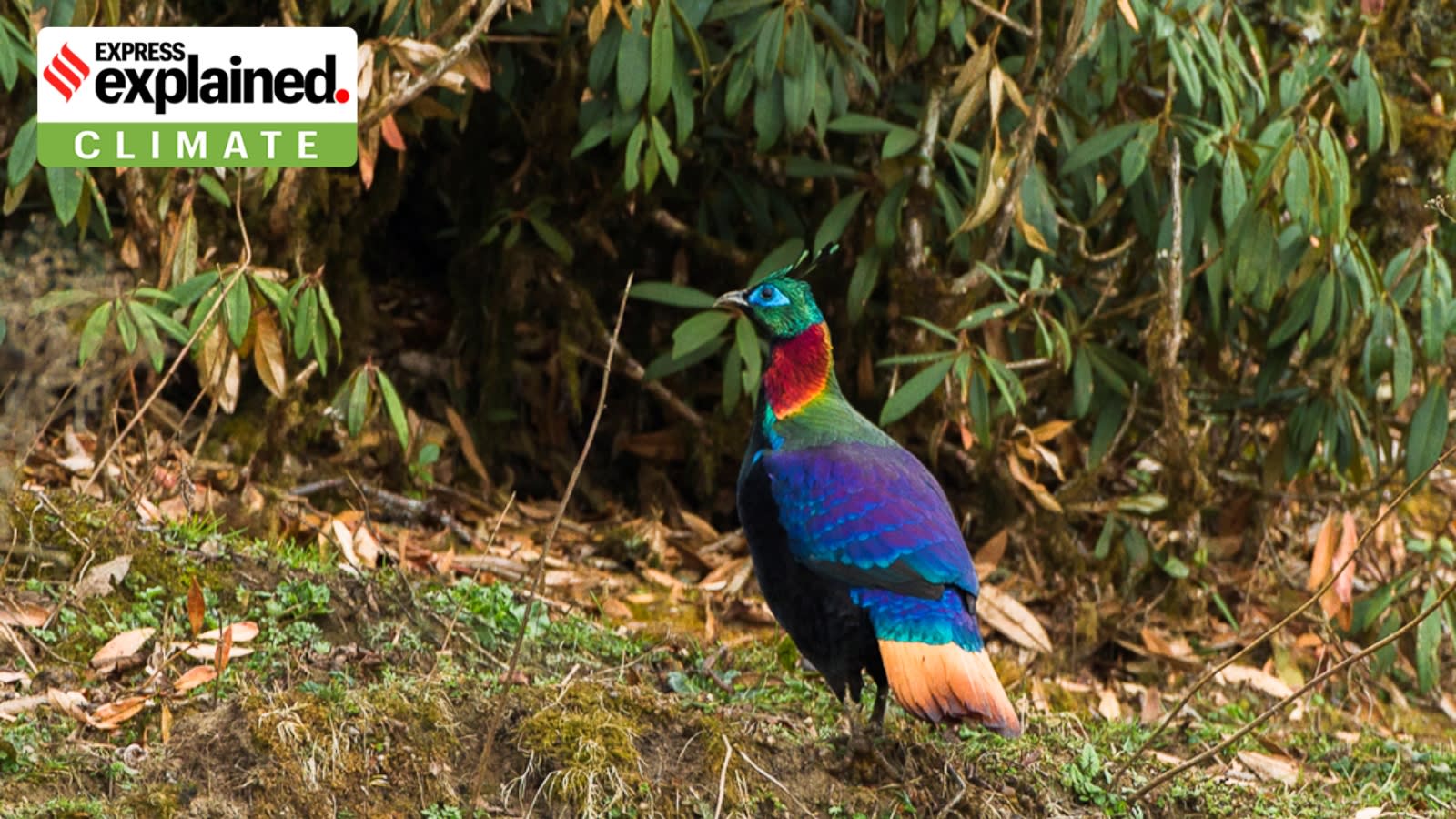
Researchers at Hemvathi Bahuguna Garhwal University have found that increasing noise pollution from tourism is altering the vocalizations of the Himalayan monal. This behavioral shift, coupled with climate-driven habitat changes, poses long-term ecological risks for this iconic mountain bird.
The Silent Crisis: Acoustic Adaptation in the Himalayan Monal
A Symbol of the Himalayas Under Pressure
The Himalayan monal (Lophophorus impejanus) is not merely a bird; it is an iconic emblem of the high-altitude ecosystems of India, serving as the state bird of Uttarakhand. Known for its iridescent plumage and ground-dwelling nature, this striking landfowl occupies a vast range across the Himalayan arc, spanning Jammu and Kashmir, Himachal Pradesh, Uttarakhand, and Sikkim. Despite its cultural and ecological prominence, recent scientific scrutiny has begun to reveal the fragility of its existence in an increasingly anthropogenic landscape.
The Impact of Anthropogenic Noise
Recent longitudinal research conducted by a team at Hemvathi Bahuguna Garhwal University (HBGU)—specifically Rajeev Lochan, Dinesh Kumar Sharma, and Anand Kumar—has brought to light a concerning behavioral shift: the Himalayan monal is altering its vocalization patterns. This phenomenon is directly attributed to the rising levels of noise pollution resulting from human activities, particularly the surge in tourism and vehicular traffic within its native mountainous habitat. As the acoustic environment becomes saturated with human-generated sound, the monal must adapt its calls to ensure they are heard, a process that reflects the broader global trend of wildlife struggling to cope with urban encroachment.
Evolutionary and Reproductive Implications
While the researchers stop short of confirming a direct link to reproductive failure, the implications of these altered calls are significant. Bird vocalizations are critical for territorial defense and mate attraction. If the monal’s call frequency or intensity is forced to change to overcome ambient noise, it may lose its efficacy in attracting mates or signaling dominance. This potential disruption in communication could lead to decreased mating success, which, over time, would threaten the population stability of a species that is currently considered non-endangered but increasingly vulnerable.
The Dual Threat of Climate Change
Beyond the immediate impact of noise, the HBGU study also addresses the existential threat of climate change. Over the course of a five-year investigation, the researchers highlighted that the bird's habitat is subject to rapid transformation as global temperatures rise. These shifts in climate are expected to alter the vegetation and altitudinal distribution of the monal’s range in the coming decades. When combined with the stress of acoustic pollution, the environmental pressures on the species become compounded, creating a scenario where the bird is fighting a battle on two fronts.
Future Outlook and Conservation Necessity
The findings from HBGU serve as a vital wake-up call for environmental management in the Himalayan region. As tourism continues to expand into ecologically sensitive zones, the need for sustainable management practices becomes paramount. Understanding how animals adapt to human interference—and at what cost—is essential for crafting effective conservation policies. Future research must prioritize whether these vocal changes are permanent behavioral adaptations or temporary responses, and whether such changes lead to long-term population decline in one of India's most celebrated avian species.