Flyovers in Hyderabad’s IT corridor busy junctions targeted for completion by May 2027
Source Entity
India Latest News: Top National Headlines Today & Breaking News | The Hindu
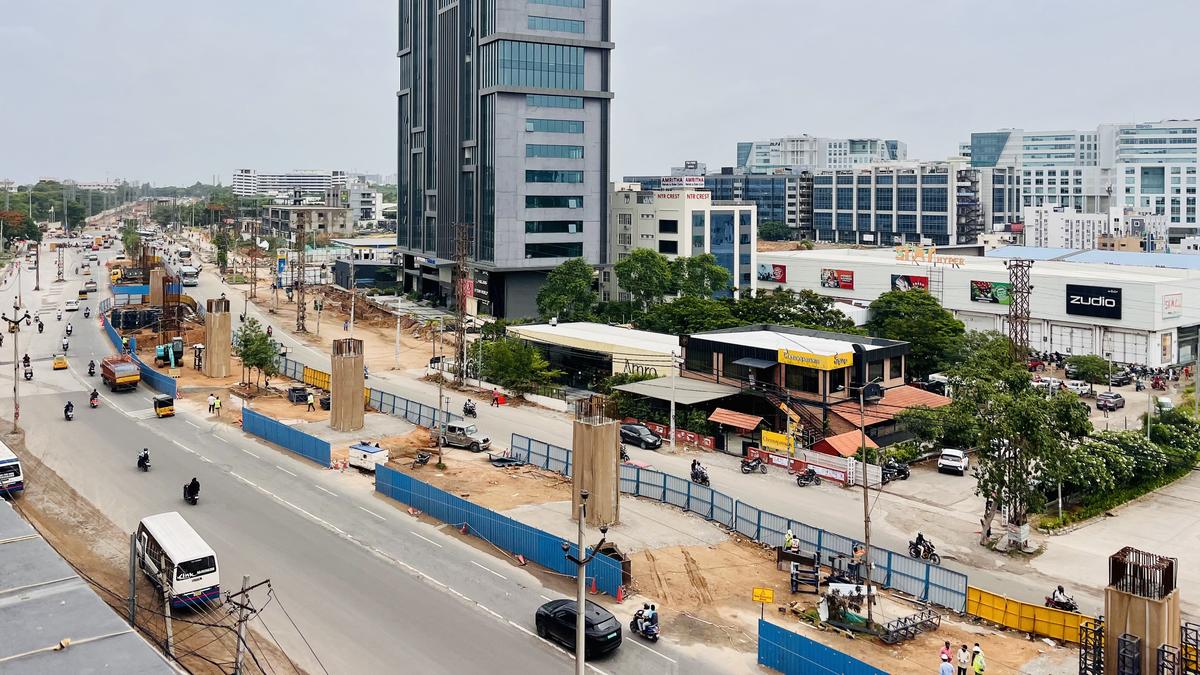
Hyderabad is accelerating the construction of major flyovers and underpasses in its IT corridor to alleviate severe traffic congestion. These ₹679 crore projects are expected to be completed by May 2027, significantly reducing commute times for hundreds of thousands of daily vehicles.
Infrastructure Overhaul in Hyderabad's IT Corridor
Hyderabad’s IT corridor is currently undergoing a massive infrastructural transformation as the Cyberabad Municipal Corporation (CMC) pushes to finalize critical flyover and underpass projects by May 2027. With a total investment of ₹679 crore, these developments at the IIIT and Khajaguda junctions are designed to mitigate the chronic congestion that plagues one of India's most significant technology hubs. The initiative reflects a strategic response to the rapid urbanization of the region, which has outpaced existing road capacity.
Targeting Bottlenecks at IIIT and Khajaguda
The IIIT and Khajaguda junctions serve as vital arteries for the city, connecting key areas such as Mehdipatnam, Shaikpet, Nanakramguda, and Gachibowli. Currently, these intersections handle a massive volume of traffic, with Khajaguda alone managing over 3 lakh vehicles daily. By implementing flyovers and underpasses, the CMC aims to streamline traffic flow, with projections suggesting that commuters could save up to 20 minutes at the IIIT junction and 16 minutes at Khajaguda, significantly enhancing the daily experience for over 2 lakh vehicles.
Managing Construction and Public Disruption
The scale of these projects necessitates significant spatial adjustments, leading to temporary hardships for daily commuters. The narrowing of the carriageway due to construction, combined with the upcoming demolition of the Raidurgam Law and Order Police Station to facilitate the underpass, has exacerbated current traffic snarls. These measures, while disruptive, are essential for the long-term viability of the corridor, as the shifting of utilities and road widening are critical components of the broader decongestion plan.
Oversight and Strategic Execution
CMC Commissioner G. Srijana has emphasized the importance of balancing speed with safety, directing engineering teams to maintain construction momentum while adhering to rigorous quality standards. The proactive management of these sites is crucial, given the density of the IT corridor. The decision to relocate police infrastructure highlights the scale of the engineering challenges involved in retrofitting modern transit solutions into established urban layouts.
Future Outlook and Urban Mobility
Looking toward the May 2027 completion date, the successful delivery of these projects will likely serve as a blueprint for future urban planning in Hyderabad. As the IT corridor continues to expand, the demand for seamless connectivity will only grow. If the CMC successfully meets its deadline, this initiative will not only reduce travel times but also likely increase the economic productivity of the region by minimizing the significant time lost in traffic queues and signal delays.
Verification Required?