Hit without getting too close: How glide bombs are giving IAF greater strike power
Source Entity
DHRUV YADAV
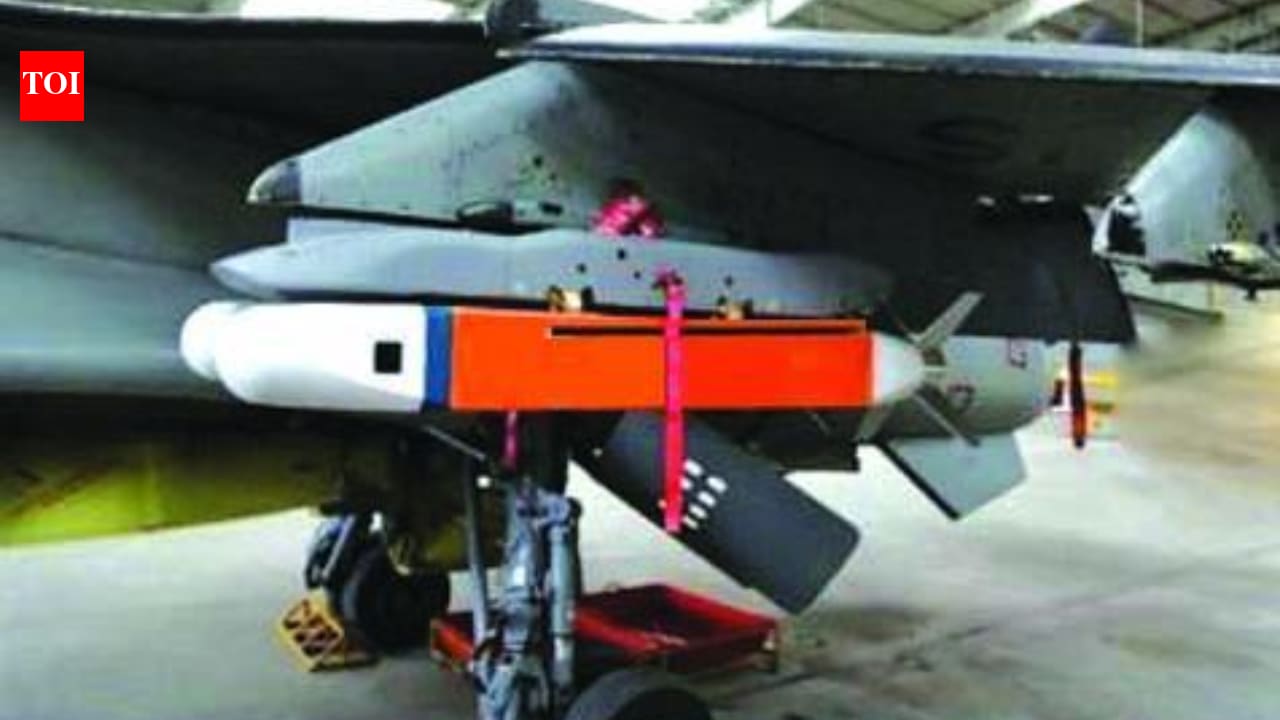
The Indian Air Force has signed an Rs 810.79 crore contract for 160 satellite-guided Smart Anti-Airfield Weapons. This indigenous development aims to bolster strike capabilities against hardened targets like bunkers and runways.
Strengthening Air Superiority: The Induction of Advanced Glide Bombs
The Indian Air Force (IAF) is set to significantly enhance its precision-strike capabilities with the induction of a new satellite-guided variant of the Smart Anti-Airfield Weapon (SAAW). This strategic acquisition marks a pivotal shift in how the force approaches the neutralization of hardened ground installations, such as enemy runways and fortified bunkers, from a safe standoff distance.
Strategic Investment and Indigenous Growth
Under a recently finalized contract valued at Rs 810.79 crore, the IAF is slated to procure 160 units of this advanced weapon system. This procurement is not merely an equipment upgrade; it represents a cornerstone of the government's broader 'Atmanirbhar Bharat' or self-reliance initiative. By prioritizing indigenous defense manufacturing, India is reducing its reliance on foreign suppliers while fostering a domestic ecosystem capable of developing high-tech, precision-guided munitions.
Technical Edge and Tactical Application
The primary advantage of these glide bombs lies in their ability to strike with high accuracy without requiring the delivery aircraft to enter the range of heavily defended enemy airspace. By utilizing satellite guidance, these weapons ensure that critical infrastructure—which is often the backbone of an adversary's operational capacity—can be incapacitated effectively. The focus on targeting runways and bunkers highlights a tactical shift toward disabling enemy air operations at the source.
The Future of Local Defense Manufacturing
The successful development and integration of these weapons underscore the maturing capabilities of India's defense research sector. As the nation continues to emphasize local manufacturing, such contracts serve as a catalyst for local aerospace and defense firms to innovate and scale. This trend is likely to continue, with future defense budgets expected to favor domestic systems that offer comparable or superior technology to international counterparts.
Broader Implications for National Security
In the context of regional security, the deployment of satellite-guided glide bombs provides the IAF with a versatile toolset to project power and maintain deterrence. The ability to neutralize hardened targets from a distance increases the survivability of both the pilot and the platform, ensuring that the IAF remains a potent force in contested environments. This procurement solidifies India's commitment to modernizing its arsenal through technology-led, indigenous solutions.
Conclusion
The induction of these 160 units signifies a robust step forward in India's military modernization strategy. By blending precision technology with a firm commitment to domestic manufacturing, the IAF is not only enhancing its immediate strike power but also ensuring long-term self-sufficiency in high-stakes defense technology.