NALSAR students screen Umar Khalid documentary
Source Entity
NIRUPA VATYAM
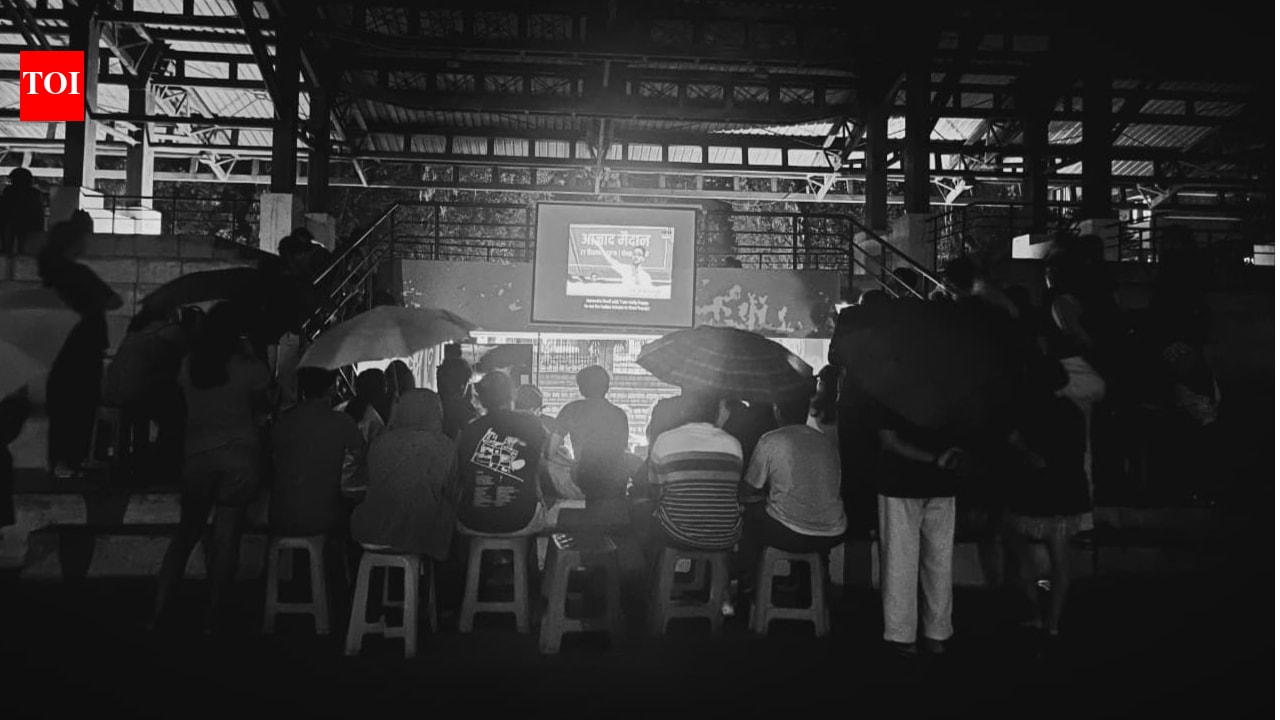
NALSAR University students recently held a private screening of the documentary 'Prisoner No. 626710 is Present' concerning activist Umar Khalid. The event proceeded despite the film lacking official certification and similar screenings being canceled at other institutions due to administrative pressure.
Student Activism and the Screening of 'Prisoner No. 626710 is Present'
A group of students at the NALSAR University of Law in Hyderabad recently organized a private, student-led screening of the documentary Prisoner No. 626710 is Present. The film centers on the experiences and legal circumstances of activist Umar Khalid, who has been a focal point of intense public and legal scrutiny in India. By hosting this event, the student organizers aimed to facilitate a platform for discourse regarding the complexities of the justice system, human rights, and the societal impact of long-term incarceration.
The Context of Institutional Challenges
The screening at NALSAR follows a pattern of heightened administrative and external pressure surrounding the documentary’s exhibition. Prior to the event at NALSAR, similar screenings were scheduled at the International Institute of Information Technology, Hyderabad (IIIT-H), and the National Law School of India University (NLSIU), Bengaluru. Both of these events were canceled amid reports of intimidation and threats. The successful, albeit private, assembly at NALSAR highlights the ongoing tension between student-led academic inquiry and the broader political environment that often influences university governance.
Regulatory Hurdles and Administrative Stance
A significant point of contention regarding the documentary is its lack of certification from the Central Board of Film Certification (CBFC). In the Indian context, the absence of such certification often provides a legal basis for authorities to discourage or block public screenings. The Vice-Chancellor of NALSAR explicitly stated that the screening was not officially sanctioned by the university, underscoring a clear administrative distance from the event. This distinction serves as a protective measure for the institution while reflecting the delicate balance universities must strike between institutional neutrality and the preservation of academic freedom.
Implications for Academic Discourse
The decision by students to proceed with the screening as a private, student-restricted event suggests a tactical shift in how campus groups navigate censorship. By restricting attendance to the student body, organizers attempted to frame the gathering as a localized, intellectual exercise rather than a public protest. This methodology reflects a broader trend of students utilizing private campus spaces to explore controversial political narratives that might otherwise be stifled by administrative or external censorship.
Broader Significance and Future Outlook
This event serves as a microcosm of the larger debate in India regarding the limits of free speech within academic institutions. The narrative surrounding Umar Khalid’s incarceration remains a polarizing subject, and the efforts to screen the documentary illustrate the determination of student groups to engage with these issues despite potential repercussions. As universities continue to grapple with these pressures, the trend of clandestine or semi-private screenings is likely to persist as a mechanism for students to challenge mainstream narratives and interrogate the efficacy of the judicial process.