ICE wants its mask back, and hired a company to ask
Source Entity
Hacker News
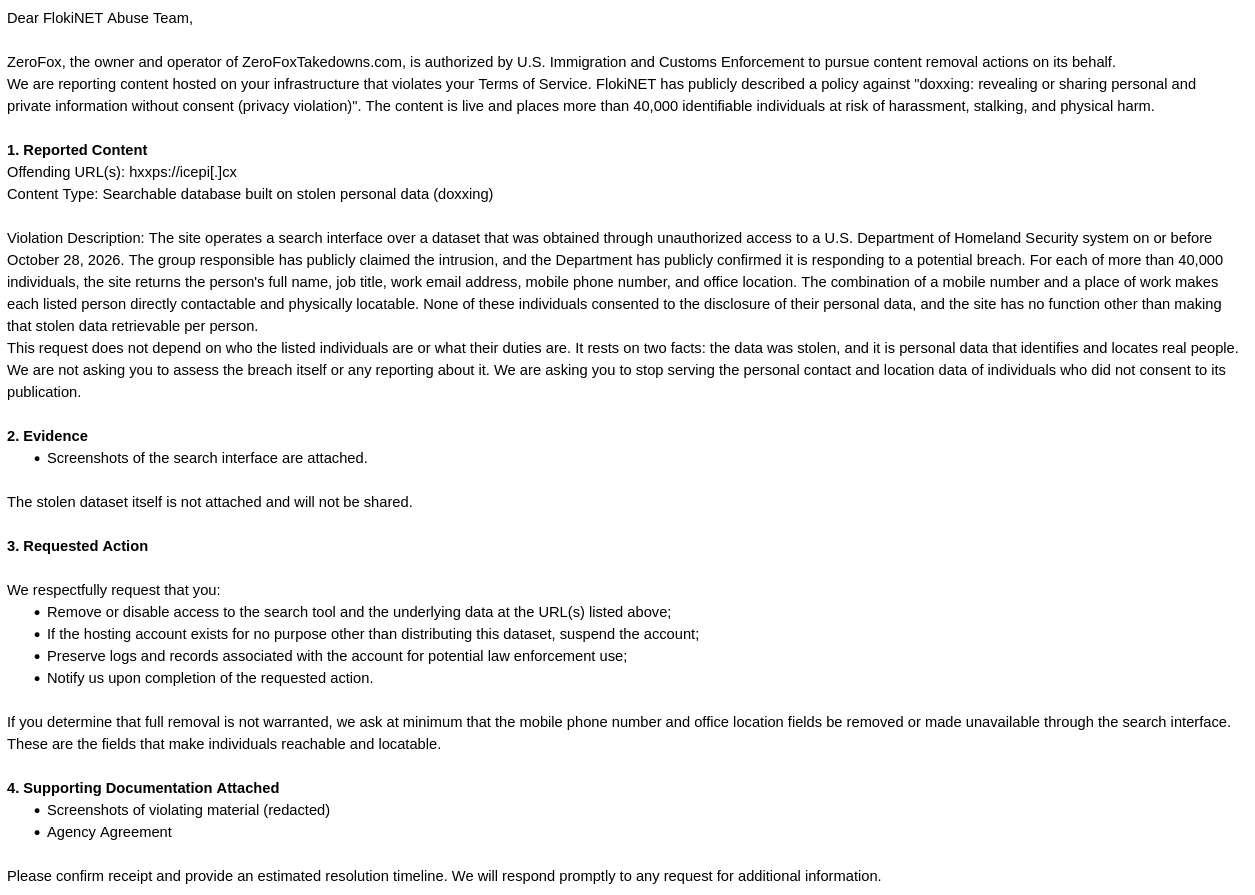
A hosting provider has publicly refused a takedown request from a third-party company representing a government agency seeking to remove the site Icepick. The provider maintains that the site, which publishes the professional contact details of government employees, does not constitute prohibited doxxing.
The Conflict Between Digital Transparency and Government Privacy
Recent reports highlight a significant standoff between a digital hosting provider and an external firm representing a foreign government agency. The agency issued a takedown notice for the website 'icepi.cx'—now relocated to 'icepicx.is'—alleging that the platform was engaged in a doxxing campaign. However, the hosting provider, which regularly manages legal notices from various entities, has formally declined the request, asserting that the site’s activities do not meet the criteria for malicious doxxing.
Defining the Boundaries of Doxxing
The core of this dispute lies in the interpretation of 'doxxing.' While the government agency characterizes the publication of employee information as a threat to privacy, the hosting provider distinguishes between private individuals and public servants. According to the provider, the site exclusively publishes professional identities, official roles, and business contact information associated with government employment. This distinction is vital in the digital age, where the line between public accountability and individual harassment is frequently contested.
Navigating Jurisdictional and Legal Challenges
The situation is further complicated by the fact that the hosting provider has no existing relationship with the firm representing the government, nor does the provider operate within the jurisdiction of the requesting agency. This creates a complex landscape of international internet law, where government entities often attempt to exert influence over platforms hosted in different legal territories. By refusing the request, the provider has signaled a commitment to platform autonomy, favoring their own internal policies over external pressure from foreign governmental bodies.
The Role of Transparency in Platform Governance
This incident is part of a broader trend where hosting services are increasingly documenting and publishing the legal threats they receive. By making these takedown notices public, the provider subjects the government agency's claims to public scrutiny. This strategy acts as a check against potential censorship, forcing agencies to justify their requests rather than operating behind the opaque wall of private legal demands. Such transparency serves to educate the public on how their data and the information of public officials are being regulated online.
Broader Implications for Digital Accountability
The refusal to take down the site highlights an ongoing shift in how the internet is governed. As governments increasingly seek to control the digital footprint of their employees, providers are becoming the final gatekeepers of information. This case establishes a precedent where professional information related to government service is viewed as distinct from private personal data, suggesting that public accountability may outweigh privacy claims in the eyes of some service providers.
Future Trends in Content Moderation
Looking forward, we can expect to see more frequent clashes between state-level actors and decentralized hosting platforms. As more governments prioritize the 'right to be forgotten' or anti-doxxing legislation, the burden will fall on providers to consistently define what constitutes public interest versus private harm. The outcome of this specific case serves as a template for other providers who must navigate the delicate balance between adhering to international legal standards and maintaining a commitment to the free flow of professional information.