40 years ago July 31, 1986: Bill passed amid walkout
Source Entity
The Indian Express
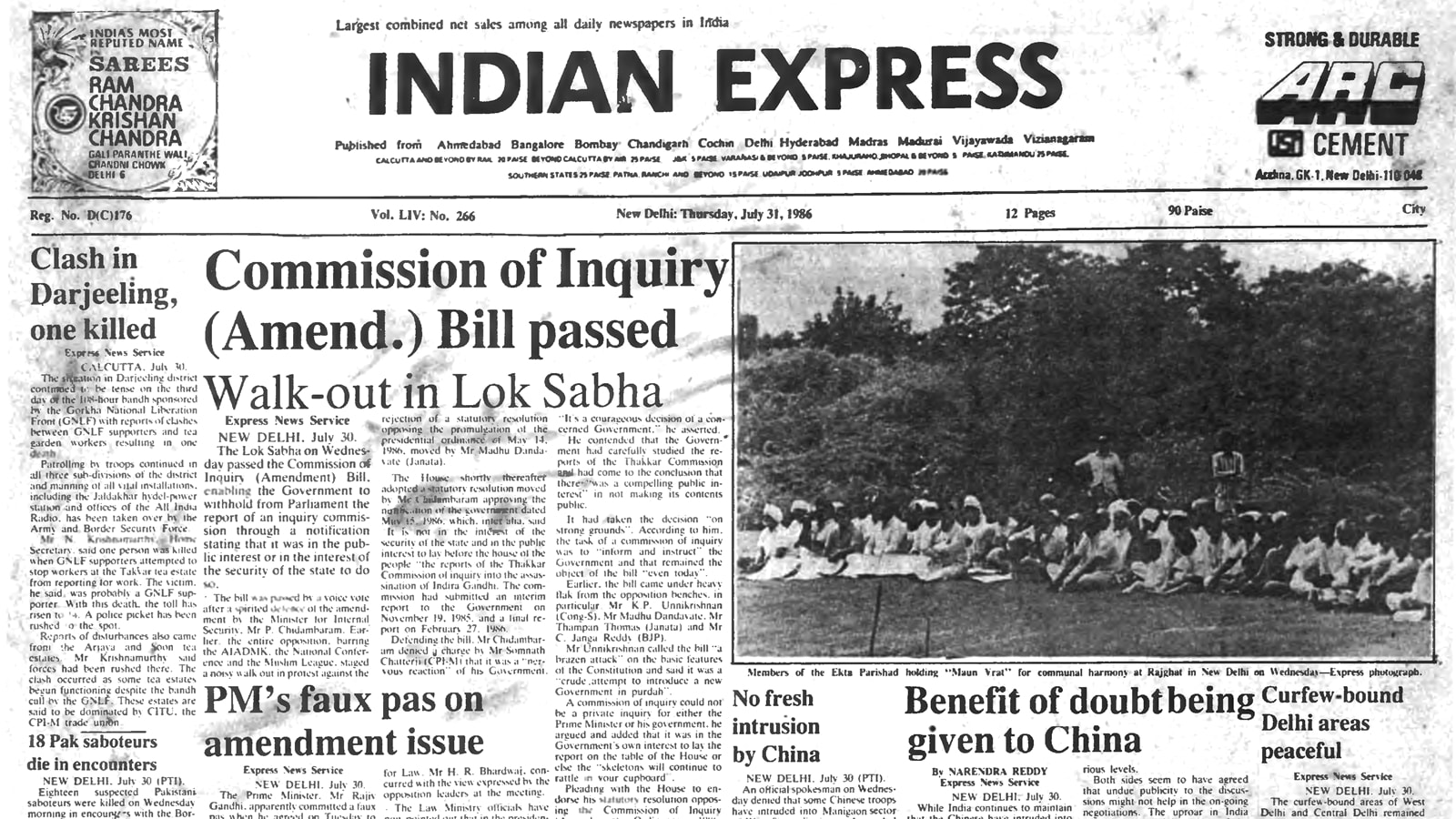
In 1986, the Lok Sabha passed the Commission of Inquiry (Amendment) Bill amid opposition walkouts, while Darjeeling faced severe unrest during a GNLF-led bandh. These events highlight a period of significant legislative and regional volatility in Indian history.
Legislative Controversy: The 1986 Commission of Inquiry Amendment
On July 31, 1986, the Indian Parliament witnessed a pivotal legislative shift as the Lok Sabha passed the Commission of Inquiry (Amendment) Bill. The passage occurred amidst significant political friction, characterized by a walkout from opposition members who contested the government's expanded authority. Minister for Internal Security P. Chidambaram spearheaded the defense of the bill, arguing that the state required the legal mechanism to withhold inquiry commission reports if their disclosure threatened the security of the nation or public interest.
Implications of the Amendment
The amendment fundamentally altered the relationship between investigative transparency and executive privilege. By granting the government the power to suppress findings through a formal notification, the bill created a legal framework where the 'security of the state' could be invoked to bypass parliamentary oversight. This move was viewed by critics as a potential erosion of democratic accountability, setting a precedent for how sensitive findings—often related to internal security or political controversies—are handled in the Indian legislative system.
Unrest in Darjeeling: The GNLF Movement
Concurrent with the legislative debates in New Delhi, the Darjeeling district was engulfed in a severe regional crisis. The Gorkha National Liberation Front (GNLF) had initiated a 108-hour bandh, a strike action that paralyzed the region. By the third day of the strike, the situation had deteriorated into violent confrontations, specifically between GNLF supporters and tea garden workers, leading to at least one fatality. This event was a flashpoint in the broader Gorkhaland movement, which sought greater autonomy for the Gorkha ethnic population in the region.
The Role of Security Forces
To manage the escalating violence, the government deployed the Army to patrol all three sub-divisions of the Darjeeling district. The military was further tasked with securing vital installations, effectively placing the region under a heightened security apparatus. This military intervention highlighted the federal government's struggle to contain regional separatist aspirations during the mid-1980s, a decade marked by various insurgencies and identity-based political movements across India.
Historical Synthesis and Conclusion
The events of July 1986 reveal a government balancing two distinct fronts: the centralization of power in the capital and the management of regional instability on the periphery. The legislative amendment passed in Parliament provided a tool for state secrecy that remains relevant in discussions of executive authority, while the Darjeeling crisis underscored the volatility of regional politics. Together, these events serve as a historical case study of the challenges faced by the Indian state in maintaining order while navigating the complexities of democratic governance and regional ethnic demands.