At INDIA march against Election Commission, a Rahul Gandhi move stumped cops
Source Entity
Asad Rehman
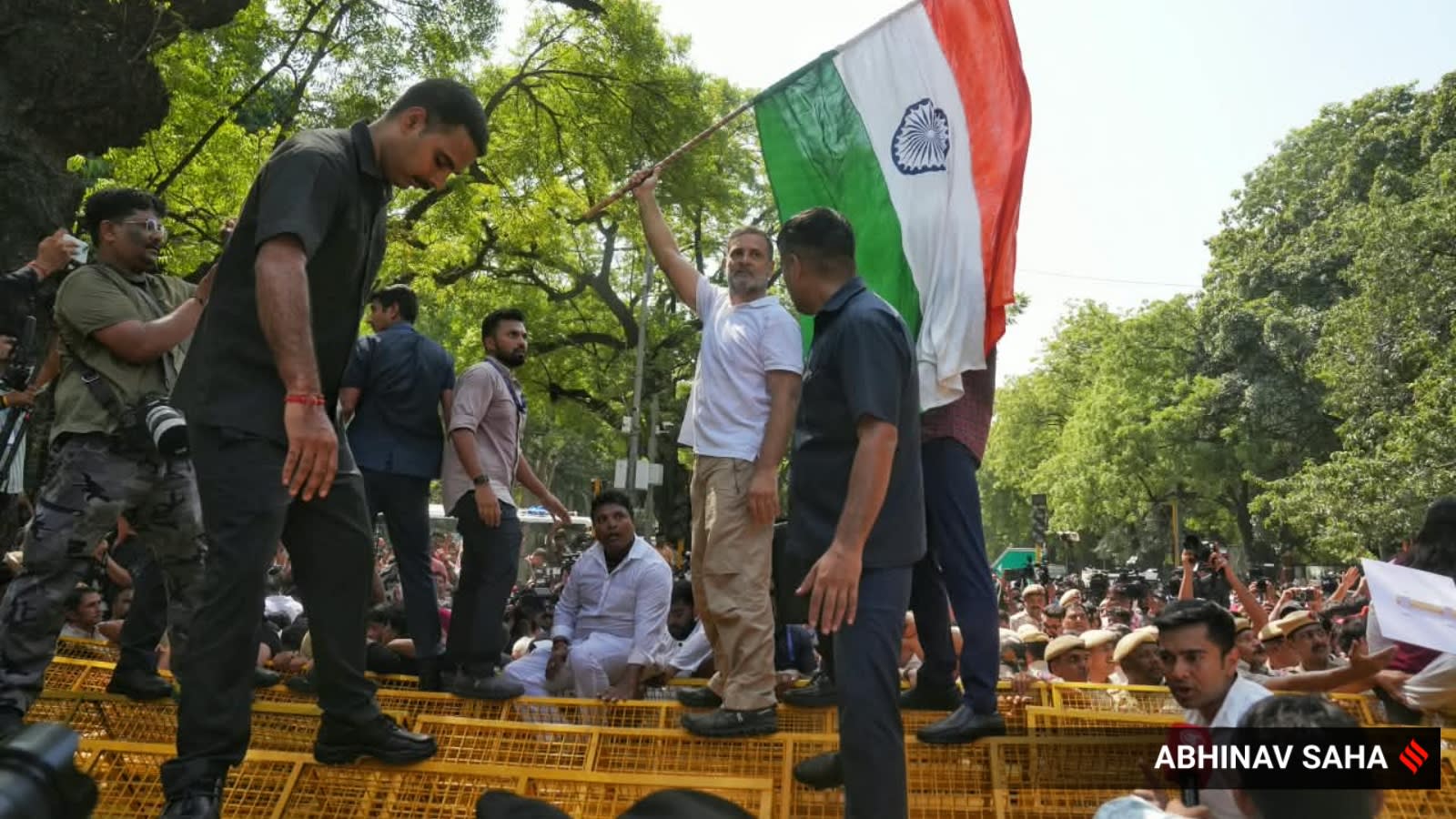
INDIA bloc MPs led by Rahul and Priyanka Gandhi staged a protest march toward the Election Commission of India to demand the resignation of CEC Gyanesh Kumar. The demonstration, centered on concerns over the Special Intensive Revision (SIR) exercise, resulted in detentions and a surprise tactical move by the Gandhi siblings into Akashvani Bhavan.
Tensions Escalate: INDIA Bloc Confronts ECI
In a significant escalation of political friction, Members of Parliament from the INDIA bloc, led by Leader of the Opposition Rahul Gandhi and Congress MP Priyanka Gandhi Vadra, marched from the Parliament House complex toward the Election Commission of India (ECI) headquarters in New Delhi. The protest was primarily driven by deep-seated opposition concerns regarding the Special Intensive Revision (SIR) exercise, which the coalition claims undermines the integrity of the electoral process.
The Confrontation and Security Measures
Delhi authorities responded with heavy security deployments, establishing extensive barricades around the Parliament and ECI vicinity. The marchers were ultimately halted near the NITI Aayog office, situated on the critical transit route between NITI Aayog and Akashvani Bhavan. Faced with this blockade, the parliamentarians staged a sit-in (dharna) on the road, utilizing visual props—including depictions of Chief Election Commissioner (CEC) Gyanesh Kumar in RSS attire—to amplify their slogans of "Democracy not for sale" and demands for the CEC's resignation.
Tactical Maneuvers and Police Confusion
As the situation unfolded, the protest took an unexpected turn characterized by a tactical departure from the planned demonstration. Following the detention of various MPs and their subsequent boarding onto police buses, Rahul and Priyanka Gandhi executed an impromptu maneuver. As they were being processed for transport, the duo bypassed security personnel and entered the premises of Akashvani Bhavan, the headquarters of All India Radio. This unscripted move reportedly left law enforcement officials momentarily bewildered, highlighting the chaotic nature of the standoff.
Historical Context and Political Implications
This protest is emblematic of the recurring friction between the executive branch's oversight bodies and the parliamentary opposition. By targeting the ECI, the INDIA bloc is signaling a broader strategy to challenge the institutional conduct of electoral revisions. The use of specific rhetoric, such as accusations of bias regarding the CEC, underscores the opposition's intent to frame electoral administrative processes as a matter of national democratic survival rather than mere bureaucratic procedure.
Future Trends in Parliamentary Protests
Moving forward, the events of this protest suggest that the INDIA bloc is increasingly willing to utilize high-visibility street demonstrations to force a public dialogue on electoral transparency. The inclusion of the SIR exercise as a primary grievance indicates that the opposition will continue to scrutinize the technical aspects of voter registration and electoral roll management. As the political landscape in India remains polarized, such confrontations between opposition leadership and constitutional authorities are likely to become a defining feature of the current legislative session, setting the stage for more intense debates regarding the autonomy and neutrality of India's democratic institutions.
Multiple Citing Sources